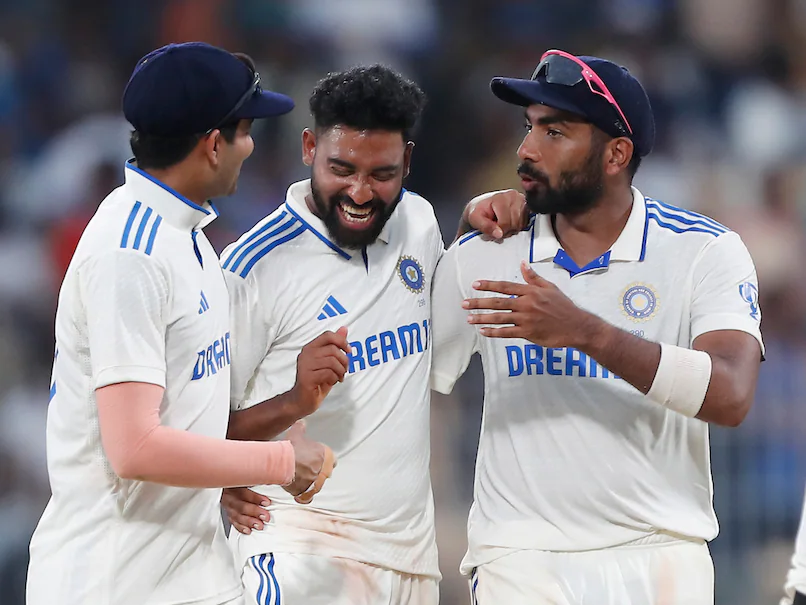
India looked in control at times with 190-plus on board and early wickets in the chase but England hit back strongly after the assault from Harry Brook and expensive bowling from Bishnoi. England won the chase with an over to spare in a match that swung decisively in the final overs.
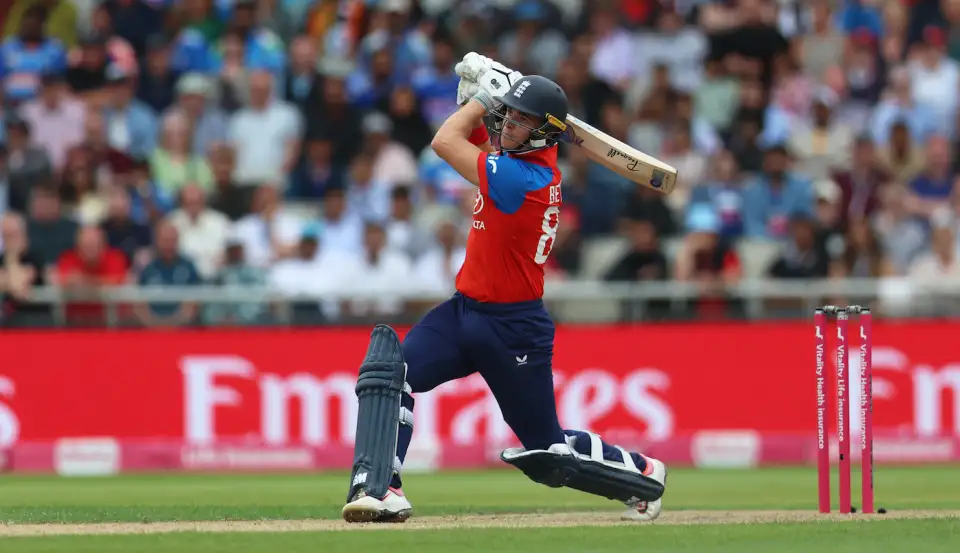
England’s Jacob Bethell celebrates after steering his side to a four-wicket win over India in Manchester. Image Credit: ESPNcricinfo
England defeated India by four wickets in the second T20I in Manchester on Saturday, chasing down 191 with an over remaining in a high-pressure contest that featured both promise and pain for the visitors. India had put up a competitive 190/7 after batting first, but a powerful counterattack led by Harry Brook and Jacob Bethell took the game away from them, while Ravi Bishnoi’s over in the 17th became the turning point.
The match also marked the debut of 15-year-old Vaibhav Sooryavanshi, whose arrival had generated significant buzz. He showed flashes of talent, but the bigger story was England’s calm response under pressure and India’s inability to close out the chase. Yeh result kaafi important hai because it showed how quickly momentum can shift in modern T20 cricket.
How England Won It
England’s chase started badly when Arshdeep Singh removed Phil Salt and Jos Buttler early, leaving the hosts under pressure. That phase gave India a real opening, and for a moment it seemed the visitors might control the game through the powerplay. But Harry Brook changed everything. NDTV has covered the full story.
Brook smashed 27 runs off one Arshdeep over, including three sixes and two boundaries, and suddenly England had the platform they needed. Even when Axar Patel dismissed Brook, the damage had already been done. The innings had swung from cautious to dangerous, and India was now chasing control rather than dictating terms.
The next key phase came through the partnership between Jacob Bethell and Tom Banton. Their 67-run stand for the fourth wicket stabilized the innings and kept England ahead of the asking rate. Bethell, in particular, played with confidence, striking an unbeaten 76 off 46 balls and finishing the job with authority. Banton added 39, and together they made sure England did not panic even when wickets fell around them.
The decisive blow came in the 17th over, bowled by Ravi Bishnoi. Two no-balls in his first two deliveries handed England free scoring opportunities, and Bethell punished the errors ruthlessly, smashing three towering sixes in the over. Bishnoi’s figures — 0/60 in four overs — tell the story of a bowler who never found control on a skiddy surface. Once England got that over, the chase became much easier.
India’s Batting Fight
India’s total of 190/7 was competitive but perhaps a touch below par for the conditions. Tilak Varma’s late flourish was crucial, as he made 24 not out off 11 balls and hit Jofra Archer for 17 in the final over to push India close to 190. That burst mattered because it prevented India from ending with a score that might have been too easy for England to chase.
Earlier, Abhishek Sharma top-scored with 43 off 24 balls, while Shreyas Iyer made 37 off 22 and Ishan Kishan contributed 49 off 43. Those were useful innings, but none of them fully took control. India kept losing the tempo just when they needed to accelerate.
The conditions were not straightforward either. The surface offered extra bounce and crosswinds, which made stroke-making difficult. The debutant Sooryavanshi, who had everyone watching closely, showed courage and class in patches, but his innings ended on 14 from 10 balls when Jos Buttler stumped him off Will Jacks. He did hit two sixes, and one of them—a no-look whip-scoop behind square—briefly reminded viewers why he is already being talked about so much.
Still, India’s middle overs did not produce enough domination. Kishan, in particular, struggled with slower balls and altered lengths, while England’s bowlers kept mixing pace and line effectively. Sam Curran’s 3/33 was especially important, as his pace-off strategy created constant uncertainty.
Why Bishnois Are Over Hurt So Much
In T20 cricket, one over can decide the match. Bishnoi’s 17th over did exactly that, but unfortunately for India, it tilted in England’s favor. The two no-balls were especially damaging because they handed England free momentum at the exact point when India needed control.
Bethell capitalized on that generosity and cleared the ropes three times. Once a batter gains confidence in the death overs, the bowlers are suddenly under pressure to be perfect on every ball. That is hard enough in normal conditions; with a skiddy surface and England’s hitters set at the crease, it became almost impossible.
Bishnoi’s spell did not just leak runs. It also broke India’s rhythm. Up to that point, England still had work to do. After that was over, the chase looked manageable, and the visitors lost the psychological edge they had built earlier in the innings. In T20 cricket, that mental shift matters as much as the scoreboard.
Sooryavanshi’s Debut Under the Spotlight
Vaibhav Sooryavanshi’s debut added a unique layer to the match. At 15, he stepped onto the international stage carrying enormous attention, especially after his domestic rise. The expectations around him were intense, and that can be a heavy burden for any young player.
He handled the moment with reasonable composure. The two sixes he hit showed that he was not overawed by the stage. His dismissal to Jacks, however, also showed how tough international cricket can be when bowlers vary pace and flight cleverly. For a teenager, that kind of exposure is valuable even if the result is not ideal.
The bigger takeaway is that debut games are rarely easy for young batters. They are not just facing bowling; they are facing nerves, noise and narrative. Sooryavanshi will learn from this much faster than the scorecard suggests. Yeh’s debut was important not because he exploded, but because he got a real taste of top-level pressure.
Background and Context
This was the second T20I of a five-match series, and England’s win gave them a 1-0 lead. India had the better start in the game, but England’s chase showed the value of staying calm when early wickets fall. That pattern is common in modern T20 cricket: powerplay pressure, middle-overs adjustment and death-over finishing decide the result.
For India, this match also raised familiar questions about bowling consistency at the end of innings. Their batting was good enough to set a fightable total, but the inability to defend under pressure remains a concern in matches against strong batting line-ups. England, meanwhile, proved again that they can absorb setbacks and counterattack fast.
The venue also mattered. Manchester and the larger dimensions of Old Trafford made clean boundary-hitting more difficult, especially in the middle overs. That meant placement, strike rotation and shot selection became even more important. England handled those demands slightly better, especially through Bethell and Banton.
Timeline
India bats first: India reaches 190/7, with late runs from Tilak Varma boosting the total.
Debut moment: 15-year-old Vaibhav Sooryavanshi makes his international debut and scores 14 off 10.
England chase begins: Arshdeep Singh removes Phil Salt and Jos Buttler early.
Brook counterattacks: Harry Brook smashes 27 runs off one Arshdeep over.
Middle overs: Bethell and Banton build a 67-run partnership.
Key turning point: Ravi Bishnoi concedes 29 runs in the 17th over.
Finish: England chase 191 with an over to spare and win by four wickets.
Also Read: Ireland Beat India by 1 Run to Script Historic 2-0 T20I Series Sweep in Belfast
Why This Matters
This matters because it is a reminder that T20 matches are often decided by small errors under pressure. India did many things right, but one costly overchange changed the result. That is the harsh reality of the format. Yeh issue kaafi important hai because a single lapse can undo 19 good overs.
It also matters because of Sooryavanshi’s debut. India is watching a new generation emerge, and every debut becomes part of a larger conversation about development, talent management and patience. Young players need exposure, but they also need support and realistic expectations.
For India’s cricket system, the match reinforces a recurring lesson: good starts are not enough if the finish is weak. To beat top sides consistently, India must close games with the same sharpness that they begin them with.
India Angle
For Indian fans, this match will sting because there was hope, a debut story and a defendable total on the board. In Hinglish, the seedhi baat yeh hai: India ne match mein kai moments pe control dikhaya, lekin end mein grip chhoot gayi. That feeling is all too familiar for fans who have seen many T20 games turn in one over.
Sooryavanshi’s debut also matters to Indian audiences because he represents the next wave of talent. People are naturally excited by a 15-year-old playing international cricket, but this game is a useful reminder that the step up is huge. It is not just about talent, it is also about adapting to pace, pressure and tactics.
There is also a broader domestic lesson. Young Indian batters are being given bigger stages sooner, which is positive, but the team management must balance hype with development. The future is promising, but it needs patience.
Analysis
My opinion is that India was not outplayed across the match, but they were out-finished. England’s response after the early wickets was more ruthless, and their batters were better at identifying the key over to attack. That difference is often what separates good teams from champions.
Bishnoi’s over will dominate discussion, but the bigger issue is India’s death-overs discipline as a unit. One bowler can have a bad day, but teams need systems to absorb those moments. The bowling group as a whole must find ways to stop momentum once it starts shifting.
On the positive side, India did get useful contributions from several batters, and Sooryavanshi’s debut will be remembered as the beginning of something larger. The performance was not perfect, but it gave selectors and fans a first glimpse of a player with real upside.
What Next
India will now need to regroup quickly before the next match in the five-game series. The priorities will be tighter bowling at the back end, better execution under pressure and perhaps clearer role definition for the middle and lower orders.
England, meanwhile, will take confidence from a successful chase against a strong opponent. Bethell’s innings, Brook’s aggression and the team’s calm response after early wickets will all give them belief moving forward.
For Sooryavanshi, the next step is simple: learn, absorb and build. One debut does not define a career, but it does set the tone for how the cricket world views the player. He has now taken the first step, and the next outings will be watched very closely.
Conclusion
England’s four-wicket win over India in Manchester was shaped by a decisive counterattack, a strong chase from Jacob Bethell and a costly over from Ravi Bishnoi. India had enough batting to make a contest of it, and Sooryavanshi’s debut added major interest, but the visitors could not defend 191 once England found momentum. The result gives England a 1-0 lead and leaves India with both lessons and opportunities as the series moves on.
Written By A. Jack