
Chief Minister Devendra Fadnavis has said that people living in Maharashtra should learn Marathi, but any attempt to enforce language pride through violence or intimidation will not be tolerated. Speaking at Hutatma Chowk on Maharashtra Day, he also rejected what he called “narrow-minded” politics amid the ongoing row over Marathi language rules for rickshaw drivers.
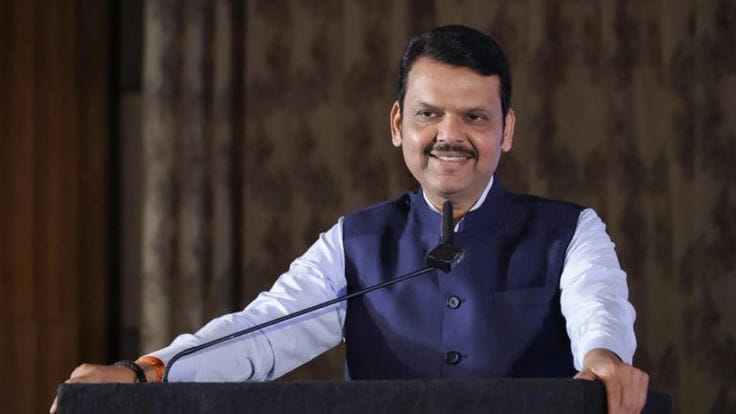
Maharashtra Chief Minister Devendra Fadnavis speaks at Hutatma Chowk on Maharashtra Day amid the state’s heated Marathi language debate.
Fadnavis on Marathi Row
Mumbai saw a sharp political message on Maharashtra Day as Chief Minister Devendra Fadnavis addressed the growing controversy over the mandatory learning of Marathi by non-Marathi-speaking rickshaw drivers. While supporting the use of the local language, he made it clear that the state government will not accept violence, coercion, or intimidation in the name of linguistic pride.
His remarks came at a time when the issue has become politically charged, with protests from rickshaw unions, a revised compliance deadline, and strong reactions from Maharashtra Navnirman Sena chief Raj Thackeray. The language debate has now moved beyond administration and into the larger conversation about identity, migration, and social harmony in Maharashtra.
What Fadnavis Said
Fadnavis said that those living in Maharashtra should learn Marathi, but he drew a firm line against forceful or aggressive behaviour. He said the state has never been narrow-minded and rejected the idea that migrants should be excluded or treated as outsiders. NDTV has covered the full story.
He also referred to the Maharashtra Dharma associated with Chhatrapati Shivaji Maharaj, saying it does not support exclusionary politics. His message was essentially two-fold: Marathi is important, but violence in the name of Marathi is not acceptable. In simple words, language ka respect hoga, lekin zor-zabardasti nahi.
Why The Issue Escalated
The controversy began after the state government decided to mandate that non-Marathi-speaking rickshaw drivers learn Marathi. That policy immediately sparked debate because language in Maharashtra is not just a communication tool; it is closely tied to identity and politics.
The government had planned a phased training programme, but protests from rickshaw unions led to an extension of the compliance deadline until August. This delay created more political noise, especially from groups that wanted a stricter and faster response. The issue quickly became less about language classes and more about political symbolism.
Raj Thackeray’s Reaction
The language debate became even sharper after Raj Thackeray questioned how anyone could have the “audacity” to refuse to speak Marathi. He also criticised the government for being too lenient and suggested that permits of non-compliant drivers should be cancelled immediately.
That kind of statement pushed the issue into a more confrontational space. Fadnavis’s response was aimed not just at policy enforcement but also at the tone of politics around language. He explicitly condemned the “Khall-Khatyak” style of politics often associated with the MNS, signalling that the government wants compliance without street-level aggression.
Background And Context
Language politics in Maharashtra has a long history, especially in Mumbai and other urban areas where migration has shaped the workforce, transport sector, and everyday social life. The state has always strongly promoted Marathi, but it has also remained a major destination for people from across India. That balance is delicate, and whenever language becomes a political tool, tensions rise quickly.
The current debate reflects that broader tension. On one side is the desire to preserve Marathi as a living public language. On the other is the reality that Maharashtra depends on a mixed workforce, many of whom are migrants who may not be fluent in Marathi but still contribute to the state’s economy.
Timeline
Maharashtra government decides that non-Marathi-speaking rickshaw drivers should learn Marathi.
A phased training plan is prepared.
Rickshaw unions protest, leading to an extension of the deadline until August.
Raj Thackeray publicly criticises the delay and demands tougher action.
On Maharashtra Day, Devendra Fadnavis speaks at Hutatma Chowk and warns against violence.
Also Read: Tragic Cruise Boat Sinks at Bargi Dam, Jabalpur: 9 Confirmed Dead
Why This Matters
This matters because language debates can easily affect daily life, especially in transport, street work, and public service sectors. Rickshaw drivers interact with thousands of passengers, so language proficiency can improve communication and reduce friction.
At the same time, the issue matters because forcing language identity through threats can create fear and resentment. A state as diverse as Maharashtra needs practical integration, not conflict-driven politics. Yeh issue kaafi important hai because it directly touches both cultural pride and social stability.
India Angle
For Indian readers, this story hits a familiar national theme: how regional identity and migration coexist in big cities. Mumbai, Pune, and other Maharashtra cities rely on workers from many parts of India, and those workers often learn local customs and language gradually.
At the same time, people in Maharashtra also want Marathi to remain visible and respected in public life. That is why this debate resonates beyond the state. It is part of a larger Indian conversation about linguistic identity, federal balance, and the limits of political activism.
Analysis
My analysis is that Fadnavis is trying to walk a careful line. He is supporting Marathi pride, which is politically important in the state, while also distancing his government from aggressive language policing. That is a smart stance because it helps him retain cultural credibility without endorsing street violence.
What The Government Wants
The government’s position appears to be that Marathi should be learned and respected, but the process should be educational rather than coercive. That distinction is important because it frames language as a civic skill, not a weapon of exclusion.
Fadnavis also said the government intends to help residents learn the language. That suggests the state may prefer structured training or awareness measures instead of public punishment and confrontation. If implemented well, this approach could reduce friction while still promoting Marathi use.
Connection To Labour Day And Maharashtra Day
Fadnavis used the occasion of Maharashtra Day to speak not only about language but also about workers and the state’s future. He extended greetings to the Marathi diaspora and paid tribute to labourers on International Labour Day, quoting Annabhau Sathe’s famous line about the dignity of workers.
That part of his speech was not accidental. It tied linguistic pride to a wider message about Maharashtra’s contribution to India’s growth. He projected the state as one that respects workers, values its heritage, and continues moving forward on the path of progress.
Why This Matters
This matters because the way a state handles language politics can either strengthen social harmony or deepen division. If the message is “learn Marathi and feel welcome,”welcome”, the policy is easier to accept. If the message becomes “speak Marathi or face consequences”,welcome”, the discussion turns hostile very quickly.
For the millions who live and work in Maharashtra, especially migrants and transport workers, the tone of enforcement is just as important as the policy itself. That is why Fadnavis’s emphasis on no violence is significant. It signals that language respect should not come at the cost of peace.
What Next
The next step will likely be the rollout of the government’s Marathi learning plan for rickshaw drivers and possibly other groups in public-facing work. The real test will be whether the state can enforce the policy without triggering more protests or political agitation.
Political reactions are also likely to continue, especially from leaders and groups who see the issue as part of a larger identity battle. If the government succeeds in making language learning feel practical rather than punitive, the controversy may cool down. If not, the debate could return with more intensity.
Conclusion
Chief Minister Devendra Fadnavis has made his position clear: Marathi should be learned by those living in Maharashtra, but violence and intimidation have no place in the process. His comments at Hutatma Chowk came at a sensitive moment, as the state continues to debate how to balance cultural pride with the realities of a diverse, migrant-heavy society.
The bigger message is that Maharashtra can be proud of its language without becoming hostile in enforcing it. That balance will decide whether this issue becomes a model of cultural integration or another flashpoint in state politics.
Written By A. Fadnavis on Marathi Row: Learn Marathi in Maharashtra, But No Violence, CM Says on Maharashtra Day