After a slow start to the tournament, Belgium finally found their attacking groove at the right time. New Zealand, who came into the match with just one point, could not match the quality and sharp finishing of Belgium.
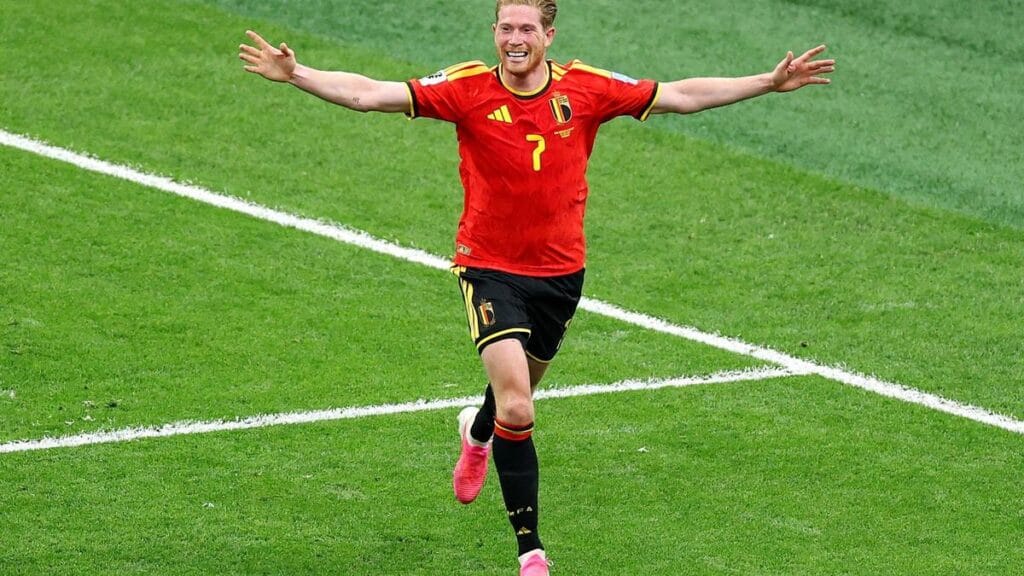
Belgium players celebrate after a 5-1 victory over New Zealand that secured top spot in Group G. Image Credit: The Hindu
FIFA World Cup 2026: Belgium defeated New Zealand 5-1 in their final Group G game on Friday to finish top of the group and qualify for the FIFA World Cup 2026 knockout rounds. The result was exactly what Belgium needed after a slow start to the tournament, with the team finally showing the firepower expected from a squad featuring Kevin de Bruyne, Romelu Lukaku and Jeremy Doku. New Zealand, who came into the match with one point from two games, were unable to match Belgium’s pace, quality or finishing power.
This was a must-win match for Belgium, and they played like a side that understood the stakes. The attacking trio did the damage, the midfield dictated play, and Belgium turned a tense group-stage situation into a comfortable win. For New Zealand, it was a difficult night in a tournament where they had already struggled to find consistency.
How Belgium Won So Convincingly
Belgium’s victory was built on control, precision and attacking depth. The star-studded frontline had been quiet earlier in the tournament, but on Friday they finally found rhythm. Leandro Trossard was the standout with a brace, while Kevin de Bruyne added his usual influence and end product. Romelu Lukaku and Alexis Saelemaekers also got on the scoresheet, showing that Belgium’s threat came from multiple areas rather than one individual alone. The Hindu has covered the full story.
That variety was important because New Zealand could not focus on stopping just one player. If Lukaku was drawing attention in the box, De Bruyne was creating from deeper positions. If Trossard drifted into space, he became dangerous quickly. That balance made Belgium extremely difficult to defend against once they settled into the match.
Belgium’s early sluggishness in the tournament may have created some doubt before this game, but they put those concerns aside with a clinical display. They were sharper in front of goal and more organized in their attacking movements. Once they gained control, New Zealand were forced onto the back foot for long stretches.
New Zealand’s Struggles
New Zealand entered the match with a single point after drawing 2-2 with Iran and losing 3-1 to Egypt. That meant they needed a strong response, but they were up against a Belgium side with more individual quality and a far more dangerous attack when fully switched on.
Darren Bazeley’s side tried to compete, but the gap in attacking depth was clear. New Zealand had moments of effort and physical resistance, but they could not sustain enough pressure to truly trouble Belgium. Once the goals started flowing for the Europeans, the game slipped out of reach.
That is often the challenge for teams like New Zealand at World Cup level. They can work hard and stay organized, but if the opponent has elite finishers in form, the margin for error disappears. Belgium punished the gaps ruthlessly.
Why Belgium Needed This Result
Belgium’s route into the knockout rounds was not straightforward. Their star-packed attack had started the tournament slowly, and the team had drawn their first two matches. That kind of beginning creates pressure, especially for a side expected to go deep in the competition. A final group match with knockout stakes can bring out either tension or quality. On Friday, Belgium chose quality.
The win matters because it resets Belgium’s tournament narrative. Instead of going into the knockouts under a cloud of underperformance, they now carry confidence and momentum. Tournament football is often about timing, and Belgium may have peaked just when they needed to.
The performance also reinforces the idea that Belgium’s experience can still matter. De Bruyne, Lukaku and Trossard have the ability to decide matches when they are at their best. Against New Zealand, that class was fully visible.
Background and Context
Belgium came into the World Cup with high expectations because of their attacking talent. A team that includes Kevin de Bruyne and Romelu Lukaku is always going to attract attention, and adding players like Jeremy Doku and Leandro Trossard only increases the pressure to produce. But results do not always follow reputation, and the first two matches were sluggish enough to raise questions.
New Zealand, meanwhile, have been a side fighting for respect and consistency on the international stage. Their draw with Iran offered some promise, but the loss to Egypt and then the heavy defeat to Belgium showed the scale of the challenge in a World Cup group containing stronger opposition.
This match therefore became more than just a final group fixture. For Belgium, it was about salvaging their campaign and taking control of their knockout destiny. For New Zealand, it was about ending the group stage with dignity and perhaps proving they could compete for longer stretches against top-level opponents. Belgium did not allow that to happen.
Timeline
Opening phase: Belgium start cautiously but begin to settle into attacking rhythm.
First half: Leandro Trossard scores to give Belgium early control.
Mid-match: Kevin de Bruyne adds another, strengthening Belgium’s lead.
Later stages: Romelu Lukaku and Alexis Saelemaekers join the scoresheet.
Trossard strikes again: Belgium complete a brace for the winger.
Full time: Belgium wins 5-1, tops Group G and advances to the knockout stage.
Why This Matters
This matters because tournament football is often decided by when a team finds form. Belgium were under pressure after two sluggish outings, and this result shows they still have the talent to produce a big performance. Yeh issue kaafi important hai because a strong team that wakes up late can still become dangerous in the knockout stage.
It also matters because the group standings determine the entire next phase of the tournament. By finishing top, Belgium improve their pathway and avoid the uncertainty that comes with finishing second. That can shape how far they go.
For New Zealand, the result underlines the gap that still exists between teams trying to build in the tournament and established European powers. They will take lessons from the campaign, but the scoreline also shows how ruthless the World Cup can be.
India Angle
For Indian football fans, Belgium’s performance is a reminder of how much depth and structure matter in tournament football. It is not enough to have star names alone; those players need to click as a unit. In Hinglish, seedhi baat yeh hai: big names ke saath timing bhi chahiye, warna start slow ho jata hai.
Indian viewers often follow Belgium because of players like De Bruyne, Lukaku and Trossard, who bring the kind of attacking football that makes big tournaments fun to watch. A 5-1 result is the sort of game that gets shared widely and discussed across social media, especially among fans who enjoy open, attacking football.
The New Zealand angle also matters for India because it highlights the challenge of closing the gap with top-tier football nations. India’s own development path needs the kind of tactical discipline and squad depth that Belgium displayed once they found their rhythm.
Analysis
My view is that Belgium’s biggest success here was not just the result, but the timing of the performance. Their stars finally delivered in a match that mattered, and that could change the mood around their tournament. If De Bruyne and Lukaku remain sharp, Belgium becomes much more dangerous.
New Zealand’s performance was not without effort, but effort alone is rarely enough in a game against this level of attacking quality. The difference in finishing made the result look more one-sided than the tactical battle may have been at the start. Once Belgium’s tempo rose, New Zealand could not keep up.
This result also gives Belgium’s fans something tangible to hold onto after two underwhelming games. In tournament football, one convincing win can reset the conversation entirely. That is exactly what happened here.
What Next
Belgium now moves into the knockout rounds as Group G winners and will likely enter the next phase with improved confidence. Their main task will be to maintain the level they found against New Zealand and avoid the slow starts that caused concern earlier in the group.
New Zealand exit the group stage with only one point and a lot of lessons. Their focus will now turn to reflection, development and how to build more competitive depth for future tournaments.
For Belgium, the next challenge is consistency. For New Zealand, it is growth. In World Cup terms, both are important — just at very different levels.
Conclusion
Belgium’s 5-1 win over New Zealand was a statement result at exactly the right time. After a sluggish start to the tournament, they finally looked like the side many expected, with Trossard, De Bruyne, Lukaku and Saelemaekers all contributing to a dominant display. New Zealand fought hard but could not cope with Belgium’s attacking quality, and the result sends Belgium into the knockout stage as Group G winners. If this performance marks the real start of their tournament, they could still be a serious threat.
Written By A. Jack