Brazil came through a nervy round of 32 clash with Japan in Houston, Gabriel Martinelli grabbing the winner in the sixth minute of stoppage time to win 2-1. The result sent the five-time champions through to the quarterfinals and ended Japan’s spirited run after they briefly led through Kaishu Sano’s opener.
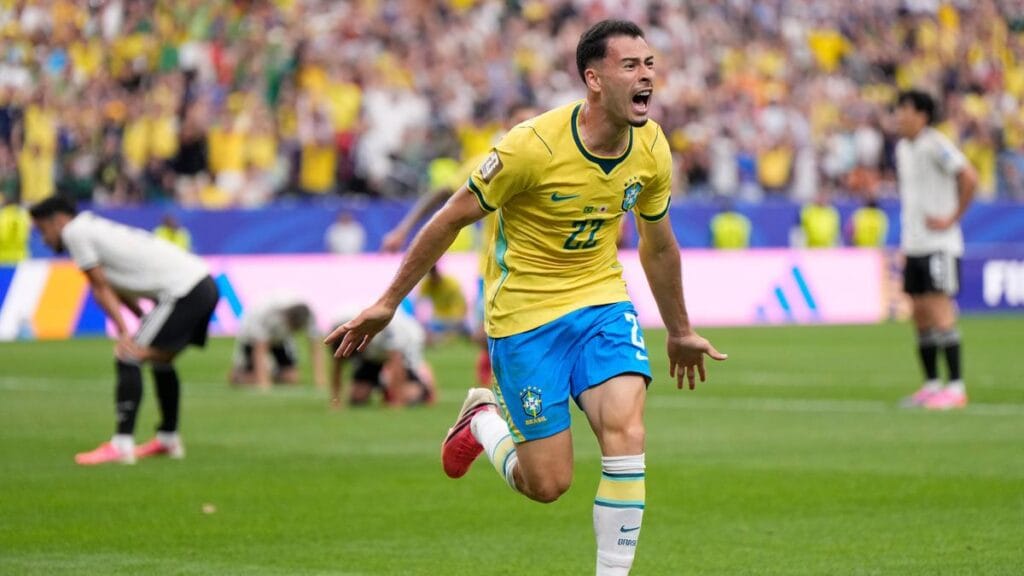
Gabriel Martinelli celebrates after scoring Brazil’s stoppage-time winner against Japan in Houston. Image Credit: The Hindu
FIFA World Cup 2026: Brazil moved into the FIFA World Cup 2026 quarterfinals after Gabriel Martinelli struck in the sixth minute of injury time to beat Japan 2-1 in a gripping round-of-32 contest on Monday in Houston. Japan had taken the lead in the first half through Kaishu Sano, but Brazil responded after the break with Casemiro’s equaliser before Martinelli’s late finish settled the match. The win keeps Brazil’s title hopes alive and extends their momentum after topping Group C.
The result was not just about advancing. It was a reminder of Brazil’s depth, composure and knack for delivering when the pressure rises. Japan played with discipline and intensity, but Brazil’s individual quality eventually made the difference. In knockout football, yeh issue kaafi important hai because one moment can rewrite an entire campaign, and that is exactly what happened here.
How Brazil Turned It Around
Brazil did not begin the match in control. Japan looked sharp and disciplined, and they punished a Brazilian mistake in midfield after 29 minutes when Kaishu Sano stole a misplaced pass and fired a right-footed shot from outside the semicircle into the net. It was a well-taken goal and a deserved lead at that stage because Japan had been organized and alert. The Hindu has covered the full story.
Brazil, however, grew stronger after halftime. The equaliser came in the 56th minute when Casemiro headed home from a Gabriel Magalhaes assist. The timing mattered because Brazil had already come close a few minutes earlier, and their pressure was beginning to build. Once they drew level, the match opened up and both sides started chasing the decisive goal.
Gabriel Martinelli then delivered the match-winning moment late in stoppage time. Having come on as a second-half substitute, he timed his run and finish perfectly when the game seemed destined for extra time. That is the sort of contribution that often separates a good bench player from a tournament hero. Brazil’s victory was built on patience, tactical adjustment and the willingness to keep attacking until the final whistle.
Japan’s Strong Start and Painful End
Japan will feel frustrated because they had Brazil under real pressure for long stretches. Their opening goal showed quick thinking and sharp execution, and for most of the game they defended with discipline. But in knockout football, being organised is not enough if the opponent has enough quality to break you down late.
Japan’s approach was smart but came under increasing pressure as Brazil pushed harder in the second half. Goalkeeper Zion Suzuki made important interventions, including stopping a Bruno Guimaraes header in the 52nd minute and then seeing Casemiro’s follow-up effort bounce off a defender’s head and his face. Those moments show how close Japan came to holding on.
Still, the final result will sting because Japan had the game in their hands for a long period. They were compact, determined and brave, but Brazil’s late surge proved too strong. Japan have still built a strong tournament reputation, but this loss also reminds everyone how unforgiving the knockout stage can be.
Brazil’s Depth Made the Difference
One of Brazil’s biggest advantages was the ability to change the game from the bench. Martinelli’s winner is the perfect example of why squad depth matters in a World Cup. Starting lineups are important, but knockout matches are often decided by substitutes who can exploit tired legs and shifting momentum.
Casemiro’s equaliser also underlined Brazil’s experience. He has the composure and timing needed in high-pressure matches, and his header brought the team back into the contest when they needed calm rather than panic. Around him, players like Vinicius Junior continued to threaten. Vinicius had a chance to put Brazil ahead in the 58th minute, but Suzuki’s save kept Japan alive a little longer.
Brazil did not dominate in a flashy way, but they controlled the most important part of the match: the final outcome. That is often what champions do. They may not play perfectly for 90 minutes, but they stay alive, absorb pressure and strike when the opening appears.
Background and Context
This victory came on a meaningful date for Brazil. Monday’s match fell on the anniversary of their first World Cup championship in 1958, when a 17-year-old Pele scored twice in the final against Sweden. That historical connection gave the result even more symbolic weight for Brazilian fans.
Brazil have long been one of the World Cup’s defining teams, and this win continued a strong record against Japan. The result was Brazil’s 12th victory in 15 games against Japan, with the two teams also having drawn twice. Japan’s first win in the series came only recently in a friendly in Tokyo in October, showing that while Brazil still hold the overall edge, Japan are no longer intimidated by the matchup.
There is also a deep cultural connection between the two countries. Brazil is home to about 2.7 million Japanese descendants, the largest Japanese population outside Japan. That relationship extends into football as well, with legendary Brazilian figures such as Zico helping shape the development of the Japanese game. Zico moved to Japan in 1991 to play for Kashima Antlers and later coached the Japan national team from 2002 to 2006, helping them reach the 2006 World Cup.
Japan’s current campaign had already been impressive before this loss. They reached the round of 32 as runners-up in Group F after draws with the Netherlands and Sweden and a win over Tunisia. The defeat to Brazil ends a 10-game unbeaten streak dating back to a loss to the United States in September, which makes the result more painful but also shows how competitive this Japanese side has become.
Timeline
29th minute: Kaishu Sano gives Japan the lead after intercepting a misplaced pass.
52nd minute: Brazil start pushing hard, but Bruno Guimaraes is denied by Zion Suzuki.
56th minute: Casemiro heads in the equalizer for Brazil.
58th minute: Vinicius Junior nearly gives Brazil the lead, but Suzuki saves.
Late stoppage time: Gabriel Martinelli scores the winner in the sixth minute of injury time.
Full time: Brazil win 2-1 and advance to the quarterfinals.
After the match: Japan’s 10-match unbeaten run ends.
Also Read: Canada Score Stoppage-Time Winner Against South Africa to Reach World Cup 2026 Last 16
Why This Matters
This matters because Brazil are now one step closer to another World Cup title, and they did it by showing resilience under pressure. Knockout-stage wins often become confidence builders, and this one could be especially important because it came after Brazil had to fight back from a deficit. That kind of victory can shape a team’s belief for the rest of the tournament.
It also matters because Japan showed they are no longer just a team that participates—they challenge elite sides for long periods. Even in defeat, they displayed tactical maturity, pressing intelligence and defensive discipline. Yeh issue kaafi important hai because it shows how global football is becoming more competitive, with fewer matches decided purely by reputation.
For fans, the match delivered exactly what knockout football should: tension, momentum shifts and a dramatic ending. For the World Cup as a whole, games like this are a big reason the tournament remains so compelling.
India Angle
For Indian football fans, this result is easy to connect with because it shows the value of bench strength and late-game mentality. In Hinglish, seedhi baat yeh hai: match 90 minute tak tab tak khatam nahi hota jab tak final whistle na baj jaye. Brazil’s substitutes changed the game, and that is a lesson every developing football nation can learn from.
Indian supporters who follow international football often admire Brazil for flair, but this match showed a different quality: patience. Brazil did not panic when they went behind. They kept pushing, trusted their quality and used the full squad to win. That kind of tactical maturity is something Indian football can aim for over time.
Japan’s performance may also resonate with Indian viewers because it reflects disciplined football without needing superstar dependence. For Indian football development, that is a useful example too—well-organized teams can compete if they stay mentally sharp and tactically unified.
Analysis
My opinion is that Brazil deserves credit not because they were perfect, but because they were persistent. Tournament winners often need that trait more than aesthetic dominance. A late winner after trailing is often a sign of a team that believes in its own depth and keeps its structure even when the game gets messy.
Japan, meanwhile, should not be defined by the loss alone. They forced Brazil to work hard and stayed in the match for a long time. But at this level, especially against a side like Brazil, one lapse in midfield or one late defensive miss can decide everything. That is the cruel side of knockout football.
From an SEO and football-news angle, this story also works because it combines a famous team, a late winner, a comeback, and a clear next-step opponent. Readers want to know who scored, when they scored, and what happens next—and this match delivers all three.
What Next
Brazil will now face either the Ivory Coast or Norway on Sunday in East Rutherford, New Jersey, in the quarterfinals. That will be another major test, and the way Brazil responded here will give them confidence heading into the next round.
Japan will leave the tournament disappointed, but they can take pride in a performance that pushed one of the game’s giants to the limit. Their focus will now shift to recovery and planning for future major tournaments.
For Brazil, the bigger question is whether this late, hard-fought win becomes a launching point for a deeper run. If they keep finding decisive moments from different players, they will remain one of the favorites.
Conclusion
Brazil’s 2-1 win over Japan was a classic World Cup knockout battle: tense, tactical and decided by a late flash of quality. Kaishu Sano gave Japan hope, Casemiro pulled Brazil level and Gabriel Martinelli delivered the stoppage-time winner that sent the five-time champions into the quarterfinals. The result keeps Brazil’s title dream alive and ends Japan’s impressive run, while also reminding fans why knockout football remains the most unforgiving and thrilling part of the World Cup.
Written By A. Jack