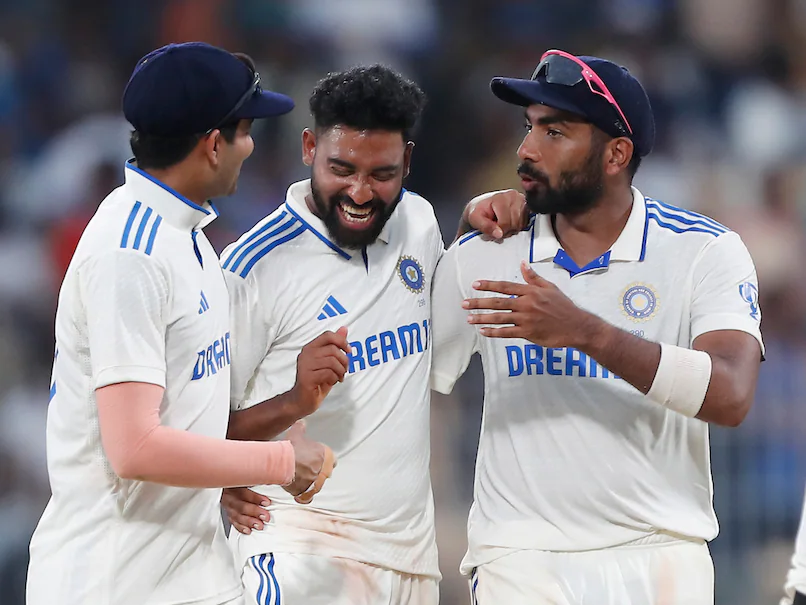
Both sides arrived into the bronze match with bruised egos after semi-final defeats but the game still delivered goals, chaos and late drama. France pushed hard through Mbappe and Michael Olise but England stood firm to finish the tournament on a high.
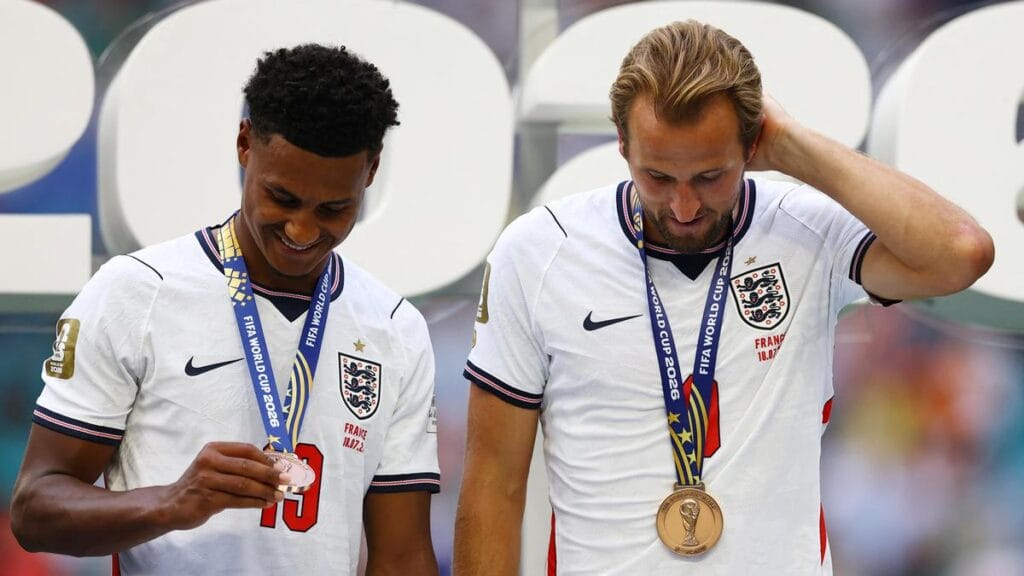
England and France battle in a wild World Cup third-place playoff that ended 6-4. Image Credit: The Hindu
FIFA World Cup 2026: England edged France 6-4 in one of the most chaotic World Cup third-place matches in recent memory on Saturday, July 18, 2026. The bronze-medal game, already shaped by disappointment after both teams missed out on the final, turned into a stunning goal-fest in which England ultimately outlasted France despite sustained pressure from Kylian Mbappe and Michael Olise.
The result gave England a consolatory victory after their painful late collapse against Argentina in the semi-final, while France was still reeling from being outplayed by Spain in the other semi. Even though neither side reached the final, this match mattered because both teams still had reputations to protect and a strong finish to deliver. Yeh match kaafi important hai because it showed that even a third-place playoff at the World Cup can deliver elite drama, elite talent and historic records.
How the Match Became So Chaotic
From the outset, the game had the feel of two elite teams trying to recover emotionally from semi-final heartbreak. England and France both arrived with attacking quality but also with defensive vulnerability that the other side could exploit. That combination is often what creates high-scoring games: both teams have enough firepower to hurt one another, but neither is able to fully control the tempo. This story was also covered by The Hindu.
England’s attacking rhythm and France’s response made the game swing repeatedly. Kylian Mbappe remained one of France’s sharpest threats, constantly forcing England’s defence to stay alert. Michael Olise also looked dangerous when France pushed forward, giving them the kind of creativity needed to stay in the contest. But England’s backup goalkeeper Dean Henderson stood out with a top-level display, keeping France from turning pressure into a full comeback.
What made the match especially chaotic was the sense that neither team was willing to settle. Third-place games can sometimes feel flat because the final is the real prize, but this one did the opposite. Both sides attacked with purpose, and both seemed determined not to leave the tournament with another disappointing performance. The result was a wild scoreline that felt more like a knockout thriller than a consolation match.
Mbappe’s Historic Moment
Even in defeat, Kylian Mbappe produced a landmark moment. His goal in this match made him the all-time leading scorer in World Cup history. That is a huge achievement because World Cup scoring records are rare, prestigious and often tied to the greatest names in the game.
Mbappé’s record is significant not just because he scored again, but because he did it on the biggest international stage with the whole football world watching. When a player reaches a record of this scale, it changes the way his career is framed. He is no longer just a tournament star or a national hero; he becomes part of the game’s historical memory.
For France, however, the record came in a match they still lost, which gives the moment a bittersweet tone. That is often how football works at the highest level. A player can create history and still leave the pitch on the losing side. In this case, Mbappe’s achievement will be remembered alongside the scoreline, not separate from it. Seedhi baat yeh hai: personal greatness and team disappointment can exist at the same time.
Dean Henderson’s Big Role
England’s second-choice goalkeeper Dean Henderson was one of the decisive reasons the team held on. Against a France side with Mbappe and Olise pushing hard, Henderson had to stay sharp and composed. His performance gave England something they badly needed after a semi-final collapse: security when the pressure came back.
Backup goalkeepers often play under difficult conditions because their chances are limited, and when they do get a big game, the margin for error is tiny. Henderson appears to have handled that responsibility well. In a match full of attacking bursts, a keeper’s calm saves can feel less visible than goals, but they are often what decides the result. In this case, his top form helped prevent France from completely flipping the game.
It is also notable that England’s second-choice goalkeeper ended up playing a major role in a World Cup medal match. That tells you something about squad depth and tournament planning. In long competitions, every player can become important. Yeh bhi ek lesson hai ki football mein bench strength bhi title-level importance rakhti hai.
Background and Context
Both teams came into the third-place playoff with very different but equally painful disappointments. France had been outplayed by Spain in the semi-final, which meant they had to quickly reset mentally for a bronze-medal match they likely did not want to be playing. England, on the other hand, suffered a late collapse against Argentina, a blow that would have been emotionally heavy after being so close to the final.
Third-place matches at the World Cup often carry a strange energy. They are not the final, yet they still involve elite teams and major global attention. Players may be tired, emotional and frustrated, but national pride is still on the line. For England and France, that meant there was enough motivation to keep the game intense even without a trophy at stake.
This match will also be remembered as part of the broader 2026 tournament narrative: high-scoring matches, major stars and repeated moments of drama. In that sense, England vs France fit the tournament’s entertainment profile perfectly. It was a chaotic, offensive and emotionally charged finish to both teams’ campaigns.
Timeline
Before the match: England and France arrive at the bronze-medal game after semi-final defeats.
France’s semi-final: They are outplayed by Spain.
England’s semi-final: They suffer a late collapse against Argentina.
Saturday, July 18, 2026: The third-place playoff kicks off.
During the match: Mbappe and Olise threaten repeatedly, while Henderson makes key saves.
Later in the game: Mbappe becomes the all-time top scorer in World Cup history.
Final whistle: England win 6-4 in a chaotic classic.
Why This Matters
This matters because a World Cup bronze match can still shape how teams, players and fans remember a tournament. England’s victory means they do not leave empty-handed, which can matter psychologically for the squad and the coaching staff. France, meanwhile, will remember the match for Mbappe’s record but also for the disappointment of losing despite their attacking quality. Yeh issue kaafi important hai because tournament narratives are often built on these small but meaningful finishing moments.
It also matters because records like Mbappe’s redefine football history. When a player becomes the all-time leading scorer in World Cup history, that is not a minor statistic. It becomes part of the sport’s global story. Even fans who did not watch the whole match will remember that milestone.
For England, the win also matters as a confidence-builder after semi-final heartbreak. For France, it is a reminder that attacking brilliance alone is not enough if the team cannot control key defensive moments. In major tournaments, the difference between celebration and regret is often razor-thin.
India Angle
For Indian fans, this game will be widely followed because World Cup knockout drama always draws attention in India, especially when global superstars like Mbappe are involved. In Hinglish, seedhi baat yeh hai: jab Mbappe jaisa player record todta hai, then football fans across India notice. The match is also a reminder of how big tournaments keep even the third-place game entertaining when top teams decide to go all out.
India’s football audience has grown significantly over the years, and many fans now follow major international matches late into the night or through highlight clips the next morning. A 6-4 World Cup bronze game is exactly the kind of spectacle that travels fast on social media and among football communities. It gives fans a reason to discuss tactics, goalkeeping and individual brilliance.
There is also an inspiration angle for Indian football followers. Matches like this show the value of squad depth, goalkeeper readiness and attacking confidence. For developing football cultures, these are useful lessons. Even in a bronze match, the intensity does not drop. That competitive standard is something Indian football hopes to match in the future.
Analysis
My opinion is that this match will be remembered more for its entertainment value than for tactical purity. The scoreline suggests a game where both teams attacked relentlessly and defended unevenly. That can happen in a bronze match, especially when players are physically and emotionally drained. But from a viewer’s perspective, it produced exactly what football fans want: goals, tension and a real sense that anything could happen.
I also think Dean Henderson deserves more attention than backup goalkeepers usually get. In a match like this, the spotlight naturally falls on Mbappe’s record, but the goalkeeper’s contribution can be just as important. If Henderson had not made key saves, the game might have ended differently. England’s ability to finish third rather than fourth likely depends heavily on that performance.
From an editorial perspective, the match is also a reminder that World Cup third-place games still matter. Some observers dismiss them because the final is the true prize. But when teams like England and France bring this level of intensity, the bronze game becomes a legitimate headline event. That is good for the tournament, good for the fans and good for the global story of football.
What Next
The next step for both teams is recovery and reflection. England will look to take confidence from the result and use the performance as proof that they can respond after disappointment. France will have to absorb the emotional contrast of Mbappe’s historic achievement alongside a painful defeat.
For Mbappe, the record will likely dominate the conversation around his tournament even though France did not reach the final. That kind of legacy moment tends to grow over time. For Henderson, this performance may strengthen his reputation as a reliable option in high-pressure games.
Looking ahead, the focus will shift from the bronze match to what these teams do next in the long cycle after the World Cup. Coaches, selectors and players will analyse what worked, what failed and how to build on the tournament going forward. In major football nations, even a third-place game can influence decisions for months.
Conclusion
England’s 6-4 win over France in the World Cup bronze medal match was chaotic, dramatic and full of elite-level moments. Kylian Mbappe made history as the all-time leading World Cup scorer, but England’s second-choice goalkeeper Dean Henderson helped secure the victory with a standout display. Both teams entered the game disappointed after semi-final exits, yet they still produced one of the tournament’s most entertaining matches. In the end, England walked away with third place, France left with a record and a loss, and fans got a match that will be remembered for its chaos and quality.
Written By A. Jack