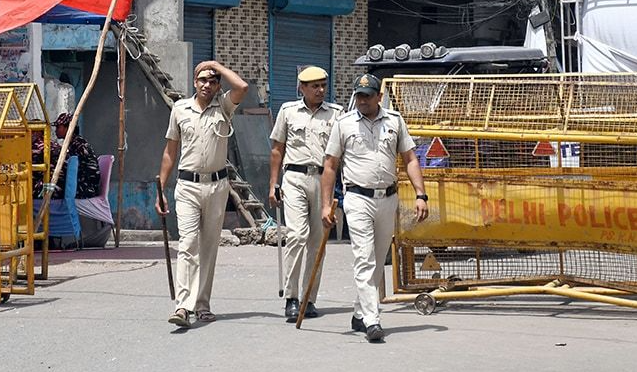
The incident caused a brief disruption to the programme as supporters surged towards the stage and chaos ensued at the protest site. The episode happened just hours after police removed activist Sonam Wangchuk from Jantar Mantar and shifted him to a hospital.
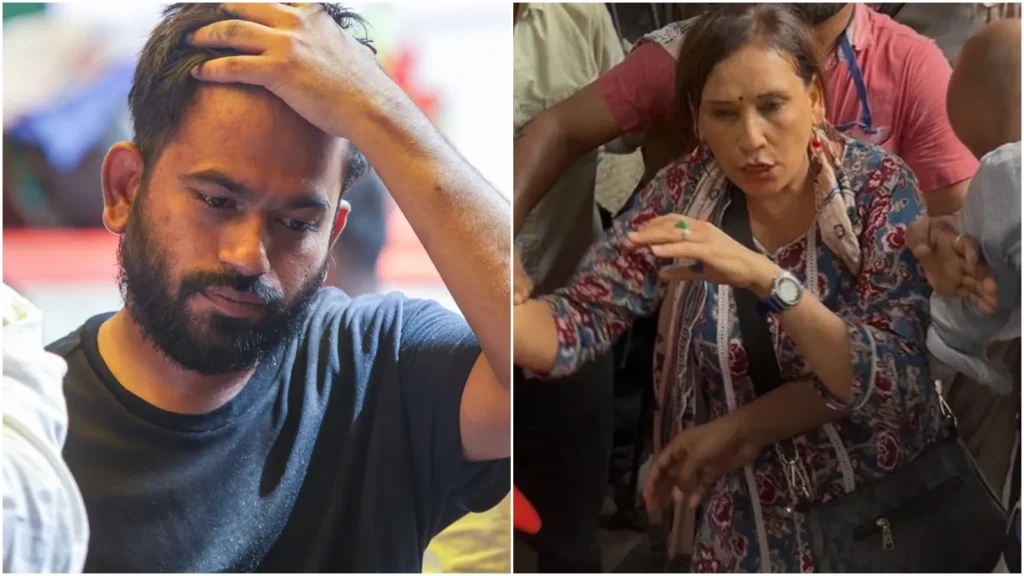
Jantar Mantar witnessed a sudden commotion when a woman allegedly threw an ink-like liquid at CJP founder Abhijeet Dipke during a public gathering. Image Credit: IndianExpress
CJP Protest in Jantar Mantar: New Delhi turned into a scene of fresh drama on Saturday afternoon after a woman allegedly threw an ink-like liquid at Cockroach Janata Party founder Abhijeet Dipke while he was addressing a gathering. The incident happened only hours after police had carried out an operation at the same protest site to shift activist Sonam Wangchuk to a hospital.
According to police sources, the woman was detained soon after the incident. Her identity and motive were not immediately known. The sudden act briefly disrupted the programme, with supporters rushing toward the stage and creating a moment of confusion. Yeh incident kaafi important hai because it shows how quickly a protest site can shift from political speech to public disorder.
What Happened at the Protest Site
The incident took place during a gathering linked to the CJP protest at Jantar Mantar. Abhijeet Dipke was addressing supporters when the woman approached and allegedly threw an ink-like liquid at him. Although the exact nature of the liquid has not been formally clarified in the information available, it was enough to trigger immediate commotion and force a temporary halt in the event.
Supporters of the protest reportedly rushed toward the stage after the attack, and the atmosphere at the venue became tense for a short while. Police sources later said the woman had been detained, which suggests the authorities acted quickly to prevent any escalation. At this stage, there is no confirmed public explanation for why she acted or whether she was connected to the protest, opposed to it, or operating on her own. This story was also covered by TheHindu.
The timing of the incident is also notable. It happened on a day when Jantar Mantar was already under tension because police had removed Sonam Wangchuk from the site earlier in the morning and taken him to hospital. That means the protest zone had already seen police movement, public attention and crowd agitation before this second incident occurred. Seedhi baat yeh hai: same jagah par do high-tension developments aane se situation aur bhi sensitive ho gayi.
Who Is Abhijeet Dipke and What Is CJP?
Abhijeet Dipke is the founder of the Cockroach Janata Party, better known as CJP, a satirical online movement that has taken a very public role in the demand for educational reforms in India. The group has been associated with protests against the alleged NEET paper leak and has also called for the resignation of Education Minister Dharmendra Pradhan.
CJP’s style is unusual because it combines satire, activism and a strong online presence. That makes its public gatherings more visible than a typical protest. It also means that any disturbance involving the group is likely to attract attention, especially at a site like Jantar Mantar, which has long been associated with demonstrations in the national capital. The attack on Dipke therefore becomes more than just a personal incident; it also becomes part of a broader protest narrative.
In India, protest spaces often become stages not only for speeches but also for political symbolism. When a founder or face of a movement is targeted, the event gets amplified. That is why this moment matters beyond the immediate confusion at the venue. It raises questions about protest security, crowd management and the possibility of provocations at sensitive public gatherings.
Why This Might Have Happened
At the time of reporting, the motive behind the act was not known. That means any explanation must be treated carefully. The woman may have been a protest critic, a disruptive participant, someone seeking attention, or a person with a personal grievance. But without a statement from police or the woman herself, no firm conclusion should be drawn.
What can be said is that the protest environment at Jantar Mantar had already become emotionally charged. Wangchuk’s hospital shift earlier in the day, combined with continued activism around the NEET issue, likely created a tense backdrop. In such situations, even a small provocation can trigger a bigger reaction. Protests in major cities often attract supporters, opponents, curious onlookers and opportunists all at once.
That is why police presence and crowd control become so important. A demonstration is not only about speech; it is also about maintaining order so that genuine dissent does not turn into chaos. The fact that the woman was detained suggests authorities viewed the act as a breach of order serious enough to merit immediate intervention.
Background and Context
Jantar Mantar has long been one of India’s most visible protest sites. It is where farmers, students, activists, political parties and civil society groups come to draw national attention to a cause. Because of that, it often becomes a flashpoint when multiple movements converge or when the political temperature rises.
Saturday’s incident came at a moment when the site was already drawing intense public interest because of Sonam Wangchuk’s hunger strike and his removal to Safdarjung Hospital. The CJP protest was running in the same broader atmosphere of education-related anger and political scrutiny. That created a crowded and volatile environment, where different narratives were overlapping at once.
The CJP, being an online satirical movement, also stands out from traditional protest groups. Its methods are more symbolic and media-friendly, which means disruptions can spread quickly across social media and news cycles. In a country like India, where political imagery travels fast, even a brief disruption can turn into a major talking point. Yeh bhi ek reason hai why this story matters — it is not just about one stage incident but about how protest politics in India is evolving.
Timeline
Earlier on Saturday: Police remove Sonam Wangchuk from Jantar Mantar and shift him to the hospital.
Later in the day: CJP protest activity continues at the same site.
During the gathering: Abhijeet Dipke is addressing supporters.
Suddenly: A woman allegedly throws an ink-like liquid at him.
Immediately after: Supporters rush toward the stage and commotion breaks out.
Soon after: Police sources say the woman has been detained.
Also Read: Sonam Wangchuk Shifted to Safdarjung Hospital on 21st Day of Hunger Strike in Delhi
Why This Matters
This matters because it shows how fragile protest spaces can become when multiple tensions overlap. Jantar Mantar is a symbolic protest site, but it also needs discipline and safety. When an individual can approach a public speaker and throw liquid at them, it raises questions about how well crowds are being screened and how secure political events really are. Yeh issue kaafi important hai because public gatherings should allow free speech without inviting physical disruption.
It also matters because incidents like this can distract from the protest’s actual purpose. CJP was there to push an education-related cause, but the attack on its founder may now dominate headlines. That shift can weaken the message of the movement and turn public discussion toward drama rather than substance. In politics and activism, that is often what happens when one disruptive act overtakes the original agenda.
There is also a broader democratic concern. India’s protest culture depends on the ability of people to assemble, speak and disagree peacefully. If public events start becoming scenes of physical interference, it can create a chilling effect. Organisers may become more cautious, supporters may feel unsafe and police may have to impose stricter controls. That is not ideal for a healthy public square.
India Angle
For Indian readers, the story is relevant because it reflects the growing intensity of issue-based protests in Delhi. Whether the topic is education reform, exam leaks or activist movements, the capital remains the place where these debates are taken directly to the street. In Hinglish, seedhi baat yeh hai: Delhi ke protest grounds ab sirf speeches ke liye nahi, high-voltage drama ke liye bhi known ho rahe hain.
The incident also touches a very Indian pattern: when a protest gains visibility, counter-reactions, interruptions and symbolic acts often follow. That can include slogans, heckling, or in some cases physical gestures like throwing ink or liquid. Such acts get attention quickly, especially online, but they also risk reducing serious issues to viral moments.
For people watching from across India, the key takeaway is simple. Protest is a democratic right, but it must be protected from disruption. The public should be able to debate big national questions without fear or confusion. That balance is what gives protest its legitimacy.
Analysis
My view is that the most important part of this story is not the liquid itself, but the environment that allowed the incident to happen. A protest site that is already under stress needs tighter control, especially when multiple groups and major headlines are overlapping. If this was a spontaneous act, it still points to weak crowd discipline. If it was deliberate, then it becomes a more serious question of protest security and intent.
I also think the CJP protest will now receive even more attention because of the attack. In media terms, this is often how secondary incidents amplify a movement’s visibility. But that can be a double-edged sword. More attention can help a cause spread, yet it can also distract from the issue being raised. The challenge for organisers is to keep the narrative focused on the demand, not the disruption.
What Next
The next step will likely be a police inquiry into the woman’s identity, motive and any connection she may have had to the protest. Authorities may also review how she managed to approach the stage and whether additional security checks are needed for similar events at Jantar Mantar.
For CJP, the immediate priority will be to keep the protest going without letting the incident derail the broader message. Dipke and his supporters may frame the attack as an attempt to intimidate or derail their campaign. If that happens, the incident could become part of their political narrative in the days ahead.
For Delhi Police, the focus will be on maintaining order at Jantar Mantar, especially after a day of back-to-back tense developments. The site may continue to attract activists and media attention, so crowd control will remain important. If more details emerge about the woman or her motive, the story could take another turn quickly.
Conclusion
The alleged ink-like liquid attack on CJP founder Abhijeet Dipke at Jantar Mantar added another layer of drama to an already tense protest site on Saturday. The woman was detained, but her motive remains unclear, and police have not yet given a full explanation. Coming just hours after the removal of Sonam Wangchuk from the same venue, the incident shows how quickly a protest space can swing from political messaging to disorder. For India’s democracy, the bigger lesson is clear: protest must remain peaceful, secure and focused on the issue at hand, not consumed by disruption.
Written By A. Jack