France advanced to a third straight World Cup semifinal with a 2-0 victory over Morocco. Kylian Mbappe and Ousmane Dembele scored in the second half and Morocco couldn’t rekindle the magic that had defined much of its earlier run.
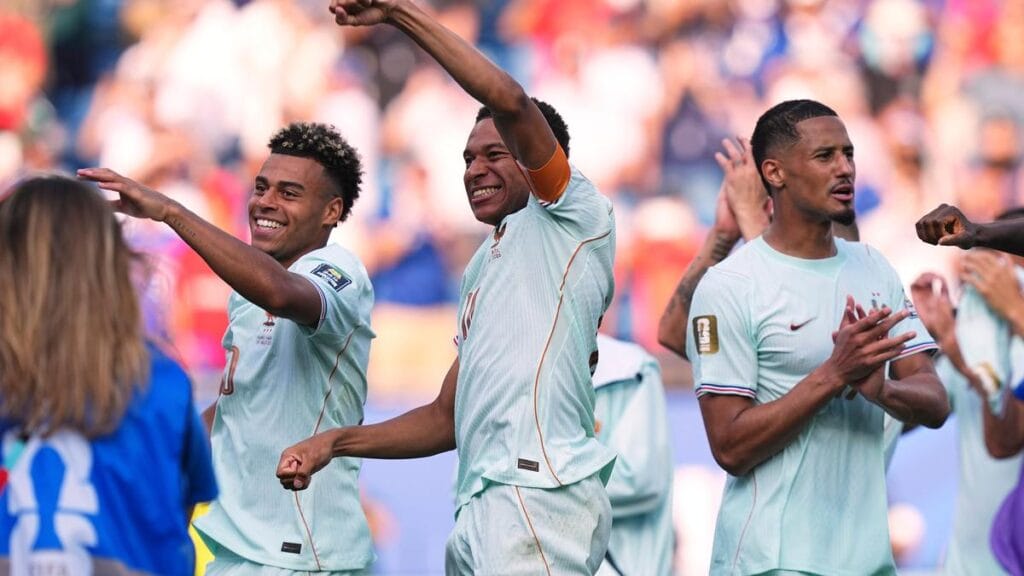
France celebrates a 2-0 quarter-final win over Morocco in Boston as Mbappe and Dembele once again deliver on the big stage.
FIFA World Cup 2026: France produced a professional and efficient performance to defeat Morocco 2-0 in the FIFA World Cup quarterfinal at Boston on July 9, 2026. Kylian Mbappe and Ousmane Dembele scored in the second half to send the two-time champions into a third consecutive World Cup semifinal, while Morocco struggled to impose itself in a match that never truly matched the intensity of their earlier games.
The result was a clear statement from France. Even after Mbappe missed a first-half penalty and later appeared to be nursing an injury, the team stayed composed and found a way through. For Morocco, it was a disappointing end to a campaign that had promised more after a strong run to the last eight.
Match Summary
France controlled the rhythm of the match for long periods and looked the more dangerous side in attack. Morocco, by contrast, appeared unusually restrained and struggled to create the kind of pressure and transition play that had made them dangerous in previous fixtures. This story is also covered by The Hindu.
The breakthrough came after halftime, with Mbappe getting on the scoresheet and Dembele adding the second to settle the tie. That proved enough for France to close out the game without serious late drama. The win continued their remarkable consistency on the World Cup stage and kept alive their title ambitions.
Mbappe’s missed first-half penalty could have changed the tone of the game, but France never lost its structure. That ability to absorb a setback and remain in control is often what separates top tournament teams from the rest. In this case, France once again showed why it remains one of the most dangerous sides in the competition.
Why France Won
France’s victory came down to control, patience and quality in the final third. Morocco did not press with the same sharpness or confidence it had shown in earlier matches, which allowed France to dictate the tempo for much of the contest. Once France found the first goal, the game opened up in a way that suited its attacking strengths.
Mbappe’s presence always forces defenders to stay alert, and even when he is not scoring immediately, he creates pressure through movement and pace. Dembele also played a key role by converting one of France’s best attacking moments into a decisive goal. The combination of individual quality and tactical balance made the difference.
Morocco, on the other hand, lacked the sharpness required to trouble a disciplined opponent like France. The team that had looked lively in previous rounds appeared subdued here, failing to turn possession into real danger. Against a side with France’s defensive organisation, that usually becomes a major problem.
Mbappe and Dembele Deliver Again
Kylian Mbappe once again played a central role in a World Cup knockout match. Even with the missed penalty in the first half, he remained a constant threat and eventually found the goal that helped France settle the game. That kind of response is what makes elite players so valuable in major tournaments.
Ousmane Dembele’s goal further underlined France’s depth in attack. When multiple forwards can step up in the same match, opponents find it much harder to focus on stopping only one player. France’s attacking structure worked exactly as intended here: one star threatened, another finished, and the team moved on.
There was also concern late in the game when Mbappe seemed to be nursing an injury. Even so, France did not appear to lose control of the match. That may be a point of concern for the semifinal, but for now the focus is on the result and the confidence it brings.
Morocco’s Quiet Night
Morocco entered the quarterfinal with the reputation of being one of the tournament’s most resilient and energetic teams. But against France, they looked far less threatening. Their attacks lacked the punch seen earlier in the World Cup, and they rarely forced France into serious defensive mistakes.
That made the match feel more one-sided than many expected. Morocco never looked completely out of the contest, but there was also little sense that an equaliser was coming once France took the lead. For a team that had previously impressed with its discipline and intensity, this was a quieter, flatter performance.
Even so, Morocco’s overall World Cup run should not be judged solely on this result. Reaching the quarterfinals and competing at this level still reflects a strong campaign. But on the night, France was simply sharper, stronger and more clinical.
What the Result Means
This victory sends France into a third consecutive World Cup semifinal, a major achievement that speaks to the team’s consistency at the highest level. Very few national teams manage that kind of sustained success across multiple tournaments. It shows France has not only talent, but also the mentality required to win deep into the knockout rounds.
The semifinal opponent will be either Spain or Belgium, with that match set for July 14. Both possibilities present different challenges, but France will go in with confidence after another composed knockout performance. The team now sits just one step away from the final.
For Morocco, the focus now shifts to reflection and rebuilding. Tournament football often comes down to small margins, and against a team like France, any missed chance or lapse in intensity can be costly. Still, the overall story of Morocco’s campaign remains positive, even if the quarterfinal ended in frustration.
Background and Context
France came into this quarterfinal with the weight of expectation that follows any top-tier World Cup contender. The team has built a reputation for delivering in knockout football, and this result reinforces that image. Advancing to a third straight semifinal is not just a statistic; it is evidence of continuity, depth and elite tournament management.
Morocco’s presence in the last eight also carried significance. The team had gained attention for its strong performances and ability to frustrate stronger opponents earlier in the competition. That is why this match drew interest well beyond the two teams themselves. Many expected a tighter battle, but France’s control changed that narrative quickly.
Matches like this often become defining moments in a World Cup because they separate teams that can survive pressure from those that can dominate it. France did the latter. Morocco, for once, could not find the rhythm that had made them such a difficult opponent earlier on.
Also Read: Switzerland Edge Colombia on Penalties to Reach First FIFA World Cup Quarter-Final Since 1954
Why This Matters
This matters because the World Cup knockout rounds are where reputations are built and tested. France’s win shows that it continues to function as one of the tournament’s most reliable teams under pressure. In football, consistency at this stage is often more valuable than flair alone.
It also matters for viewers because matches like this shape the tournament’s larger story. A team that reaches three straight semifinals becomes part of World Cup history, and players like Mbappe and Dembele add to that legacy with every decisive goal. For fans, this is the kind of performance that turns a good team into a feared one.
For Morocco, the result is disappointing but still significant. Reaching the quarter-finals keeps their status as a rising force in global football. Even in defeat, their run carries meaning for supporters who have watched the team grow on the biggest stage.
India Angle
For Indian football fans, this match is another reminder of how intense and high-quality World Cup football can be. India may not be in the tournament, but the big-match drama, the star power and the tactical battle still draw huge interest here. In simple terms, yeh match un viewers ke liye bhi important hai jo world football ko closely follow karte hain.
Mbappe’s performance will especially interest Indian fans who follow global stars through highlight clips, social media and live coverage. These matches also help grow football interest in India by showing how elite teams manage pressure and finish games. That kind of exposure matters for the sport’s popularity back home.
Analysis
My view is that Morocco’s subdued performance was the real surprise here. They were not overwhelmed in a chaotic sense, but they were neutralised in a very organised one. France did not give them enough space, and Morocco did not find enough invention to break through.
The missed penalty could have made this a more nervous game, but France’s response was calm rather than frantic. That mental strength will matter a lot if Mbappe’s injury concern becomes serious. If he is fully fit, France will remain one of the favourites. If not, the semi-final could become much more complicated.
What Next
France now turns to the semi-final on July 14, where it will face either Spain or Belgium. That will likely be a far tougher tactical test, especially if the opponent is Spain, who usually bring possession control and pressure in midfield. France will need the same balance it showed here, plus perhaps a more efficient start in front of goal.
Morocco, meanwhile, will head home knowing its World Cup journey ended one step short of the last four. The immediate task will be to assess what worked in the tournament overall and where the team needs to improve for future campaigns. Even in defeat, this run adds to the team’s growing reputation.
Conclusion
France’s 2-0 win over Morocco was a composed and convincing quarterfinal performance built on second-half goals from Mbappe and Dembele. Morocco, so impressive in earlier matches, could not bring the same energy or threat, and France made them pay. With a third consecutive semifinal now secured, Les Bleus remain firmly in the hunt for the World Cup title. The next test will be even bigger, but for now France can take confidence from another night of knockout efficiency.
Written By A. Jack