Morocco won 3-2 on penalties after a dramatic 1-1 draw with the Netherlands in the 2026 FIFA World Cup Round of 32 on Monday, June 29, 2026. Morocco advance to play Canada next thanks to Ismael Saibari’s winning spot-kick.
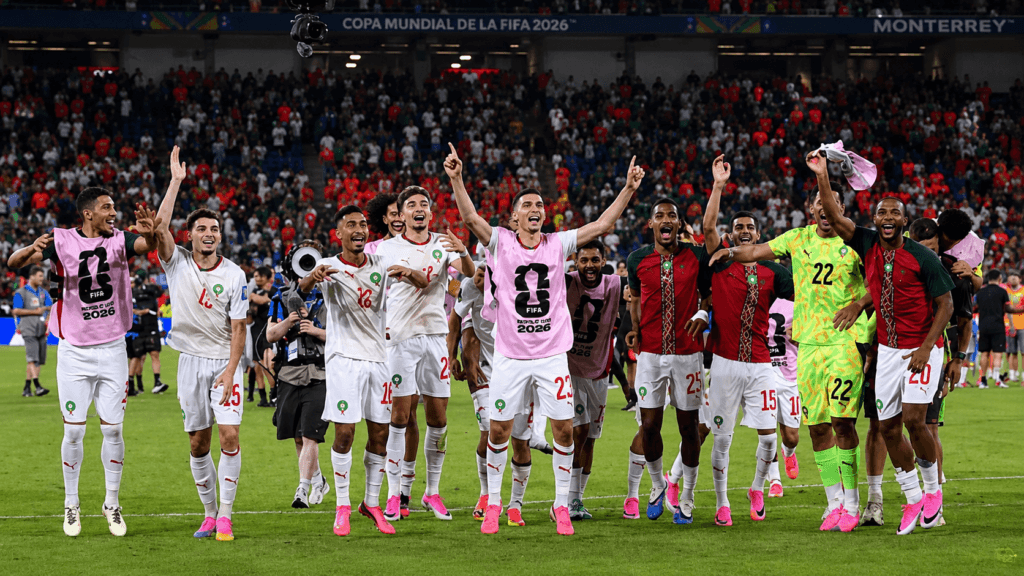
Moroccan players celebrate after defeating the Netherlands on penalties. Image Credit: ESPN
Morocco produced a memorable World Cup knockout performance on Monday in their Round of 32 match against the Netherlands, winning 3-2 on penalties after the game finished 1-1 in regular time. The African side showed resilience, discipline and composure across a tense match that swung late before being decided from the spot. Ismael Saibari converted the decisive penalty to send Morocco into the Round of 16, where they will now meet Canada.
This was the kind of World Cup game that can define a tournament run. The Netherlands led through Cody Gakpo’s 72nd-minute goal, but Morocco refused to surrender and found a dramatic stoppage-time equalizer through Issa Diop, forcing extra time and eventually penalties. In a knockout match, yeh issue kaafi important because one moment, one kick or one mistake can change everything.
How Morocco Won the Match
Morocco did not merely survive; they controlled large portions of the contest. Reports from the match indicate that Morocco dominated much of regular time, forcing the Netherlands to defend deeply and absorb pressure. Even after falling behind, they maintained belief and kept pushing until the final stages of the match.
The turning point came late in the second half when Cody Gakpo gave the Netherlands a 72nd-minute lead. His reaction was emotional, and the goal seemed to put the Dutch on the path to qualification. But Morocco responded with urgency and determination, and in the first minute of stoppage time, Issa Diop headed home the equalizer. The Hindu has covered the full story.
That goal changed the entire tone of the match. The Netherlands, who had been moments away from victory, suddenly had to deal with the pressure of extra time and then penalties. Morocco handled the shootout better, with Ismael Saibari scoring the decisive kick to secure the 3-2 win.
In knockout football, stamina and mental strength often matter as much as tactics. Morocco showed both. They stayed organized after conceding, they created enough pressure to force a late equaliser, and they stayed calm when the match moved to penalties. That combination is why they advanced.
Why the Netherlands Fell Short
The Netherlands had their moments, but they could not close out the game once they took the lead. In matches like this, scoring first is often a major advantage, but only if the team can defend with focus and avoid last-minute pressure. That did not happen here.
Gakpo’s goal should have given the Dutch a platform to control the final phase of the match. Instead, Morocco kept attacking, and the equalizer arrived at the worst possible time for the Netherlands. From there, the match became a test of nerve, and penalties rarely forgive any lapse in concentration.
The Dutch also appeared to struggle with Morocco’s intensity for long stretches. Morocco’s control of possession and ability to sustain pressure forced the Netherlands to defend more than they wanted to. Even though the Netherlands remained dangerous, they were not able to manage the final moments of normal time.
This defeat will hurt because the Netherlands was close to advancing. But in World Cup knockout football, close is not enough. A late equalizer can erase all the work done over 90 minutes. That is exactly what happened here.
Morocco’s Growing World Cup Reputation
Morocco’s win adds another significant chapter to their World Cup story. The team has continued to build a reputation as one of the most disciplined and mentally strong sides on the international stage. A penalty-shootout victory over a traditional European power like the Netherlands adds to that image.
What stands out is not just the result, but the manner of the performance. Morocco was not passive. They pushed the Netherlands, remained dangerous, and came back when it mattered most. That kind of response suggests a team with growing confidence and strong belief.
In tournament football, such wins can have a lasting effect. Players begin to trust each other more, coaches gain more tactical confidence and supporters start to believe that a deep run is possible. Morocco’s celebration reflected that feeling. It was not just relief; it was a statement.
Background and Context
This match came with high stakes because it was part of the World Cup Round of 32 knockout stage, where one mistake can send a team home. The Netherlands entered with a strong reputation, while Morocco came in with the momentum of a side that had already shown they could compete with elite opponents.
The two teams also carried different kinds of expectations. The Netherlands, as a European heavyweight, was expected to control periods of the match and find a way through. Morocco, meanwhile, was expected to compete hard, stay organised and make life difficult. Instead, they ended up going further by outlasting the Dutch in a dramatic finish.
The story of the match also connects to wider football history. Morocco’s progress is another sign that national teams outside the traditional power centers are becoming increasingly difficult to beat. That is good for the global game because it makes the tournament more unpredictable and exciting.
For the Netherlands, the result will bring questions about game management and mental resilience. For Morocco, it will bring confidence, momentum and another chance to go deeper in the tournament.
Timeline
First half: Both teams play a tight knockout match with limited separation.
72nd minute: Cody Gakpo scores to give the Netherlands the lead.
Late stoppage time: Issa Diop heads in the equalizer for Morocco.
Full time: Match ends 1-1, sending the game into extra time.
Penalty shootout: Morocco win 3-2.
Decisive kick: Ismael Saibari converts the winner.
After the match: Morocco advances to the Round of 16 to face Canada.
Also Read: FIFA World Cup 2026: Gabriel Martinelli’s Stoppage-Time Strike Sends Brazil Past Japan
Why This Matters
This matters because it shows how quickly World Cup knockout football can flip. A team can be seconds from victory and still end up eliminated. That makes every late defensive action, every clearance and every set piece hugely important. Yeh issue kaafi important hai because it reminds fans and teams alike that concentration must last until the final whistle.
It also matters because Morocco’s victory is another example of football’s changing balance. Traditional giants are no longer guaranteed safe passage. Teams with tactical discipline, belief and structure can now beat them in high-pressure games. That is one reason World Cups remain so compelling.
For supporters, especially those who enjoy underdog stories, this result is thrilling. It proves that knockout football still has room for dramatic comebacks and surprise winners. The emotional swing of Gakpo’s lead, Diop’s equaliser and Saibari’s penalty made this a classic tournament moment.
India Angle
For Indian football fans, this match is relatable because it shows the value of patience and mental strength in pressure situations. In Hinglish, seedhi baat yeh hai: jab match last minutes tak tight ho, toh sabse badi cheez composure hoti hai. Morocco had that, and the Netherlands lost it at the worst possible time.
Indian viewers who follow World Cup football will also appreciate how teams with strong structure can challenge bigger names. That is a useful lesson for developing football nations, including India. Talent matters, but so does organisation, belief and the ability to stay calm in a penalty shootout.
This result may also interest Indian audiences because Canada, Morocco and other emerging teams are creating fresh knockout narratives. Fans often enjoy seeing new contenders shake up the traditional order, and that is exactly what this match delivered.
Analysis
My opinion is that Morocco deserved the win because they were the more persistent side. They did not panic after conceding, and they kept forcing the game until the Netherlands cracked. That is often the difference between good teams and tournament teams. Tournament teams know how to stay alive under pressure.
The Netherlands, meanwhile, will look back at the last 10 minutes and wonder how the game got away from them. Late defensive concentration is non-negotiable in knockout football, and even a brief lapse can be fatal. That is the lesson here.
Morocco’s progression also enriches the tournament narrative. Every World Cup needs teams that defy expectations and keep the competition open. This result does exactly that.
What Next
Morocco now moves on to the Round of 16, where they will meet Canada. That will be another high-pressure test, but this win gives them real momentum going into that match.
The Netherlands will head home with disappointment and questions about what went wrong late in the game. Their focus will now turn to analysis and rebuilding for future international competitions.
For the tournament, Morocco’s advance ensures that the knockout stage remains full of fresh storylines. The next round will bring new tactical battles, new pressure and possibly more surprises.
Conclusion
Morocco’s penalty shootout victory over the Netherlands was a dramatic, hard-earned World Cup win that showcased resilience, composure and timing. Gakpo’s goal gave the Dutch hope, but Diop’s stoppage-time equalizer and Saibari’s decisive penalty sealed a famous 3-2 triumph for Morocco. The result sends Morocco into the Round of 16 against Canada and leaves the Netherlands with a painful knockout exit. In a tournament built on moments, this was one of the biggest so far.
Written By A. Jack