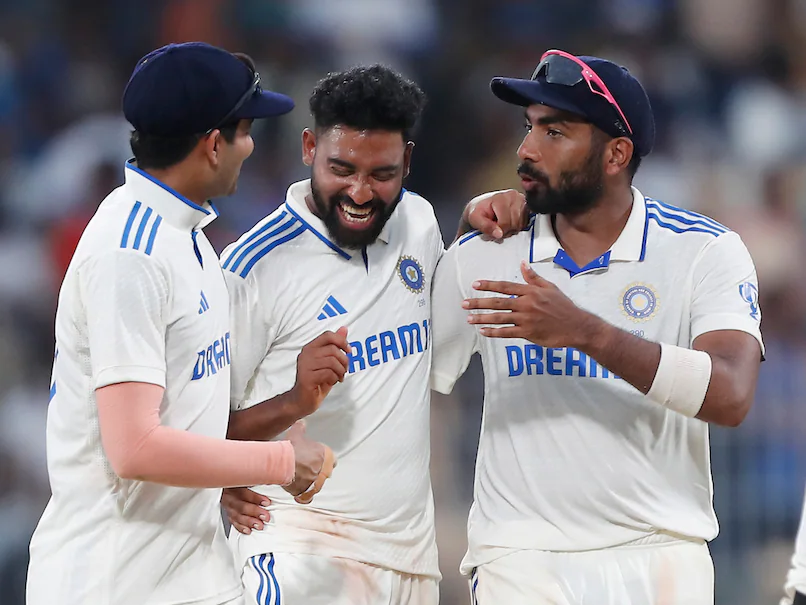
Sonal Dinusha’s maiden Test century and Niroshan Dickwella’s 80 delayed India’s push, but Manav Suthar and Ravindra Jadeja bowled Sri Lanka out for 284 on Day 3.
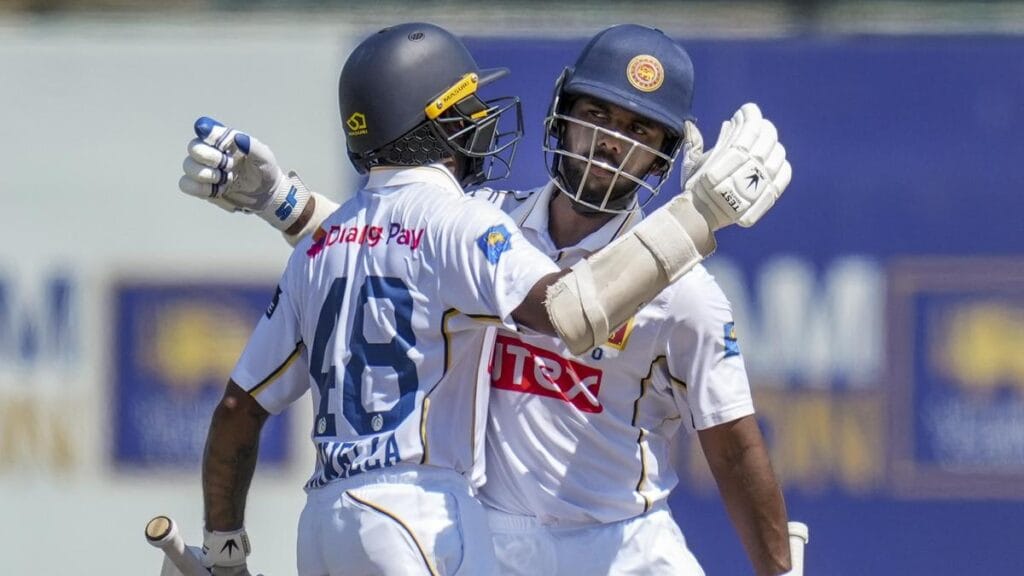
Sri Lanka’s Sonal Dinusha celebrates his maiden Test century during the first Test against India at the Galle International Stadium. Image Credit: TheHindu
Galle Test: India seized control of the first Test against Sri Lanka at Galle after bowling the hosts out for 284 on Monday, August 17, 2026. Sri Lanka’s total came in reply to India’s imposing 462, giving the visitors a commanding 178-run first-innings lead despite a spirited fightback led by Sonal Dinusha and Niroshan Dickwella.
Dinusha scored a determined 100 from 168 balls, while Dickwella made 80 off 115 deliveries. The pair added 146 runs for the sixth wicket after Sri Lanka had slipped to 90/5, temporarily rescuing the innings and frustrating India’s spin-heavy attack.
However, left-arm spinner Manav Suthar finished with four wickets and Ravindra Jadeja claimed three as India eventually completed the job. Rain and dark clouds then ended play early, leaving India with a significant advantage heading into the fourth day.
How Sri Lanka Fought Back
Sri Lanka’s start was far from reassuring. Chasing India’s 462, the hosts lost half their side for only 90 runs, allowing India to dictate terms with disciplined bowling and sharp fielding. The pitch at Galle offered assistance to the spinners, and India used the conditions effectively through Suthar and Jadeja.
At that stage, Sri Lanka appeared likely to concede a much larger deficit. But Dinusha and Dickwella changed the momentum with a patient yet positive partnership. The left-handed pair defended carefully against India’s spinners and attacked whenever the bowlers dropped short or overpitched. This story was also covered by The Hindu.
Their 146-run stand was especially important because it came under pressure. Both batters had to survive extended spells from Jadeja and Suthar while protecting an already fragile lower order. Dinusha’s ability to rotate the strike helped prevent India from building sustained pressure, while Dickwella used his experience to counterattack with controlled strokes.
Dinusha reached his maiden Test century from 168 balls, including four fours and two sixes. His innings was the highlight of Sri Lanka’s first innings and ensured that India did not immediately force the follow-on.
Dickwella also made an impressive return to the Sri Lankan Test side, scoring 80 off 115 balls. His contribution was vital because it gave Dinusha the support required to extend the partnership deep into the day.
India’s Spin Attack Finishes the Job
Once the Dinusha–Dickwella partnership was broken, Sri Lanka’s resistance quickly weakened. India’s spinners returned with renewed intensity, and the lower order struggled to handle the turn and variation on offer.
Manav Suthar was India’s most successful bowler, taking 4/76. He used his left-arm angle, changes in pace, and sharp turn to trouble Sri Lanka’s batters throughout the innings. His dismissal of Lahiru Kumara, who was stumped while attempting to charge down the pitch, ended Sri Lanka’s innings.
Ravindra Jadeja claimed 3/57 and also reached the landmark of 350 Test wickets during the innings. His control from one end allowed India to maintain pressure while Suthar attacked from the other.
Together, the two left-arm spinners took seven wickets and ensured that Dinusha’s century did not completely alter the balance of the match. India’s bowlers were particularly effective after the sixth-wicket stand ended, taking the final wickets quickly and limiting Sri Lanka’s total to 284.
India’s Strong First Innings
India’s advantage was established before Sri Lanka came out to bat. The visitors scored 462, powered by Devdutt Padikkal’s outstanding 167 and KL Rahul’s composed 82.
Padikkal’s innings continued his impressive return to Test cricket. After scoring a century on Independence Day, the left-hander converted his opportunity at number three into a substantial score. His 167 gave India stability in the middle order and placed Sri Lanka’s bowlers under pressure.
KL Rahul’s 82 added further strength to India’s total. The combination of a large first-innings score and a disciplined bowling attack allowed India to remain in command even when Sri Lanka’s lower middle order mounted its counterattack.
Sri Lanka’s Prabath Jayasuriya was the most successful bowler, finishing with 4/109, while Keshara Nuwantha took 3/175. However, India’s batting depth ensured that the visitors crossed 450 and created a strong platform for the Test.
Statements and Match Context
There were no extensive post-day comments available at the time of reporting, but the match situation clearly reflected two contrasting stories: Sri Lanka’s resilience and India’s control.
Dinusha’s century was a major personal milestone and the most important innings of Sri Lanka’s campaign so far. It prevented an early collapse and showed that the hosts could still compete despite losing five wickets for 90 runs.
For India, the response from Suthar and Jadeja underlined the value of maintaining pressure after a partnership has developed. Instead of allowing the 146-run stand to dominate the day, India returned with the second new phase of spin and removed the remaining batters.
An expert-style reading of the match is simple: Sri Lanka won a session through Dinusha and Dickwella, but India won the larger contest through superior batting depth and sustained bowling pressure.
Why Galle Tests Often Favour Spin
The Galle International Stadium is traditionally regarded as one of the most spin-friendly Test venues in international cricket. Its surface generally becomes slower as the match progresses, and spinners can extract turn, bounce, and grip when they hit the right areas.
India’s decision to use two left-arm spinners proved effective. Jadeja brings experience, control, and batting value, while Suthar provided a different angle and attacking option. The combination allowed India to rotate bowlers without losing pressure.
Sri Lanka also rely heavily on spin in home conditions, but their top order struggled to deal with India’s accuracy. The team’s recovery came through two lower-middle-order batters rather than the established top order, highlighting both the depth of their fight and the weakness exposed earlier in the innings.
Timeline
India’s first innings: India scores 462, with Devdutt Padikkal making 167 and KL Rahul contributing 82.
Sri Lanka’s early reply: The hosts lose five wickets for 90 runs as India’s spinners dominate the opening phase.
Sixth-wicket recovery: Sonal Dinusha and Niroshan Dickwella add 146 runs to revive Sri Lanka’s innings.
Dinusha’s milestone: Dinusha scores his maiden Test century from 168 balls.
Dickwella’s contribution: The returning wicketkeeper-batter makes 80 off 115 balls.
India’s bowling finish: Manav Suthar takes 4/76 and Ravindra Jadeja claims 3/57.
End of Sri Lanka’s innings: Sri Lanka are bowled out for 284, trailing India by 178 runs.
Early close: Dark clouds and rain prevent further play at Galle.
Also Read: Bangladesh Make History With First-Ever Test Cricket Win in Australia: Nine-Wicket Stunner in Darwin
Why This Matters
Yeh match India ke liye kaafi important hai kyunki visitors have created a strong winning position in the opening Test. A 178-run lead gives India control over the tempo, especially on a surface expected to become increasingly difficult for batting.
India’s lead: The visitors can now bat again and build a target that may be difficult for Sri Lanka to chase in the fourth innings.
Spin dominance: Suthar’s four-wicket haul and Jadeja’s three wickets show that India’s bowling strategy is working in Galle.
Sri Lanka’s confidence: Dinusha’s century and Dickwella’s return provide positives despite the large deficit.
Test cricket’s balance: The match has shown how quickly momentum can shift. Sri Lanka looked close to collapse before a 146-run partnership changed the mood.
For Sri Lanka, the immediate challenge is to prevent India from extending the lead beyond reach. For India, the task is to avoid giving the hosts an opportunity to return to the game.
India Angle
Indian fans have several reasons to be encouraged. Devdutt Padikkal’s 167 has strengthened the middle order, while Jadeja’s performance has added another milestone to his long Test career.
Padikkal’s consecutive big scores are particularly significant because India had been searching for stability at number three. His ability to score heavily in Sri Lanka suggests that he can handle spin and build long innings in Asian conditions.
Jadeja, meanwhile, continues to provide balance as a senior all-rounder. His three wickets, 350th Test wicket milestone, and ability to control the run rate make him central to India’s strategy.
Suthar’s performance is also noteworthy. A four-wicket haul in Galle gives the young spinner valuable experience and strengthens India’s depth in the slow-bowling department. Agar woh consistency maintain karte hain, toh Suthar future tours ke liye strong option ban sakte hain.
Analysis
India’s advantage is substantial but not yet absolute. Sri Lanka’s 146-run partnership proves that batting remains possible when players show patience and use their feet effectively. India cannot afford to become complacent in the second innings.
The key tactical lesson is that India must keep the scoring rate healthy while protecting wickets. A defensive approach could allow Sri Lanka’s spinners to create pressure, whereas calculated aggression could push the target beyond 400 and end the contest.
Sri Lanka, on the other hand, needs early wickets. If they remove India’s top order quickly, the match could still develop into a competitive contest. If India’s batters settle in again, the hosts may face an almost impossible fourth-innings chase.
What Next
India will begin the fourth day with a 178-run lead and the opportunity to strengthen its position further. The visitors are likely to bat with a clear goal: build a sizeable second-innings total and leave Sri Lanka with a demanding target.
Possible developments include:
India may target a lead of 350–400 runs before declaring or being bowled out.
Sri Lankan spinners will look to exploit the pitch and prevent India from scoring freely.
India may use its spinners again in the fourth innings, particularly if the pitch deteriorates.
Sri Lanka will need early wickets and another major partnership to stay alive in the match.
Weather could remain a factor, with rain and dark clouds already shortening the third day.
The fourth day could decide whether India converts their advantage into a comfortable win or allows Sri Lanka to extend the contest.
Conclusion
India ended the third day of the Galle Test in a commanding position after bowling Sri Lanka out for 284 and taking a 178-run first-innings lead. Sonal Dinusha’s maiden Test century and Niroshan Dickwella’s 146-run sixth-wicket partnership gave the hosts hope, but India’s spinners eventually finished the job.
Manav Suthar’s 4/76 and Ravindra Jadeja’s 3/57 ensured that Sri Lanka could not turn its fightback into a match-changing total. With India’s strong batting lineup set to return in the second innings, the visitors have a clear chance to take control of the Test.
The contest is not over, but India has done the hardest work so far. Ab dekhna yeh hai ki visitors apni 178-run lead ko kitna bada banate hain aur kya Sri Lanka ke spinners fourth day par comeback kar paate hain.
Written By A. Jack