The Hemant Soren government scraps JSSC-CGL and cancels examinations, results and selections linked to blacklisted agency TDPL since 2014; students celebrate but continue protest over their CBI probe demand.
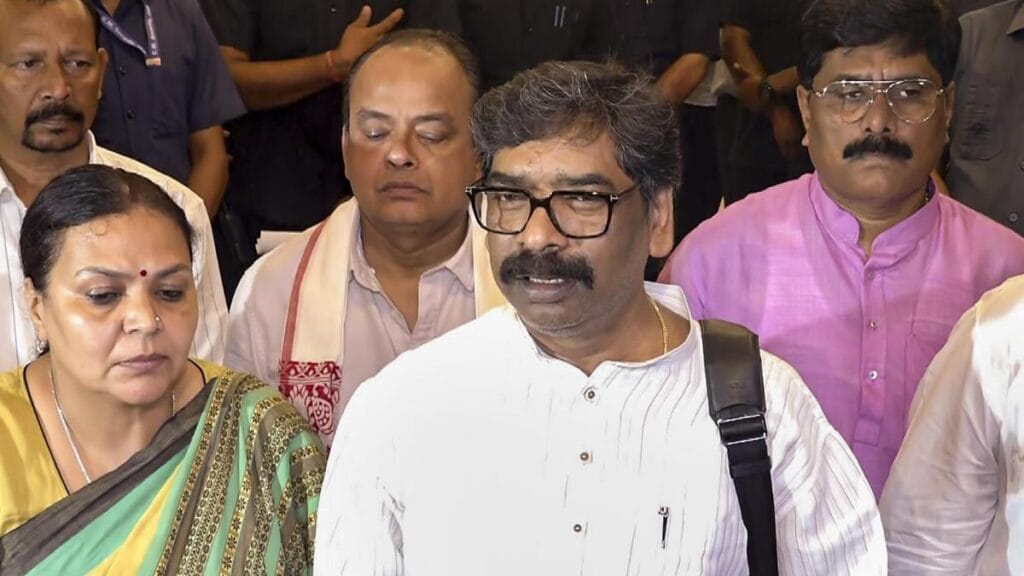
The Hemant Soren government scraps JSSC-CGL and cancels examinations. Image Credit: The Hindu
The Jharkhand government has cancelled the Jharkhand Staff Selection Commission–Combined Graduate Level (JSSC-CGL) examination and all exams, results, selections and recruitment processes linked to TSR Data Processing Private Limited (TDPL), a private agency that was blacklisted by the state government in May 2025.
Chief Minister Hemant Soren announced the decision late on Monday, August 18, 2026, after an emergency Cabinet meeting that lasted about four hours. The move came on the 24th day of a student-led protest at Ranchi’s Jaipal Singh Munda Stadium over alleged irregularities in JSSC and Jharkhand Public Service Commission (JPSC) examinations.
Students celebrated the cancellation as a major victory. However, the JPSC–JSSC Reform Manch said the agitation would continue because the government has not accepted its central demand for a Central Bureau of Investigation (CBI) inquiry into the alleged recruitment scam.
What the Cabinet Decided
The Cabinet’s decision is wider than the cancellation of one examination. The government has decided to nullify all activities connected with TDPL in Jharkhand, including examinations conducted by the company, results declared through it, selections made under its processes, and related recruitment actions since 2014.
Addressing students and the public after the meeting, Chief Minister Soren said the government had reviewed the matter and decided to cancel all examinations and processes linked to the agency. This story was also covered by TheHindu.
“We have resolved to cancel everything tied to TDPL—this includes examinations conducted, the results, the selected candidates or those who participated, and all other activities associated with TDPL,” Soren said.
The announcement means thousands of candidates may now face uncertainty about previously cleared exams, appointments, and recruitment lists. Reports suggest that some candidates who had secured jobs through JSSC-CGL have already begun protesting outside the Project Bhavan Secretariat, saying the cancellation will affect their careers and livelihoods.
The state government has also announced a wider review of alleged irregularities since 2014. The Crime Investigation Department (CID) will investigate complaints related to recruitment examinations, while a reform committee headed by senior IAS officer Amitabh Kaushal will recommend changes to the state’s examination and recruitment system.
Why the Government Took This Step
The decision comes after nearly a month of sustained protests by government job aspirants. Students have accused JSSC and JPSC of serious irregularities, including suspected question paper leaks, opaque examination procedures, manipulation in recruitment, and alleged involvement of private agencies in the selection process.
TDPL, a Lucknow-based testing and outsourcing firm, became central to the controversy after it was blacklisted by the Jharkhand government in May 2025 for alleged examination-related non-compliance. The firm’s role in conducting tests, publishing results and managing recruitment processes has since come under the scanner.
The CID also searched the JSSC office in Ranchi on Monday as part of its investigation into alleged irregularities. Investigators have arrested Abhay Tiwari, also known as Manoj Kumar Tiwari, a Block Supply Officer in Godda district, alleging that he played a significant role in the recruitment racket.
According to investigators cited in reports, Tiwari was simultaneously working as TDPL’s marketing manager while holding a government post. This alleged conflict of interest has intensified concerns about the integrity of the recruitment process and strengthened the protesters’ demand for an independent investigation.
Students Celebrate, But CBI Demand Remains
For thousands of students protesting in Ranchi, the cancellation of JSSC-CGL is a partial win, not the end of their movement. Aspirants celebrated the Cabinet decision because cancellation was one of their biggest demands, but they have refused to withdraw the protest until the state orders a CBI inquiry.
The students’ argument is straightforward: a CID probe, they say, is not enough because the alleged irregularities involve government agencies, officials and an outsourced private firm. They want an external central agency to investigate the full chain—question-setting, outsourcing contracts, data handling, results, appointments and alleged financial links.
The protest leaders have also demanded time-bound action against those found guilty, protection for peaceful demonstrators, withdrawal of legal cases against student protesters, and reforms that prevent another paper leak or recruitment controversy.
Student leader Devendra Nath Mahato ended his hunger strike after the government announced the JSSC-CGL cancellation, but other protesters have maintained that the broader movement will continue until the CBI inquiry issue is addressed.
Statements From the Government and Protest Leaders
Chief Minister Hemant Soren:
The Chief Minister said the Cabinet had taken a clear decision to cancel JSSC-CGL and all activities connected with TDPL, including examinations, results, selections and recruitment processes.
He also announced a comprehensive inquiry into examination-related lapses since 2014 and said a panel headed by senior IAS officer Amitabh Kaushal would recommend structural reforms in the examination system.
Jharkhand CID:
The CID began searches at the JSSC office in Ranchi as part of its ongoing investigation. The arrest of Abhay Tiwari, alleged to be linked to the recruitment racket and TDPL, indicates that the probe is moving beyond broad allegations to individual roles and possible institutional links.
Student protesters:
Students have welcomed the JSSC-CGL cancellation but insist that the government must order a CBI inquiry. “Cancellation is an important step, but the people responsible must be identified and punished through an independent probe,” is the core position emerging from the JPSC–JSSC Reform Manch.
How the Jharkhand Exam Protest Grew
The students’ agitation began on July 25, 2026, at Jaipal Singh Munda Stadium in Ranchi. It started with demands for investigation into alleged irregularities in recruitment examinations but quickly developed into a broader movement against the state’s examination system.
The protest drew aspirants from districts across Jharkhand, many of whom had spent years preparing for government jobs. The key examinations under scrutiny included JSSC-CGL and the JPSC Combined Civil Services Examination.
Over the past weeks, students organised sit-ins, hunger strikes, rallies and marches. Tensions rose after police action during a march towards the Assembly, and the government held multiple rounds of talks with student representatives.
Before the Cabinet decision, students had also announced plans to gherao the Chief Minister’s residence if their demands were not met. The cancellation of JSSC-CGL has reduced immediate pressure, but the unresolved CBI demand means the government could still face continuing protests.
Timeline
July 25, 2026: Students begin a sit-in protest at Jaipal Singh Munda Stadium in Ranchi over alleged irregularities in JPSC and JSSC recruitment examinations.
Late July–early August: Aspirants demand cancellation of JSSC-CGL, a CBI inquiry, transparent recruitment procedures and accountability for officials and private agencies.
May 2025 (background): TDPL is blacklisted by the Jharkhand government over alleged examination-related non-compliance.
August 17, 2026: CID searches the JSSC office in Ranchi as part of the examination irregularities probe.
August 18, 2026: The Emergency Cabinet meeting chaired by CM Hemant Soren runs for around four hours.
Late August 18: The Government cancels JSSC-CGL and all exams, results, selections and recruitment actions linked to TDPL since 2014.
After announcement: Students celebrate the cancellation but announce that their protest will continue until the CBI inquiry demand is accepted.
Ongoing: CID continues investigation; Amitabh Kaushal-led reform committee is expected to recommend changes to recruitment examinations.
Also Read: After Effigies of Soren and Rahul Burnt, Jharkhand Govt Calls Fourth Round of Talks on Exam Protest
Why This Matters
Yeh issue kaafi important hai because it affects not just one examination but the credibility of government recruitment across Jharkhand.
Impact on aspirants: Candidates who have spent years preparing for JSSC-CGL may now need to sit for fresh examinations, adding uncertainty, financial pressure and career delays.
Impact on selected candidates: Those who already secured jobs through JSSC-CGL now face anxiety over their appointments and have begun voicing opposition to the blanket cancellation.
Institutional trust: Cancelling every TDPL-linked examination, result and selection since 2014 is a major admission that the state sees possible systemic concerns, not merely an isolated irregularity.
Probe credibility: The students’ refusal to end their protest highlights the trust gap between aspirants and the state’s investigative machinery.
Future recruitment: The reforms committee may determine how Jharkhand conducts examinations, appoints vendors, stores data, handles objections, and audits results in the future.
India Angle
Jharkhand’s exam controversy reflects a wider national concern. Across India, paper leaks, outsourcing failures, question-paper disputes and recruitment delays have weakened young people’s trust in public examinations.
For aspirants in Uttar Pradesh, Bihar, Rajasthan, Madhya Pradesh, Maharashtra and other states, yeh issue familiar lagta hai. Government job exams are often treated as life-changing opportunities, particularly for students from lower- and middle-income households. When an exam is cancelled after recruitment or selection, the cost is not only administrative—it affects years of preparation, family finances and mental well-being.
The TDPL case also raises questions about the outsourcing of high-stakes government recruitment. Private vendors may bring technology and scale, but without strong due diligence, independent audits, data security and conflict-of-interest checks, outsourcing can create fresh vulnerabilities.
India’s states may now be pressured to introduce stronger safeguards:
Public disclosure of examination vendors and contracts
Independent third-party audits of question paper and result systems
Biometric verification and stronger data protection
Time-bound grievance redressal for candidates
Clear accountability for officials, vendors and middlemen involved in malpractice
Analysis
The government has accepted one of the most visible demands—cancellation of JSSC-CGL—and has expanded the action to TDPL-linked examinations going back to 2014. That is a significant decision. However, cancelling results and recruitments without a clear, fast re-examination roadmap could create a new class of aggrieved candidates: those who cleared exams and began government jobs in good faith.
The decision also creates a massive administrative challenge. A broad cancellation of TDPL-linked activity must be followed by transparent identification of affected examinations, publication of a legal framework, protection for candidates, and a calendar for fresh examinations. Without these steps, relief for protesting students can turn into fresh uncertainty for thousands of others.
In my view as an SEO/news writer, the most important follow-up angle is not simply “exam cancelled”. It is whether Jharkhand can rebuild a recruitment system that is transparent enough for students to trust and fast enough to prevent careers from being stalled indefinitely.
What Next
The next phase will be crucial for both the government and student protesters.
CID investigation: The CID is expected to continue its probe into the JSSC office, TDPL’s role and alleged recruitment irregularities since 2014.
CBI demand: Students are likely to continue their protest until the government takes a clear position on ordering a CBI inquiry.
Reform committee: Amitabh Kaushal’s panel will need to consult stakeholders and recommend practical reforms for vendor selection, examination security, evaluation and grievance handling.
Fresh exam roadmap: The government will face pressure to announce dates, eligibility rules, fee policies and age-relaxation measures for candidates affected by the cancellation.
Selected candidates’ challenge: Candidates already appointed through JSSC-CGL may seek legal clarity or approach courts, potentially complicating the cancellation process.
Fast-track action: Reports suggest the government is considering a 90-day timeline for the CID probe and fast-track court proceedings, though formal implementation will be closely watched.
Conclusion
The cancellation of JSSC-CGL and all TDPL-linked recruitment processes since 2014 is one of the biggest decisions taken by the Hemant Soren government in response to the 24-day student movement. It gives protesters a major partial victory and acknowledges the seriousness of concerns surrounding Jharkhand’s recruitment system.
But the agitation is not over. Students still want a CBI inquiry, while candidates already selected through JSSC-CGL are now facing uncertainty over their careers.
The real test for the government starts now: conduct a credible investigation, punish wrongdoing, protect honest candidates, and build a transparent exam system. Sirf exam cancel karna enough nahi hoga—system ko repair karna hoga, tabhi Jharkhand ke youth ka trust wapas aa payega.
Written By A. Jack