Viral Videos Misidentified Amid Rajasthan Gang Rape Outrage; Investigation Confirms Clips Are From an Unrelated Hardoi Incident

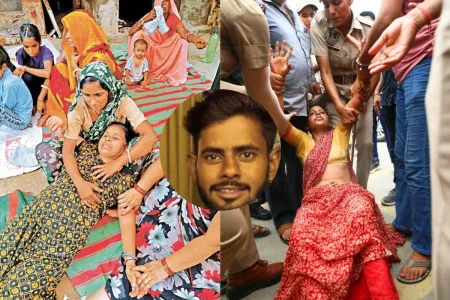
As public anger simmers over the shocking gang rape of a minor in Rajasthan’s Sri Ganganagar district, misinformation is also spreading fast on social media platforms. Multiple disturbing videos of a woman visibly distressed have been circulated widely online with claims that the video shows the survivor of the Rajasthan gang rape case. But a close verification has shown that these claims are utterly false.
Viral videos are not linked to the Sri Ganganagar case, confirmed independent fact-checking. Instead, they relate to an earlier incident reported from Bilgram in the Hardoi district of Uttar Pradesh. The misleading posts have once again demonstrated how viral misinformation can be weaponized against sensitive criminal cases, creating unwarranted panic while disrespecting survivors and misinforming the public.
The incident is another reminder for people to check emotionally charged content before sharing it, especially when it involves victims of serious crimes.
Why and How the False Claim Spread
The Sri Ganganagar case has come under the national spotlight after police alleged a minor girl was raped by 32 men over a period of days from June 18 to June 23. The brutality of the case shocked the country, and millions of people took to social media to discuss it.
During this period of intense public scrutiny, users on a number of platforms began posting two disturbing videos of an apparently distressed woman. The posts claimed the videos showed the Rajasthan survivor.
The emotional nature of the case meant that the misinformation spread rapidly. Many users circulated the videos without verifying their veracity, thinking they were helping to draw attention to the crime. Unfortunately, fake news travels faster than real news because it touches emotions directly.
Fact-checkers then performed a reverse image search on one of the videos, which led to an Instagram post uploaded before the viral Rajasthan claims. The post talked about an incident related to abduction in Bilgram of Hardoi, Uttar Pradesh and it was proved that the video has nothing to do with the investigation of the Sri Ganganagar gang rape.
Later searches revealed that Rajasthan Police had not issued any official statement confirming the videos to be related to the gang rape case. Similarly, there was no credible media report claiming the footage to be from the Rajasthan investigation.
The false narrative seems to have emerged after social media users dug up an old video and attached it to a trending national story to gain attention and engagement.
Also read: 13-Year-Old Girl Raped by Over 30 Men After Being Trafficked by Rickshaw Driver
Fact Check: The Truth Comes Out
Digital verification tools helped to expose the misinformation. Reverse image searches continue to be one of the most reliable ways to track down the original source of viral visuals.
The probe found that one of the clips was circulated in connection with a Hardoi incident much before the Sri Ganganagar case made headlines. In the attached description, there was mention of an alleged case of abduction in Bilgram and it was stated clearly that the video is from Uttar Pradesh.
There is no credible evidence that the viral videos show the survivor from Rajasthan.
What this means is that you can’t trust visual content on the internet at face value. Fake captions are often used to repackage videos and images to influence public opinion.
Understanding the Rajasthan Gang Rape Case
The Sri Ganganagar case itself is still one of the most disturbing criminal investigations reported in recent weeks. As per the police probe, several accused allegedly trafficked and gangraped a minor girl for days.
Authorities initiated a large-scale probe after the victim’s testimony resulted in the identification of dozens of suspects. “The police have continued to make arrests and collect forensic evidence and witness statements.
The case remains under investigation and authorities have warned the public against sharing unconfirmed content or false information regarding the case.
Police have warned that sharing fake videos can interfere with investigations and cause further trauma to survivors and their families.
Expert View on Viral Misinformation
Experts on digital misinformation have long warned that sensitive criminal cases are fertile ground for false narratives.
Media verification specialists say emotional stories naturally generate higher levels of engagement online. This leads to some users reusing unrelated visuals for the sake of more views, likes and shares.
Experts also point out that once misinformation has gone viral, correcting it becomes much harder, since many users remember the emotional impact rather than the factual correction.
Media literacy researchers say some of the best ways to curb the spread of fake information include reverse image searches, checking publication dates and relying on verified news organizations.
As one digital media analyst explains, “False context is one of the fastest-growing forms of online misinformation. A genuine video with a fabricated caption can misguide millions within hours.”
Background
India has witnessed several high-profile misinformation campaigns in recent years during major criminal investigations.
Old videos, unrelated photos, and photoshopped photos are often passed around as recent evidence after big crimes make national headlines.
Fact-checking groups have repeatedly called out cases where video from other states — or even other countries — was wrongly labeled as part of a trending event.
The increasing popularity of short-video platforms has accelerated the pace at which misleading content spreads online.
Law enforcement agencies have also started to more closely monitor viral posts, especially where misinformation might incite public disorder or disrupt criminal investigations.
Timeline of Events
The alleged crimes in Sri Ganganagar took place between June 18 and June 23, the investigators said. The news of the case went national and there was widespread public outrage on television, in newspapers and on social media.
Shortly thereafter, two disturbing videos allegedly featuring the Rajasthan survivor began to go viral on social media. The clips racked up thousands of views and shares within a short time, before fact-checkers started to verify their provenance.
Finally, one of the videos was traced back, through reverse image analysis, to an Instagram post about a different incident in Bilgram, Hardoi. That turned out to be a false viral claim on the footage that linked it to Rajasthan.
The clarification has since been shared on several fact-checking platforms to stem the tide of misinformation.
Why This Matters
This issue is important because misinformation can have serious real-world consequences in criminal investigations. When the fake videos are connected to real crimes, it creates a false understanding in the public.
The misinformation can compound trauma and violate privacy for survivors. Meanwhile, the families may be undergoing more emotional trauma as the false claims spread on unrelated videos.
In terms of an investigation, fake visuals can divert resources of the police and confuse witnesses or members of the public who are trying to follow events.
There is also a wider issue of public trust. Repeated exposure to false information during major news events can cause people to begin to lose faith in real journalism and verified reporting.
Yeh issue important hai kyuki social media millions of Indians ke liye news ka primary source ban chuka hai. This means that responsible sharing is now everyone’s collective duty.
India Angle
India’s fast-growing digital ecosystem has changed the way news is delivered to citizens. It has increased access to information but has also made misinformation spread much faster than before.
Platforms such as Instagram, Facebook, WhatsApp and X can put videos in front of millions of people within hours, often without proper verification.
For Indian audiences, particularly those that follow sensitive crime stories, it is increasingly important to be able to tell the difference between verified journalism and viral misinformation.
Fact-checking groups, government agencies and responsible media outlets continue to encourage citizens to verify information before sharing it.
“Things as simple as checking for official statements from the police, checking trusted news sources, and doing reverse image searches can go a long way towards limiting misinformation.”
Analysis
This episode serves as a good reminder of one of the biggest challenges facing modern news reporting from a digital journalism perspective: the balance of speed with accuracy.
Naturally, trending stories attract online attention, but they can also be a breeding ground for misinformation. Many social media users contribute to the problem unknowingly, valuing emotional responses over factual verification.
As a news writer, I think responsible journalism should always be about verified evidence, not viral claims. The publication of accurate corrections is as important as the publication of breaking news, because both are in the public interest.
This case also points to the growing importance of digital literacy. Readers are advised to cultivate the habit of questioning viral information, especially if it is not officially confirmed or is from an anonymous account.
In today’s digital landscape, verification is no longer the sole domain of journalists. All social media users have a role to play in helping prevent misinformation from spreading.
What Next
The authorities investigating the Sri Ganganagar case would likely continue collecting evidence as the legal proceedings against the accused are still on. Meanwhile, fact-checkers are likely to keep an eye on misleading posts that try to exploit public interest around the case.
Social media companies may also remove content that breaks their misinformation policies when flagged by users or picked up by their moderation systems.
The incident is likely to add more fuel to the ongoing discussions concerning digital responsibility, online verification tools and the need for media literacy across India.
In building criminal investigations, we encourage readers to use verified news organizations and official police updates, not unverified social media postings.
Conclusion
Viral videos claiming to show the survivor of the Rajasthan Sri Ganganagar gang rape case have been digitally verified to be fake. The video is from an unrelated incident in Bilgram in Hardoi, Uttar Pradesh. “While the authorities are investigating the Rajasthan case, the spreading of unrelated videos only creates confusion, fuels misinformation and undermines public trust in factual reporting.
Responsible journalism and educated audiences must keep pace with information moving at a breakneck speed. Users should check the source, context, and authenticity of emotionally charged content before sharing. This protects the integrity of ongoing investigations, respects the dignity of survivors and helps build a more informed digital society.