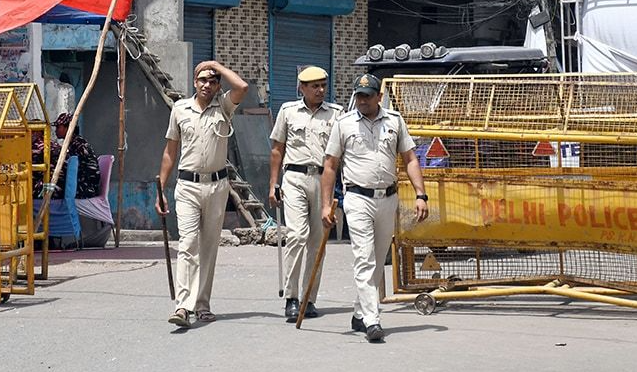
With mobile data cut off in central Delhi, a lot of people headed to WiFi hotspots nearby to go online. The move drew harsh criticism from digital rights groups, who said the shutdown limited people’s access to information at an important time.
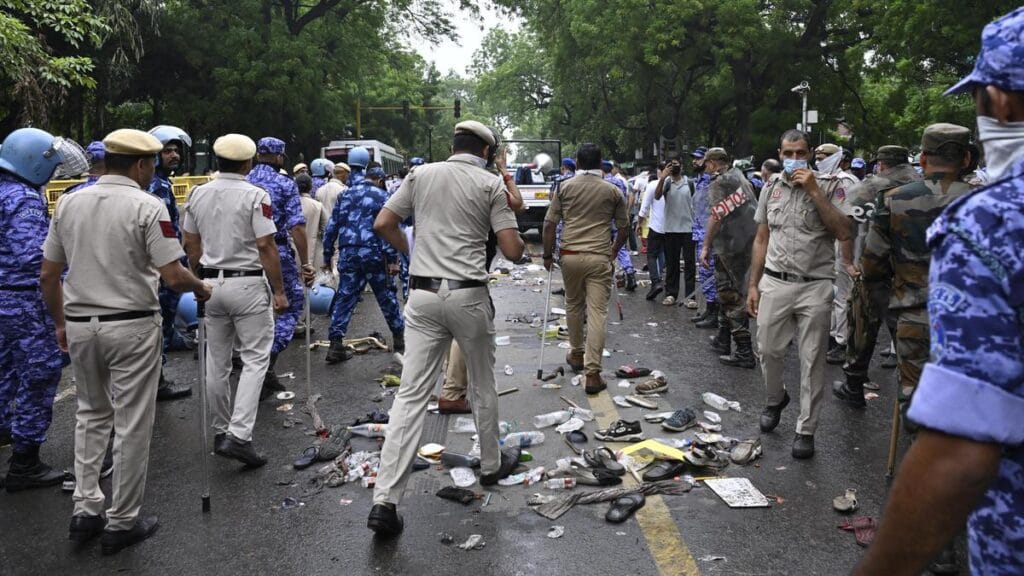
Supporters of Cockroach Janta Party (CJP) during protest march to demand resignation of Education Minister Dharmendra Pradhan over alleged NEET exam irregularities Police dispersed scene Image Credit : The Hindu
Jantar Mantar Protest: Central Delhi saw a major communications blackout on Monday as mobile internet was switched off while demonstrators gathered at Jantar Mantar and police moved in to disperse them. The shutdown slowed the circulation of visuals from the protest area, including images and videos being sent by journalists on the ground.
This was the first widespread internet shutdown in Delhi since the 2021 farmers’ agitation, making it a significant step in the Capital’s handling of unrest. Protesters and reporters were forced to use nearby WiFi hotspots to continue sending updates. Yeh issue kaafi important hai because it affects not only protest management but also how the public sees events in real time.
What Happened in Central Delhi
The shutdown came as large crowds gathered in central Delhi and security forces responded forcefully to the protest. According to reports, mobile internet was switched off across Central Delhi for several hours, and that disruption made it difficult for people at the scene to upload photos, videos or live commentary. This story was also covered by The Hindu.
That mattered because visual evidence often shapes public understanding of protests within minutes. When mobile data disappears, the pace of reporting slows down, especially for independent journalists and ordinary citizens who depend on phones to share what they are seeing. Some people were able to continue using WiFi from nearby establishments, but that workaround was limited and uneven.
Mobile internet shutdowns are generally used as an extraordinary measure during unrest. They are intended to reduce coordination, limit the spread of rumours and stop online escalation. But they also reduce transparency. Seedhi baat yeh hai: the same action that may help authorities control a situation can also make it harder for the public to understand what is actually happening on the ground.
Why the Shutdown Drew Criticism
The decision to suspend mobile internet in central Delhi was criticised by the Internet Freedom Foundation and the Software Freedom Law Centre, India. Their objection was not only about inconvenience but also about principle: shutting down communications in the middle of a live protest limits access to information and makes it harder for citizens, media and activists to document events.
That criticism is especially relevant in a democracy where protests are part of public expression. Even if the state believes a shutdown is needed for order, it raises questions about proportionality and transparency. Was the disruption narrowly targeted, or broader than necessary? Was there a public order threat severe enough to justify the blackout? These are the kinds of questions that usually follow such decisions.
The issue also becomes more serious because the government’s decision drew condemnation while visuals from the crackdown were already being blocked by the shutdown. When people cannot see what is happening and cannot easily share it, the official version of events dominates the conversation. That is why rights groups often argue that shutdowns should be used sparingly, if at all. Yeh bhi important hai because information control can shape public memory of a protest.
Background and Context
Delhi has seen internet shutdowns before, but they remain unusual in central parts of the city. The last major comparable disruption was during the farmers’ agitation in 2021, when internet services were restricted around protest sites. Earlier shutdowns in 2019 during anti-CAA protests also affected parts of the capital and were widely debated.
Those earlier events established a pattern: when protests grow large and politically sensitive, communication restrictions often become part of the state response. However, digital rights groups have increasingly challenged this approach, arguing that it harms not only protesters but also commuters, journalists, businesses and emergency communication. In a city like Delhi, even a limited shutdown can affect a wide circle of people.
This current case is especially notable because it happened in the heart of the national capital, not at a peripheral protest site. Central Delhi is both politically symbolic and operationally sensitive. Any communications blackout there will inevitably attract national attention. It also affects the country’s perception of how freely information can move when power is being challenged. That makes the story much bigger than a temporary service disruption.
Timeline
Morning: Large crowds gather at Jantar Mantar in central Delhi.
Around protest escalation: Security forces begin dispersing demonstrators with force.
During the crackdown: Mobile internet is switched off across Central Delhi.
Immediately after: Journalists and protesters rely on nearby WiFi hotspots to send updates.
Later in the day: Rights groups condemn the shutdown and demand restoration.
Also Read: Mumbai Shivaji Park Protest Grows Over Delhi Police Action Against Sonam Wangchuk
Why This Matters
This matters because communications access is now a core part of public life, not a luxury. When mobile internet is switched off in a protest zone, people lose a basic tool for reporting, organising and staying informed. That can make a tense situation harder to follow and easier to misrepresent. Yeh issue kaafi important hai because the public’s right to know is directly affected.
It also matters for accountability. Protest footage and live updates often serve as evidence of what actually happened during a crackdown. If those visuals are delayed or suppressed, the record becomes weaker and more dependent on official statements. That is a serious issue in any democracy, especially when the police action is forceful.
There is also a practical impact. People who are not part of the protest can still be affected by a shutdown through disrupted work, travel and communication. Journalists may struggle to file updates, small businesses may lose digital transactions and families may find it harder to stay in touch. In a city like Delhi, these effects can spread quickly beyond the protest area.
India Angle
For Indian readers, this case speaks to a familiar tension between law and order and the freedom to communicate. In Hinglish, seedhi baat yeh hai: jab protest hota hai, government ko control chahiye hota hai, lekin logon ko bhi truth dekhne ka haq hota hai. The internet shutdown sits right in the middle of that conflict.
India has used communication restrictions in different states and cities during unrest, but each such move raises the same debate. Is it a necessary security measure or an overreach that hurts civil liberties? In Delhi, the stakes are even higher because the Capital is where national policy and public dissent often collide.
The story also matters to ordinary citizens because most people now depend on mobile data for everything from navigation to news alerts. A shutdown in central Delhi does not only affect protesters; it affects commuters, office workers, shopkeepers and residents. That makes the impact much wider than the police perimeter suggests.
Analysis
My opinion is that the key issue here is transparency. Authorities may argue that a shutdown was necessary to manage unrest, but shutting off mobile internet in a large part of the Capital also restricts the public’s ability to verify what is happening. In a situation involving forceful dispersal, that loss of visibility becomes especially significant.
I also think this case shows how protest coverage has changed in the smartphone era. A few years ago, the public might have waited for TV footage or newspaper reports. Today, people expect immediate clips, live streams and social posts. When a shutdown cuts that flow, it does not just slow reporting; it changes the speed at which public opinion forms. That is why digital rights groups respond so strongly.
From an editorial perspective, this is not a small technical story. It is a story about how modern protest, modern policing and modern media all collide in one space. The internet shutdown is the hinge point that ties all those strands together. It is one of those moments where technology, politics and civil liberties are all in the same frame.
What Next
The next step will depend on how long authorities keep restrictions in place and whether the protest situation stabilises. If the unrest eases, mobile internet services are likely to be restored more quickly. If tensions continue, the shutdown could remain a topic of public protest itself, especially among civil liberties groups and journalists.
There may also be legal and policy scrutiny over whether the shutdown was justified and whether the order was properly disclosed. Rights groups are likely to keep pressing for accountability and clearer limits on such measures. That pressure could feed into future debates about protest management in Delhi and across India.
For the public, the immediate question is simple: how can citizens, media and authorities ensure safety without compromising access to information? That is the debate this shutdown will keep alive in the days ahead.
Conclusion
The mobile internet shutdown in Central Delhi did more than slow the spread of protest visuals; it exposed the tension between public order and digital freedom in India’s capital. As police cracked down on demonstrators at Jantar Mantar, journalists and protesters had to rely on limited WiFi access to keep the story moving.
The move drew criticism from rights groups and revived concerns about how far the state should go in controlling information during unrest. In a city like Delhi, where every major protest becomes a national story, the blackout is itself part of the news.
Written By A. Jack