Lamborghini CEO Stephan Winkelmann said the brand made the right decision to step back from a fully electric model and focus instead on plug-in hybrids. His comments come after Ferrari was heavily criticised over the reveal of its first all-electric car, the Luce.
Lamborghini CEO Stephan Winkelmann defends the brand’s decision to prioritize plug-in hybrids after Ferrari’s EV debut triggered backlash.
Ferrari Luce Backlash
The high-end auto industry is facing a fresh debate over the future of electric performance cars after Ferrari’s first all-electric vehicle, the Luce, drew strong backlash from fans, analysts, and some former insiders. In that context, Lamborghini CEO Stephan Winkelmann said on Wednesday that canceling the company’s own all-electric plans was “the right way to go” for his brand.
Winkelmann said Lamborghini’s earlier decision to move away from a full-electric future and focus on plug-in hybrid electric vehicles had worked well. He stressed that every brand must choose its own path, adding that innovation should matter but not be forced on customers who are not ready for it. The comment has added another sharp twist to the growing divide between carmakers pushing EVs and luxury brands trying to protect their identity. Yeh debate kaafi important hai because it shows how even premium carmakers are now rethinking the speed of the electric transition.
What Winkelmann Said
Winkelmann said Lamborghini’s choice to shift from traditional internal combustion engines to plug-in hybrids was a “very important” one and that the strategy had “worked out.” He avoided directly attacking Ferrari or commenting on the Luce’s reception, but his message was clear: Lamborghini believes its customer base is not ready for a full-electric supercar. CNBC has covered the full story.
He said the acceptance curve for EVs among Lamborghini’s type of customers is not rising enough to justify a pure-electric move. In his view, innovation should be meaningful and market-led, not simply pursued for novelty’s sake. That statement reflects a very specific luxury-car philosophy. Brands like Lamborghini are not just selling technology; they are selling emotion, sound, speed, prestige, and a very particular driving identity.
This is why the company’s decision to cancel the all-electric Lanzador and a version of its Urus SUV matters. It signals a strategic bet that hybrid performance can preserve the brand’s appeal better than a forced EV pivot. In simple words, Lamborghini is saying, “We will electrify, but not at the cost of our core identity.”
Ferrari’s Backlash Created the Opening
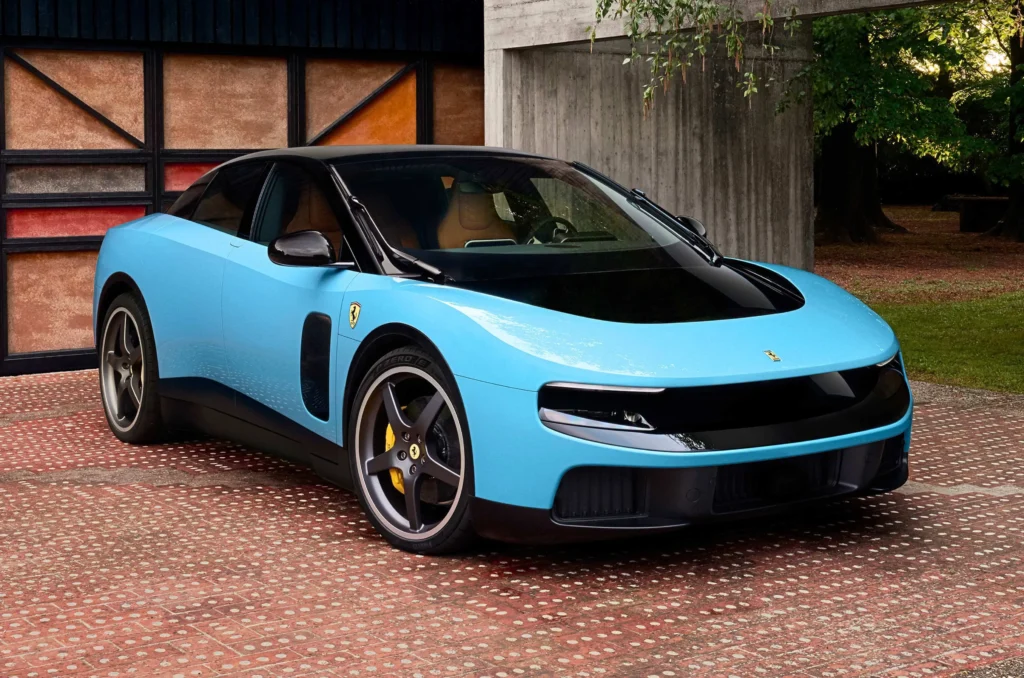
The timing of Winkelmann’s comments is important because Ferrari’s Luce had just faced a wave of criticism. Ferrari shares fell about 8 percent in Milan and 5.3 percent in New York after the reveal. Analysts pointed to “design hate” as one reason for the drop, while fans were also unhappy that the iconic supercar maker was embracing an EV concept.
The Luce was designed by former Apple design chief Jony Ive and has a much more minimalist look than traditional Ferraris. It features a bubbly exterior and a screen-heavy, pared-down interior that marks a sharp departure from Ferrari’s usual aesthetic. For many fans, that was enough to trigger concern that the car was drifting too far away from the brand’s historic identity.
Former Ferrari executive Luca di Montezemolo also criticized the car, reportedly saying he hoped Ferrari would remove the prancing horse logo from it. Italian Deputy Prime Minister and Transport Minister Matteo Salvini also voiced criticism. In luxury-car branding, perception matters as much as engineering. When loyal customers feel a brand is changing too fast, the reaction can be immediate and emotional.
Why Lamborghini Took a Different Route
Lamborghini’s decision to cancel its full-EV plan did not happen in isolation. The brand is owned by Volkswagen and has been one of several global automakers that pulled back on EV investment because of weaker demand. That shift is part of a larger industry pattern where the original enthusiasm around battery-electric vehicles has run into a more cautious market reality.
For Lamborghini, the challenge is especially sharp. A supercar brand sells more than transportation. It sells drama, noise, design, and exclusivity. If customers associate the brand with the roar of an engine and the physical experience of driving, then a full-electric model may feel less authentic to them. That is what Winkelmann appears to be betting on.
Plug-in hybrids give Lamborghini a middle path. They allow the company to meet emissions and technology expectations while still preserving some of the sensory experience that customers expect. The strategy is not anti-innovation. It is a different form of innovation — one that tries to keep the brand emotionally intact while adapting to regulation and market pressure.
Industry Context
The auto industry has spent years treating the EV transition as inevitable and fast. But by 2026, the landscape looks more nuanced. Demand has been uneven, luxury buyers have mixed reactions, and some brands are realizing that their customer base does not want a complete break from combustion engines just yet.
Lamborghini is not alone in reconsidering the pace of electrification. Across the industry, manufacturers have adjusted timelines, scaled back ambitious EV launches, or leaned more heavily into hybrids. For premium brands especially, the transition is about brand psychology as much as battery technology.
Ferrari and Lamborghini are among the clearest examples of this tension because they are not mass-market automakers. Their identity is tied to heritage, sound, and performance culture. That means even small product changes can trigger emotional responses from loyal fans and investors. The Luce backlash shows what happens when a legendary brand takes a bold EV step that some followers see as too abrupt.
Timeline
March 2026: Lamborghini reportedly cancels plans for the all-electric Lanzador and a version of the Urus SUV.
Monday this week: Ferrari unveils its first all-electric vehicle, the Luce, in Italy.
Tuesday: Ferrari shares fall sharply in Milan and New York after the reveal.
Wednesday: Lamborghini CEO Stephan Winkelmann says canceling the EV plans was the right decision for Lamborghini.
Following reaction: Debate continues over whether luxury carmakers should move faster or more cautiously on EVs.
Also Read: Parle Industries Shares Hit 5% Upper Circuit Again as Viral Melody Buzz Fuels Wrong-Stock Rally
Why This Matters
This matters because it reveals a broader shift in how luxury brands think about the electric future. The debate is no longer just about battery range or charging speed. It is about identity, customer loyalty, and whether a brand can remain desirable while changing its powertrain.
It also matters for investors. When Ferrari’s stock drops after an EV reveal, that is a market signal, not just a design critique. It suggests that even in premium segments, electric transition can be risky if it clashes with what buyers think the brand stands for. Yeh issue kaafi important hai because it affects product strategy, brand value, and long-term market trust.
India Angle
The India angle is relevant because Indian luxury-car buyers are also watching how global premium brands handle electrification. India’s high-end auto market is still relatively small, but it is growing, and brand image matters a lot to affluent buyers here. People who buy Ferrari or Lamborghini in India are not just buying a vehicle; they are buying a statement.
In Hinglish, the seedhi baat yeh hai: luxury buyers yahan bhi poochte hain ki “car ka feel wahi hai ya nahi?” That is why the Ferrari-Lamborghini debate matters in India too. If global supercar brands move too quickly toward EVs without retaining emotional appeal, Indian luxury consumers may respond cautiously as well. The choice between a loud V8-style experience and a silent electric powertrain is a real branding question in this market.
Analysis
My view is that Lamborghini is making a commercially smart, if somewhat conservative, choice. The company is protecting what makes the brand special while still adapting through hybrids. That may not sound revolutionary, but in a segment built on emotion, it could be the wiser move. Ferrari’s backlash shows the risk of moving too far ahead of customer sentiment. Innovation is important, but luxury brands are different from mainstream ones: they are judged not only on performance and technology but also on emotional continuity. Lamborghini seems to understand that better than most.
What Next
The next phase will likely involve more scrutiny of how Ferrari and Lamborghini balance performance, electrification, and brand identity. Ferrari may continue defending the Luce and its EV roadmap, while Lamborghini is expected to lean harder into plug-in hybrids for now.
Investors and customers will watch sales, reception, and long-term strategy closely. If Ferrari’s EV proves successful, the backlash may fade. If not, Lamborghini’s cautious approach could look even smarter. Over time, the luxury auto market may settle into a hybrid-heavy middle ground before full electrification becomes more widely accepted. For now, the competition is not just about speed on the road—it is also about who reads the customer better.
Conclusion
Lamborghini CEO Stephan Winkelmann’s defense of canceling the brand’s EV plans comes at a moment when Ferrari is facing serious backlash over its first all-electric car, the Luce. His comments underline a key truth in the luxury auto world: not every brand can afford to electrify in the same way or at the same speed.
For Lamborghini, plug-in hybrids appear to offer the best balance between innovation and identity. For Ferrari, the challenge will be proving that an EV can still feel like a Ferrari. The larger industry lesson is clear — in the premium car segment, technology alone is not enough. Brand emotion, customer loyalty, and timing matter just as much.
Written By A. Jack