The news of Ranveer Singh quitting Don 3 is no longer just a story of casting. It has become a larger conversation about power, control and celebrity image. But the move, in many ways, has only reinforced the perception of him as a star who will not be boxed in.
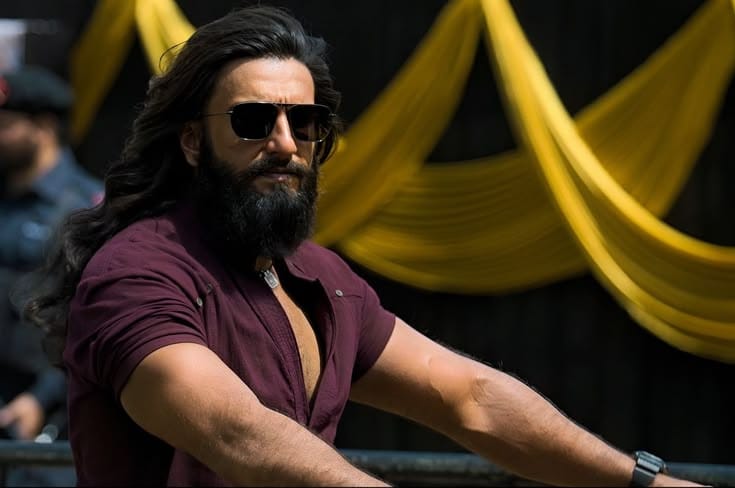
Ranveer Singh’s reported exit from Don 3 has sparked a larger debate on celebrity power, film franchises and control in Bollywood.
Ranveer Singh walking away from Don 3 has triggered a wave of commentary that goes far beyond Bollywood casting chatter. What was once seen as a franchise update is now being discussed as a statement about power, timing, and how modern stars manage their own image.
The debate gained fresh momentum after writer and commentator Shobhaa De linked Ranveer’s exit to the ongoing Delhi Gymkhana controversy, calling him the “Delhi Gymkhana of Bollywood.” Her comparison has resonated because both situations appear to revolve around exclusivity, gatekeeping, and who gets to control the narrative. Yeh story interesting isliye bhi hai because it is no longer just about a film—it is about how power works in public life.
Why the Comparison Works
The Delhi Gymkhana dispute has long symbolized an old-world network of privilege, access, and institutional control in the capital. A place like that is not just a club; it represents inherited influence, social hierarchy, and the quiet rules of belonging. Shobhaa De’s analogy suggests that Ranveer Singh occupies a similar space in Bollywood—highly visible, difficult to predict, and impossible to fully control.
That comparison works because Ranveer has never behaved like a conventional star. He has often embraced exaggeration, reinvention, and theatrical public presence while still delivering strong performances on screen. In the current Don 3 debate, the striking part is not that he left—it is that he left without turning the moment into a loud public battle. That silence, oddly enough, has made him appear even more in control. NDTV has covered the full story.
When a star steps back from a high-profile franchise and refuses to over-explain the decision, the industry is left to fill the gap with speculation. That vacuum becomes the story. And in Ranveer’s case, the silence has made him look strategic rather than shaken.
What Happened Around Don 3
The Don 3 situation has been developing for some time. The film had already gone through major off-screen turbulence, and Ranveer Singh’s name became central to the next phase of the franchise after earlier casting shifts and delays. Then came reports that he had walked away, followed by industry reactions, union responses, and renewed public debate.
FWICE’s non-cooperation directive against Ranveer added another layer of drama. What could have remained a routine production issue turned into a broader conversation about who in Bollywood gets punished when projects stall. That is important because film production is not just about stars and directors—it involves technicians, assistants, spot boys, editors, stylists, and many others whose livelihoods depend on the project moving forward.
This is where the story stops being only about Ranveer Singh and becomes a larger industry case study. If a franchise stalls, the visible fallout may land on the star, but the invisible cost spreads across the entire production ecosystem. That is why the public reaction has been so intense.
Ranveer’s Silence as Strategy
One of the most interesting parts of this entire episode is that Ranveer Singh has not turned this into a media war. He has not been posting emotional statements every few hours. He has not turned every interview into a defense of his decision. Instead, he has let the noise travel without constantly entering it.
That kind of restraint is rare in celebrity culture, where every issue is usually over-explained in public. But in Ranveer’s case, the silence itself has become a message. It suggests he understands that some moments do not need constant explanation. Sometimes walking away quietly is more powerful than staying and arguing.
That is also why the comparison with Don feels so fitting. Don, as a character, is never rushed by public panic. He watches, calculates, and stays a step ahead. If Ranveer is choosing projects more carefully now, especially after Dhurandhar reportedly changed his professional standing, then the industry is likely seeing a more selective version of him. That shift gives him leverage, and leverage changes how stars are perceived.
Background and Context
The Don franchise has always carried enormous weight in Hindi cinema. It is not just an action series; it is a legacy property with a very specific identity. When a franchise like that changes direction, every decision becomes emotionally loaded for audiences. If the lead changes, the tone changes. If the tone changes, fans react.
Ranveer Singh stepping into the Don universe already invited comparison with earlier versions of the role. That made expectations high and criticism inevitable. Over time, delays, creative uncertainty, and changing audience reactions only intensified the pressure. Then, as the off-screen narrative kept shifting, the conversation became less about a film and more about whether anyone could realistically control the Don brand anymore.
On the other side, Delhi Gymkhana became a symbol of institutional exclusivity and the defense of old power structures. That parallel is why the metaphor caught fire. One is a social club rooted in legacy and access. The other is a celebrity trying to define his own path in an industry built on hierarchy and perception. Both are, in different ways, about who gets to stay inside the circle and who gets to walk away from it.
Timeline
Earlier: Don 3 was announced as a major franchise continuation.
After delays and creative turbulence: Ranveer Singh becomes associated with the project.
Recent reports: Ranveer exits Don 3, prompting fresh debate.
FWICE action: A non-cooperation directive adds pressure and public attention.
Shobhaa De’s remarks: The Delhi Gymkhana comparison pushes the issue into a wider discussion on power and gatekeeping.
Now: The conversation has shifted from casting to celebrity control and industry authority.
Also Read: Ranveer Singh Faces FWICE Non-Cooperation Directive After Don 3 Exit
Why This Matters
This matters because it shows how celebrity exits are no longer just film business news. They are now part of a broader discussion about power, image, and the right to choose. When a star like Ranveer Singh walks away from a project, the reaction says as much about the industry as it does about the actor.
It also matters because Bollywood often talks about talent and creativity while quietly operating through hierarchy, loyalty, and influence. The Don 3 episode has exposed how fragile these balances can be when a star does not follow the expected script. Yeh issue kaafi important hai because it forces the industry to confront a hard question: is it really about collaboration, or is it about control?
India Angle
For Indian audiences, this story lands because Bollywood is still one of the country’s biggest cultural mirrors. Ranveer Singh is not just a film actor; he is a public personality who represents a certain kind of modern, loud, experimental Indian stardom. His choices matter because they shape how fans see celebrity independence.
In Hinglish, seedhi baat yeh hai: jab ek bada star quietly project chhod deta hai, toh log usse weak nahi, smart bhi samajh sakte hain. That kind of response is especially relevant in India, where public figures are often expected to explain every move. Ranveer’s reported exit shows that Indian celebrities are increasingly trying to control their own narrative, rather than be controlled by it.
Analysis
My opinion is that Ranveer’s move feels “Don” not because it is dramatic, but because it is unreadable. He has stepped away from a high-pressure franchise and refused to fight every battle in public. That creates mystery, and mystery in celebrity culture is a form of currency. The industry often assumes that visibility equals control, but this case suggests the opposite: sometimes absence is more powerful than noise. If Dhurandhar has indeed improved his leverage, then he is behaving like a star who now understands his market value better. Bollywood tends to be uncomfortable when actors begin acting like brands with boundaries. But that discomfort is exactly what makes the story so compelling.
What Next
The next phase will depend on whether Don 3 gets a new lead or whether the project undergoes another major rethink. The franchise still has brand value, but every fresh delay or casting shift makes the off-screen story more complicated. Producers will likely want to stabilize the narrative quickly to avoid further confusion.
For Ranveer Singh, the likely next step is a more selective phase in his career. If he is indeed focusing on larger strategic choices after Dhurandhar, we may see him take fewer but more carefully chosen projects. That could strengthen his standing further if the films land well. For now, the bigger question is whether Bollywood can accept a star who refuses to be managed in the old way.
Conclusion
Ranveer Singh walking away from Don 3 has become more than a casting update—it has turned into a statement about power, silence, and celebrity control. The comparisons to Delhi Gymkhana work because both stories revolve around who gets to decide the rules, who gets excluded, and who has the confidence to step away.
That is why the moment feels so “Don.” Not because of any punchline or pose, but because it reflects quiet control in a noisy system. In an industry that often demands constant explanation, Ranveer’s silence may be his loudest move yet.
Written By A. Jack