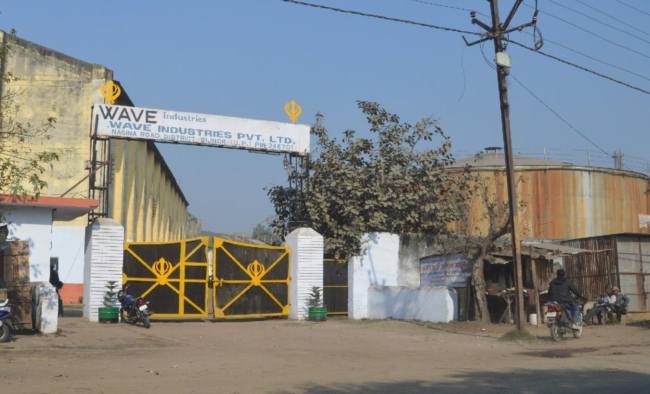
A woman bank manager was injured after a scooter-borne man allegedly threw a chemical on her face in Lucknow’s Alambagh area. Police have launched an investigation, with initial findings pointing to a possible personal dispute.
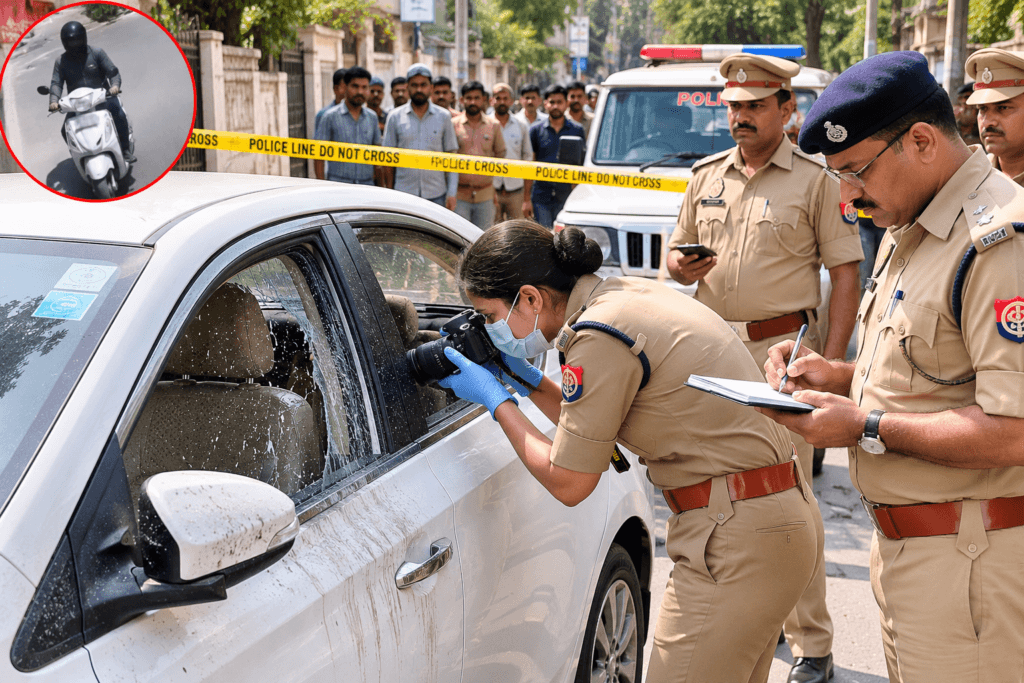
This Image is only for illustration | made By AI
An unfortunate case that recently occurred in the city of Lucknow, which is in the Indian state of Uttar Pradesh, has brought to light new questions regarding women’s security when a woman banker was reportedly doused with chemicals by a motorcyclist who has not yet been identified. This unfortunate occurrence happened on Tuesday evening in the area of Railway Colony of Alambagh, where the lady was seated inside her parked car after coming back from work.
As per police sources, the unknown assailant tapped on the car’s window, and the woman opened the window pane. A few seconds later, he threw the chemicals on the face of the victim and fled the scene. The victim felt immediate irritation and a burning sensation in her eyes and took herself to the Ajanta hospital for treatment. It was reported later that the condition of the victim is stable.
The investigation of the police is currently underway.
Why and How Did the Incident Happen?
According to the initial findings of the police, the identity of the victim has been established as Manpreet Kaur, who works as the manager of the Central Bank of India, posted at Manaknagar, Lucknow.
According to the police report, Manpreet Kaur returned to Railway Colony in the evening, where she usually keeps her car before reaching her home. It is stated that around 7:30 p.m., a youth in a scooter appeared before her parked car.
The suspect is alleged to have knocked the window on the driver’s side out. Thinking that the youth may want to ask something or talk, Manpreet opened the window and the accused threw the liquid from a bottle on her face and escaped from the spot.
The victim got blisters and severe eye burns, which resulted in blurred vision. She somehow managed to reach Ajanta Hospital, where she received first aid.
So far, the exact details of the liquid have not been confirmed by the police. The liquid is expected to be tested in the forensic laboratory, and the test results will help in determining whether it was an industrial liquid, acid, or any other corrosive liquid.
In addition to this, the investigators are examining the video
Also read: Why Are Jharkhand Students Protesting? Inside the JPSC, JSSC Recruitment Row and CBI Demand
Official Statements
Police authorities have admitted that there is an ongoing probe and several teams have been assigned to track down the criminal suspect.
As per Inspector Brajesh Kumar Tripathi, the initial probe has revealed that there was a conflict between the husband of the victim and some other person. However, police authorities have admitted that all possible aspects are being considered and a final verdict on the motive has not yet been made.
He further added that forensic findings, CCTV footage, and eyewitness testimony will be important for establishing the chronology of events and naming the culprit.
Medical authorities treating the victim have confirmed that she suffered from eye irritations and discomfort in her face due to exposure to the chemical.
Background and Context
Nevertheless, chemical assaults are still a threat even as there are tighter rules in the selling of corrosive materials in India.
After a number of acid assault incidents, the Supreme Court ordered states to regulate the sale of acids and ensure that measures are put in place to assist victims. However, chemical assaults using unidentified chemicals have continued to happen all over India.
Law enforcement bodies have time and again warned citizens to be wary of lonely places during evenings as the surveillance systems using CCTV cameras get bolstered.
Furthermore, the Lucknow incident points out the issue of guaranteeing the safety of women in urban areas amidst increased police surveillance and technology.
Timeline
On Tuesday night, after finishing her shift at the Central Bank of India, Manaknagar branch, Manpreet Kaur went back to the Railway Colony, Alambagh.
At about 7:30 PM, she had parked her car just like she always does before leaving for her house.
A man sitting on a scooter came near her car and knocked on the window pane.
Upon rolling down the window, the accused is reported to have hurled some liquid on her face and ran away.
Suffering from intense irritation in the eyes, the lady took herself to the Ajanta Hospital.
The police arrived at the spot and started their investigation.
Why This Matters
This is a significant issue that brings into question public safety and crimes against women in urban India.
While the motive is yet to be established, the incident clearly highlights how any common event can suddenly become threatening. It is only natural for a person seated inside a stationary car to feel safe, but the incident shows that such a thing is not impossible.
“This issue is quite important because increased surveillance, quick response, and stringent punishment of offenders are crucial for increasing confidence among the public and the safety of women.”
The incident also calls for stricter regulations regarding dangerous substances if it is proved that a corrosive liquid was indeed used.
India Angle
Women’s safety continues to be a significant issue in India. Urbanization is taking place at a fast pace, but maintaining security in public places is also vital.
There have been cases of chemical attacks, stalking, sexual harassment, and targeted attacks on women that have led to governments implementing measures such as surveillance cameras, helplines for women, and stricter criminal laws. Nevertheless, according to experts, there is a need for coordinated work from the police, local bodies, residents’ associations, and citizens themselves to prevent such acts.
The case in Lucknow highlights the importance of creating public awareness and conducting prompt investigation.
Moreover, if proven by forensic examination, the incident may bring into discussion the question of restricting access to dangerous substances.
Analysis
As far as the editorial is concerned, the Lucknow episode is a reason for every suspected attack using chemical weapons to be investigated promptly and in a transparent manner.
Although the preliminary information shows that there might have been some kind of personal issue involving the victim’s husband, investigators will have to go by the facts rather than assumptions, because CCTV footage, forensic reports, and eyewitness accounts will reveal the motive and the individuals behind the attack.
Moreover, it is necessary to enhance preventive measures at residential colonies and parking lots, where attacks can take place in isolation.
Furthermore, the incident has once again underlined the necessity of educating people regarding the steps they should take after getting exposed to any kind of chemical weapon. It is also covered by hindustan in Hindi.
What Next?
The police have been requested to continue investigating CCTV tapes, forensic evidence, and mobile phone communications to apprehend the suspects.
Laboratory tests on the collected chemical will determine the type of chemical used in the assault.
The investigators will also continue interviewing people connected with the reported dispute in an effort to explore all possible motives for the crime.
If enough evidence is obtained, criminal proceedings are likely to be instituted against those involved in the crime.
Conclusion
The recent chemical assault on a woman banker at Lucknow has come as a shock to the residents and created worries about the safety of people in public areas. Even though the woman appears to be in a good state, it highlights the dangers involved with such targeted attacks using hazardous substances.
Now, as the police are in the process of conducting investigations into the case, their attention has shifted to identifying the culprit behind the attack, determining the motivation from the evidence, and holding him accountable. It also acts as an example of how more security is required for the citizens’ protection.