
Items such as vada pav, samosas, deep-fried snacks, chips, cold drinks, sugary beverages, chocolates and ice cream will be off limits in schools and their surrounding 50-metre zone. The order covers around 1.08 lakh schools and nearly two crore students across all education boards.
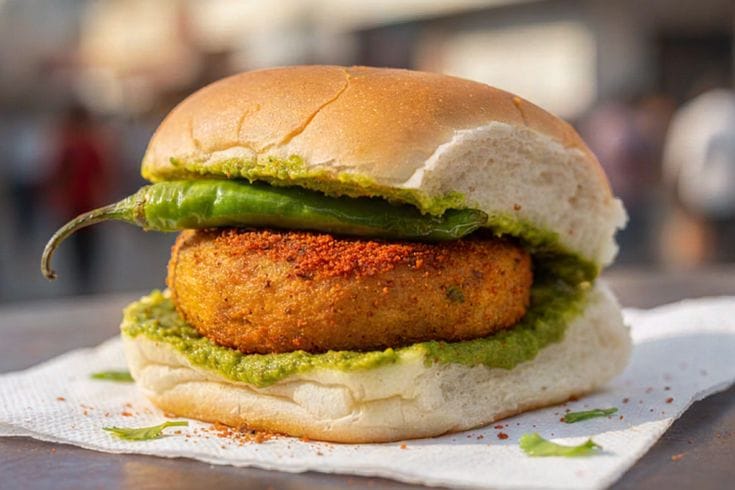
Mumbai Vada-Pav. This image is only for illustrations.
In a major push to improve child nutrition and combat lifestyle-related diseases, the Maharashtra FDA has issued a statewide ban on the sale and promotion of junk food in and around schools. The order, announced on Wednesday by FDA Commissioner Tukaram Mundhe, prohibits HFSS foods — those high in fat, trans-fat, sugar and salt — from being sold, distributed or advertised within school premises or within a 50-metre radius.
The move is part of the state’s ongoing “Safe Food, Safe Maharashtra” campaign and is expected to cover around 1.08 lakh schools and nearly two crore students. It applies uniformly to every school in the state, whether government-run, aided, private, residential, or affiliated with the CBSE, ICSE, State Board or any other board.
What the new order says
Under the order, items such as vada pav, samosas, deep-fried snacks, chips, cold drinks, sugary beverages, chocolates and ice cream will be off limits within schools and their surrounding 50-metre zone. That means school canteens, hostel canteens, Mid-Day Meal (PM-POSHAN) kitchens, Anganwadi centres and all food suppliers to schools will now need a valid FSSAI licence and registration.
Schools will now be expected to:
Put up a Food Safety Display Board
Appoint a food safety supervisor
Implement the “Eat Right School” campaign
Promote health and wellness activities
Ensure safe drinking water, clean kitchens, proper food storage and hygiene
Mundhe said the primary responsibility for enforcing these rules lies with school principals and management. The School Education Department will oversee compliance in government and government-aided schools, while other education boards and local bodies will carry out their own monitoring. This story was also covered by NDTV.
He added that the FDA will soon begin inspection drives across the state. Schools found breaking the rules could face notices, suspension or cancellation of licences, seizure of food items, and legal action under the Food Safety and Standards Act, 2006.
Why the ban was introduced
The order gives effect to the Food Safety and Standards Authority of India’s (FSSAI) “Safe Food and Balanced Diets for Children in School Regulations, 2020″. The state government believes it will help lower the risk of obesity, diabetes and other lifestyle-related illnesses among children while building healthier eating habits in schools.
Mundhe said, “Our goal is to ensure safe food reaches every child in Maharashtra. This will foster a culture of healthy eating and help build a healthy society.” He added that the objective is not simply to impose restrictions but also to build awareness about healthy eating among children and parents. Workshops with school management will be held at the district and taluka levels, with a focus on encouraging nutritious eating through the “Eat Right School” campaign.
Yeh issue kaafi important hai because childhood eating habits often shape adult health. If schools become zones where only nutritious food is available, it can reduce the temptation for children to consume HFSS items regularly.
Background and context
The FSSAI regulations from 2020 already laid down norms for safe food and balanced diets for children in schools. However, enforcement has been uneven across states. Maharashtra’s new order is an attempt to operationalise those norms at the state level with clear penalties and inspection mechanisms.
School canteens and nearby vendors have long been a source of cheap, popular snacks for students. Items like vada pav, samosas and chips are not only affordable but also heavily marketed to children. Over time, concerns have grown about the nutritional quality of such food and its contribution to rising obesity and diabetes rates among school-going children.
By extending the ban to a 50-metre radius, the FDA is trying to close the loophole where vendors simply set up stalls just outside the school gate. That spatial buffer is intended to make it harder for students to access HFSS foods during school hours.
Timeline
2020: FSSAI issues “Safe Food and Balanced Diets for Children in School Regulations”.
Wednesday: Maharashtra FDA announces statewide ban on HFSS foods in and around schools.
Next: Inspection drives to begin; workshops with school management planned at district and taluka levels.
Ongoing: Schools are required to appoint food safety supervisors and display boards and ensure compliance.
Also Read: FDA Suspends Food Licences of 5 High-Profile Mumbai Clubs After Hygiene Violations
Why This Matters
This matters because childhood nutrition is a long-term public health investment. When children grow up consuming high-fat, high-sugar foods, they are more likely to develop obesity, diabetes and cardiovascular issues later in life. By restricting HFSS foods in schools, the state is trying to shift the default option towards healthier choices.
It also matters because schools are a controlled environment where policy can have immediate impact. Unlike homes, where parents make food choices, schools can standardise what is available during the day. If implemented well, the ban can reduce daily exposure to unhealthy snacks and drinks.
For parents, the message is clear: schools should be safe zones for nutrition, not places where children are constantly tempted by junk food. In simple Hinglish, jab school mein healthy khana milega, toh bachchon ki aadat bhi badlegi.
India angle
For Indian readers, this story is directly relevant because childhood obesity and lifestyle diseases are rising across the country. From metro cities to smaller towns, more children are being diagnosed with conditions that were once rare in younger age groups.
The India angle also includes the regulatory challenge. While FSSAI has laid down norms, enforcement depends on state agencies. Maharashtra’s order sets a precedent that other states may follow if it shows positive results.
There is also the cultural angle. Snacks like vada pav and samosas are deeply embedded in Indian school life. Banning them requires not just enforcement but also awareness-building so that students and parents understand the health rationale.
Analysis
My opinion is that the 50-metre radius rule is a smart move. Without it, vendors could simply relocate just outside the school boundary and continue selling HFSS items. The buffer zone makes the policy more enforceable and meaningful.
I also think the emphasis on licensing and inspections is crucial. If schools and suppliers know they can face licence suspension or legal action, they are more likely to comply. But the real test will be whether the FDA follows through with regular checks and penalties for violations.
What Next
The immediate next step will be the rollout of inspection drives across the state. The FDA will likely begin with high-profile schools and canteens to set an example, then expand to smaller institutions and nearby vendors.
Schools will need to appoint food safety supervisors, put up display boards and ensure their kitchens and storage meet hygiene standards. Suppliers will also need to verify their FSSAI licences and adjust their product offerings to comply with the ban.
Longer term, the success of the policy will depend on whether it leads to measurable changes in children’s eating habits. If obesity and diabetes rates among school-going children begin to decline, it will validate the approach. If not, questions will be raised about enforcement and alternative healthy options.
Conclusion
Maharashtra’s ban on HFSS foods in and around schools is a bold step toward improving child nutrition and reducing the risk of lifestyle diseases. By prohibiting the sale and promotion of items like vada pav, samosas, chips and sugary drinks within a 50-metre radius, the state is trying to make school zones zones of healthy eating.
The order covers 1.08 lakh schools and nearly two crore students, with clear penalties for violations. If implemented effectively, it could set a benchmark for other states to follow. The real challenge will be ensuring compliance, building awareness and providing affordable, nutritious alternatives for students.
Written By A. Jack