
The discharge from Khadakwasla dam was raised from 27,203 cusecs to 43,571 cusecs on Friday, leading to rapid waterlogging in Ekta Nagar, one of Pune’s most flood-prone areas. Residents say water entered ground-floor homes within hours of the increased release.
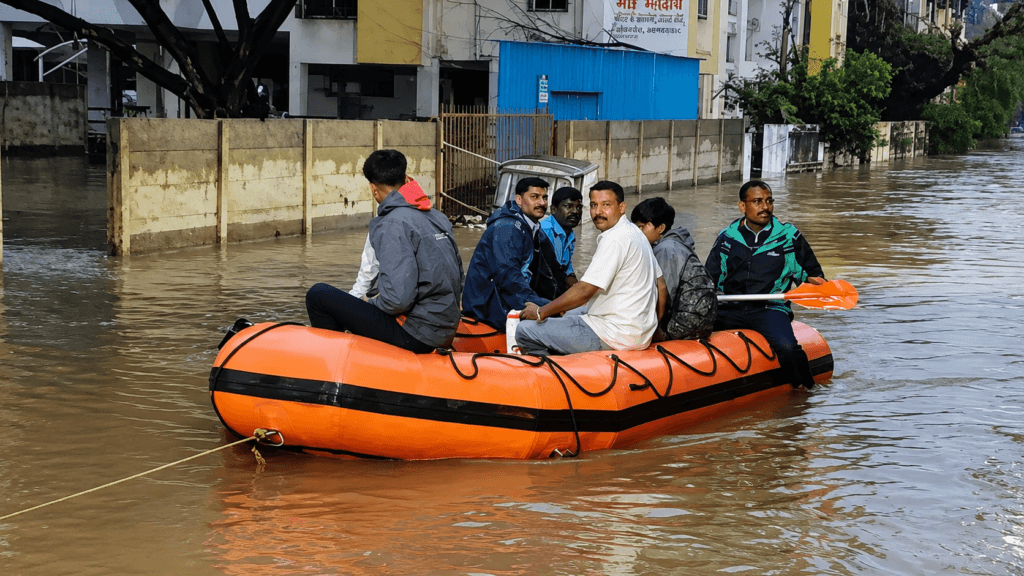
Fire brigade personnel use boats to evacuate families from flooded housing societies in Ekta Nagar, Pune. Image Credit: IndianExpress
Pune’s Ekta Nagar, a locality long known for its vulnerability to flooding, was once again submerged on Friday as heavy rainfall and a sharp increase in water discharge from the Khadakwasla dam caused the Mutha river to overflow. Around 70 families from the Sinhagad Road area were shifted to safer locations by the fire brigade, which used boats to navigate through waterlogged streets and rescue residents trapped in ground-floor homes and shops.
The flooding began in the afternoon after the dam discharge was increased from 27,203 cusecs to 35,574 cusecs and later raised to 43,571 cusecs. The higher release led to rapid waterlogging in Ekta Nagar, which comprises several residential buildings located in low-lying areas along the river. For many residents, the water entered their homes within hours, forcing them to move to higher floors or wait for rescue teams.
What happened in Ekta Nagar?
Ekta Nagar is among the city’s most flood-prone localities. In recent years, the area has witnessed severe flooding after water is released from the Khadakwasla dam into the Mutha river following heavy rainfall. On Friday, the combination of intense rain and the increased dam discharge created a perfect storm for waterlogging.
As the water level rose, fire brigade teams were deployed with boats to shift families to safer locations. Residents reported that water entered ground-floor apartments and shops, damaging furniture, electronics and stored goods. Some families said they had only minutes to move to upper floors before the water reached dangerous levels. This story was also covered by The IndianExpress.
The evacuation was carried out in phases, with priority given to households with children, elderly members and those with limited mobility. Temporary relief arrangements were set up in nearby community centres and schools, where displaced families were provided with food, water and basic medical support.
Why the flooding happened
The immediate trigger for the flooding was the increase in dam discharge. The Khadakwasla dam, one of the key water sources for Pune, regulates its outflow based on inflow from upstream catchments and the overall water level in the reservoir. When heavy rainfall occurs in the catchment area, the dam authorities are often forced to release more water to prevent overtopping and structural risk.
On Friday, the discharge was increased in two stages: first from 27,203 cusecs to 35,574 cusecs, and then to 43,571 cusecs. That sudden increase, combined with the existing rainwater runoff, overwhelmed the river’s capacity and led to spillover into low-lying areas like Ekta Nagar.
Yeh issue kaafi important hai because dam releases are necessary for safety, but they must be coordinated with downstream flood management. If communities are not given enough warning or if drainage infrastructure is inadequate, the result is exactly what happened in Ekta Nagar.
Background and context
Ekta Nagar’s flooding problem is not new. The locality has been repeatedly affected in past monsoon seasons due to its proximity to the Mutha river and its low elevation. Even moderate dam releases can cause waterlogging in the area if the river is already full from rainfall.
The Khadakwasla dam has been a focal point of Pune’s flood management challenges for years. During heavy monsoon spells, the dam’s inflow can rise sharply, forcing authorities to increase discharge. That water flows into the Mutha river, which passes through several urban localities before joining the Mula river.
In recent years, the city has seen repeated calls for better flood forecasting, early warning systems and improved drainage in vulnerable areas. However, rapid urbanisation, encroachment on riverbanks and siltation have reduced the natural carrying capacity of the river, making flooding more likely even with moderate releases.
Timeline
Friday morning: Heavy rainfall in Pune and the catchment areas of the Khadakwasla dam.
Afternoon: Dam discharge increased from 27,203 cusecs to 35,574 cusecs, then to 43,571 cusecs.
Same afternoon: Waterlogging begins in Ekta Nagar; water enters ground-floor homes and shops.
Late afternoon: The Fire brigade deploys boats; around 70 families shifted to safer locations.
Evening: Relief arrangements set up; residents await further updates on water levels.
Also Read: No Food, No Water: Maharashtra Building Collapse Victims Share Ordeal
Why This Matters
This matters because flooding in urban areas is not just an inconvenience; it is a safety and livelihood issue. When water enters homes, it damages property, disrupts daily life and can pose health risks due to contaminated water and stagnant pools.
It also matters because Ekta Nagar is a residential area with many families living in compact housing societies. Repeated flooding erodes their sense of security and forces them to live with the constant anxiety of the next heavy rain. For small shop owners, waterlogging can mean loss of stock and income, which is difficult to recover from.
For Pune’s urban planning, the incident is another reminder that flood management must be integrated with dam operations, drainage infrastructure and community preparedness. In simple Hinglish, jab dam ka paani chhodte hain, toh neeche ke ilaakon mein alert pehle se hona chahiye.
India angle
For Indian readers, this story is directly relevant because monsoon flooding is a recurring issue across many cities and states. From Mumbai to Chennai to Patna, urban flooding during heavy rains and dam releases is a common challenge.
The India angle also includes the dam management dimension. Many cities depend on dams for water supply and irrigation, but when catchment areas receive heavy rainfall, the downstream impact can be severe. Better coordination between dam authorities, meteorological departments and local administrations is essential to minimise risk.
There is also the climate angle. With climate change increasing the frequency of extreme rainfall events, cities like Pune will need to invest more in flood-resilient infrastructure, early warning systems and community evacuation plans.
Analysis
My opinion is that the core issue here is not just the dam release but the lack of adequate flood buffers in downstream areas. When a locality is known to be flood-prone, there should be stronger drainage, raised plinths and clear evacuation protocols.
I also think the timing of the discharge increase matters. If residents are given more advance notice, they can move valuables to higher floors and prepare for evacuation. That reduces panic.
What Next
The immediate next step will be monitoring the water levels in Ekta Nagar and surrounding areas as the dam discharge continues. If rainfall persists in the catchment area, further increases in release may be required, which could prolong the flooding.
Authorities will likely review the evacuation process to identify gaps in warning systems, boat deployment and relief distribution. Residents may also demand long-term measures such as improved drainage, river desilting and stricter enforcement against encroachments.
Longer term, Pune may need to revisit its flood management strategy, integrating dam operations with real-time rainfall data, urban drainage capacity and community preparedness. If such incidents become more frequent, the city will need to invest in flood-resilient housing and infrastructure.
Conclusion
The flooding of Ekta Nagar in Pune after increased discharge from the Khadakwasla dam has once again highlighted the vulnerability of low-lying urban localities to monsoon-related waterlogging. Around 70 families were shifted to safer locations by the fire brigade using boats, as water entered homes and shops within hours of the dam release.
While dam operations are necessary for safety, the human cost of downstream flooding cannot be ignored. For Pune, the challenge is to balance water management with flood risk reduction, ensuring that communities like Ekta Nagar are better protected in future monsoon seasons.
Written By A. Jack