
The FDA suspends Fort eatery’s license after finding alleged improper egg storage, raw-cooked food mixing, open drains, stagnant water and flies; statewide raids seize food products worth ₹2.24 crore.
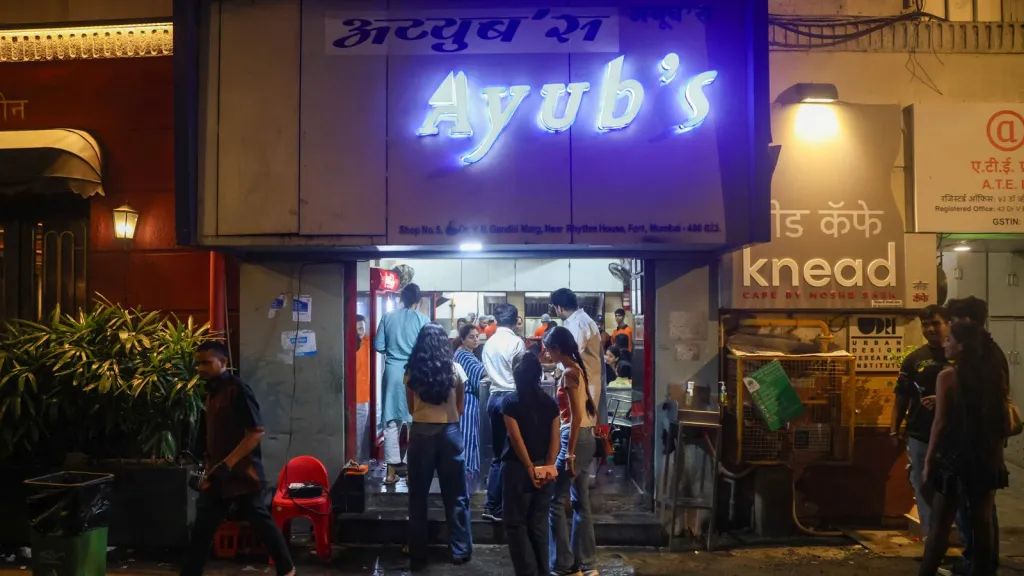
AYUB’S in Fort, Mumbai, a well-known late-night kebab and roll eatery whose food license was suspended by the Maharashtra FDA. Image Credit: Indian Express
Mumbai’s well-known Fort eatery AYUB’S has become the latest establishment to face action in the Maharashtra Food and Drug Administration’s expanding food-safety crackdown. The FDA suspended the restaurant’s food license after an inspection found alleged violations involving egg storage, food segregation, hygiene, pest control and sanitation.
The inspection took place on August 22, 2026, after the FDA received information about possible food-safety violations at the restaurant. The license was suspended with effect from August 23 under the Food Safety and Standards Act, 2006.
Inspectors reportedly found eggs and other high-risk food items stored at room temperature, raw and cooked food kept without proper segregation, flies in food-handling areas, stagnant water and open or poorly maintained drains.
The action forms part of the FDA’s “Safe Food, Safe Maharashtra” campaign, which has intensified inspections across restaurants, hotels, food outlets, dark stores, clubs and food manufacturers throughout the state.
What FDA Found at AYUB’S
The FDA’s inspection flagged multiple alleged deficiencies that could increase the risk of microbial contamination and cross-contamination.
Eggs are high-risk perishable items and require appropriate handling and storage. If stored in unsuitable conditions, they may support bacterial growth or become contaminated through contact with other raw materials. This story was also covered by The IndianExpress.
The absence of proper separation between raw and cooked food is also a major concern. Raw meat, poultry, eggs and vegetables can carry bacteria that should not come into contact with ready-to-eat food, cooked food or clean utensils.
Houseflies, stagnant water and open drains can create an environment where contamination spreads quickly. The FDA said the conditions could lead to microbial contamination and food-borne illness.
Why Raw-Cooked Food Segregation Matters
Food safety depends heavily on preventing cross-contamination. A restaurant kitchen should have separate handling systems for:
Raw meat and poultry
Eggs
Cooked food
Ready-to-eat ingredients
Vegetables and fruits
Clean utensils
Waste material
If raw and cooked food are stored together, bacteria from raw items can transfer to food that will not be cooked again before serving.
For example, a cutting board used for raw chicken should not be used for cooked kebabs or salad preparation without cleaning and sanitization. Likewise, containers holding raw eggs should not be kept near cooked sauces, bread or ready-to-eat fillings.
In a busy roll and kebab outlet, the risk can increase because ingredients are handled continuously and food is often prepared quickly to serve late-night customers.
The FDA’s findings suggest that hygiene systems at AYUB’S needed immediate correction.
AYUB’S: A Popular Mumbai Institution
AYUB’S is known across Mumbai for kebabs, rolls and late-night food service. The Fort outlet has long been popular with office-goers, students, tourists, actors, politicians and late-night revellers.
Its reputation has been built over decades, particularly around its grilled kebabs, roomali rotis and quick-service rolls.
That popularity is precisely why the FDA action has attracted attention. A famous brand can create a strong sense of trust among customers, but food-safety inspections show that reputation must be backed by regular compliance.
A high-volume kitchen serving hundreds of customers must maintain even stricter systems because a single lapse can affect a large number of people.
The license suspension does not necessarily mean permanent closure. It means the establishment must correct the identified deficiencies and satisfy the regulator before food operations can resume.
Statewide “Safe Food, Safe Maharashtra” Drive
The AYUB’S action came during the FDA’s statewide food-safety campaign.
On August 24, FDA officials inspected 37 hotels, restaurants and food establishments across Maharashtra.
The results included:
| Enforcement activity | Number |
|---|---|
| Establishments inspected | 37 |
| Improvement notices issued | 31 |
| Food licenses suspended | 4 |
| Food products seized | 60,709.8 kg |
| Value of seized products | ₹2.24 crore |
Along with AYUB’S, the FDA suspended licenses or registrations of:
Sankalp Mahila Audyogik Utpadak Sahakari Sanstha Ltd, Kurla
Burhampur Jalebi Center, Nagpur
Step In Restaurant, Nagpur
The regulator also seized 60,709.8 kg of food products worth ₹2.24 crore. This included 55,996 kg of roasted arecanut worth approximately ₹2.23 crore in Nagpur.
In Pune, FDA officials seized 4,317 kg of food products worth ₹7.27 lakh from an establishment allegedly operating without a valid food license or registration.
In Jalgaon, officials collected a 396.8-kg sample of suspected adulterated loose soybean oil for testing.
These figures show that the FDA campaign is not limited to restaurants. It is also examining suppliers, manufacturers, processors and unlicensed operators.
License Suspension Under Food-Safety Law
The FDA suspended AYUB’s license under the Food Safety and Standards Act, 2006, and related rules and regulations.
A food-license suspension means the business cannot legally manufacture, store, sell or distribute food until it complies with the regulator’s conditions and receives approval to resume operations.
The FDA may require the establishment to:
Clean and sanitise food-preparation areas
Fix drains and eliminate stagnant water
Improve pest-control systems
Create separate raw and cooked food storage
Upgrade temperature-control facilities
Train food handlers in personal hygiene
Maintain food-testing records
Maintain traceability records for ingredients
Submit compliance documentation
Undergo a reinspection
The exact restoration process will depend on the FDA’s inspection report and follow-up review.
Statements and Regulatory Context
The FDA action was carried out under the guidance of Maharashtra Food Safety Commissioner Tukaram Mundhe.
The regulator has been conducting inspections across Maharashtra after repeated findings of cockroaches, flies, live rodents, expired food, unsafe storage, poor cold-chain management, artificial colors, analog products, and inadequate sanitation at various establishments.
The department’s position is that food establishments must ensure hygienic conditions at every stage—from sourcing and storage to preparation and service.
AYUB’S has not issued a detailed public response in the reports available so far. The company or outlet may seek reinspection after completing corrective measures.
Maharashtra’s Intensifying Food-Safety Drive
The state-wide campaign has already affected several well-known businesses in Mumbai and Maharashtra.
In recent weeks, the FDA has taken action against:
Prominent clubs
Quick-commerce warehouses
Fast-food outlets
Hotel kitchens
Restaurants and dhabas
Food businesses near schools
Catering units
Food manufacturers
Earlier inspections found live flies, cockroaches, poor refrigeration, stale food, analogue cheese or paneer concerns, artificial colors, and unsafe food handling.
The current enforcement surge reflects an effort to make compliance continuous rather than complaint-driven.
For customers, this means that food safety may increasingly become a factor in choosing where to eat. For businesses, it means that routine hygiene practices are no longer optional or merely cosmetic.
Also Read: Maharashtra FDA Suspends Licenses of 5 Food Outlets at Mumbai Cricket Association Premises
Timeline
August 22, 2026: Maharashtra FDA inspects AYUB’S in Fort after receiving information about alleged food-safety violations.
During inspection: Officials reportedly find improper egg storage, poor segregation of raw and cooked food, open drains, stagnant water, houseflies and pest-control shortcomings.
August 23: FDA suspends AYUB’S FSSAI food license with immediate effect under the Food Safety and Standards Act, 2006.
August 24: FDA inspects 37 hotels, restaurants and eateries across Maharashtra.
Statewide action: Authorities issue 31 improvement notices and suspend four food licenses.
Nagpur seizure: FDA seizes 55,996 kg of roasted arecanut worth around ₹2.23 crore.
Pune action: FDA seizes 4,317 kg of food products worth ₹7.27 lakh from an alleged unlicensed operator.
Jalgaon sampling: Officials collect 396.8 kg of suspected adulterated loose soybean oil for laboratory testing.
Ongoing: AYUB’S and other suspended businesses must complete corrective action and seek regulatory clearance before resuming food operations.
Why This Matters
Yeh action is important because food safety directly affects the health of everyday customers.
Risk of food-borne illness: Improper storage of eggs and poor raw-cooked food segregation can lead to bacterial contamination.
Pest-control failures: Flies, open drains and stagnant water can contaminate ingredients, utensils and work surfaces.
High customer volume: Popular eateries can serve hundreds of people in a day, increasing the potential impact of unsafe practices.
Consumer trust: Famous names cannot rely only on reputation; hygiene needs to be visible and verifiable.
Regulatory accountability: License suspension sends a strong message that food businesses must comply with safety standards.
The enforcement action does not mean every dish served earlier was unsafe. But it means the FDA found conditions serious enough to suspend the license until corrections are made.
India Angle
The AYUB’S case reflects a national challenge. India’s restaurant and food-delivery economy is expanding rapidly, but hygiene systems vary widely across outlets.
Cities such as Mumbai, Delhi, Bengaluru, Chennai, Hyderabad and Pune have thousands of restaurants, cloud kitchens, street-food vendors, catering services and delivery kitchens.
Consumers increasingly rely on ratings and brand names, but food safety depends on what happens inside the kitchen:
How ingredients are stored
Whether refrigerators work correctly
Whether staff wash hands
Whether utensils are cleaned
Whether raw and cooked food are separated
Whether drains and waste areas are maintained
Whether pests are controlled
Whether food is traceable to reliable suppliers
India needs more frequent inspections, public hygiene ratings, food-handler training and accessible complaint systems.
“Famous hai, toh safe hoga” is not a reliable food-safety rule. Customers deserve evidence-based compliance.
Analysis
The Maharashtra FDA’s action is important because it targets a popular landmark eatery, not a little-known outlet. That creates a wider deterrent effect.
However, the real test comes after the headlines fade.
A license suspension should lead to the following:
Genuine kitchen upgrades
Better staff training
Improved pest control
Daily temperature logs
Independent audits
Transparent reinspection
Clear communication to customers
If businesses only conduct surface-level cleaning before a reinspection, the underlying risks may return.
In my view, the FDA should publish inspection summaries and reinspection outcomes on a public platform. Consumers should be able to see whether a restaurant’s license has been restored, what violations were found and whether the corrective actions were verified.
What Next
The next steps are likely to include:
Corrective action by AYUB’S: The outlet will need to address all FDA observations before reopening food operations.
Reinspection: FDA officers may revisit the premises to verify hygiene, storage, pest control and record-keeping improvements.
License review: The food license may be restored only after the regulator is satisfied with compliance.
Broader inspections: FDA teams are likely to continue checking well-known restaurants, food manufacturers and smaller outlets across Maharashtra.
Food-product testing: The suspected soybean-oil sample from Jalgaon will be tested, and further action may follow if adulteration is confirmed.
Consumer reporting: Customers may increasingly report visible hygiene concerns to regulators.
Industry response: Restaurants may invest more in documented food-safety systems to avoid suspension.
Conclusion
AYUB’S, one of Mumbai’s best-known late-night food destinations, has lost its food license after the Maharashtra FDA reported serious hygiene and safety deficiencies at its Fort outlet.
The inspection found alleged improper egg storage, poor separation of raw and cooked food, open drains, stagnant water, flies and weak pest control.
The action forms part of a much larger statewide campaign that has led to inspections, license suspensions, and seizures worth crores of rupees.
For AYUB’S, the path forward is clear: correct the failures, undergo reinspection and restore compliance. For the broader food industry, the message is equally clear: taste and popularity are not enough—hygiene, traceability and safe handling are non-negotiable.
Written By A. Jack