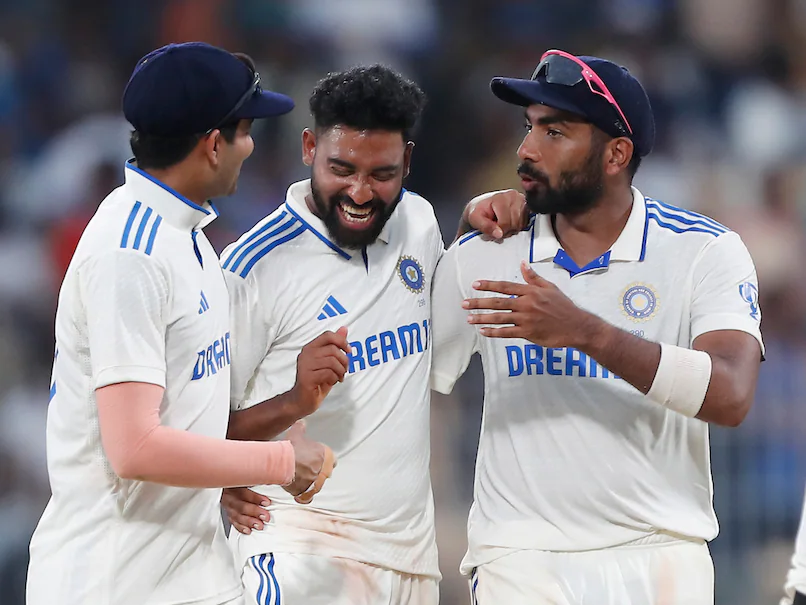
Sonal Dinusha’s fighting 103 delays India’s move, but debutant Saransh Jain claims his maiden Test wicket as Sri Lanka concedes a 213-run first-innings lead in Colombo.
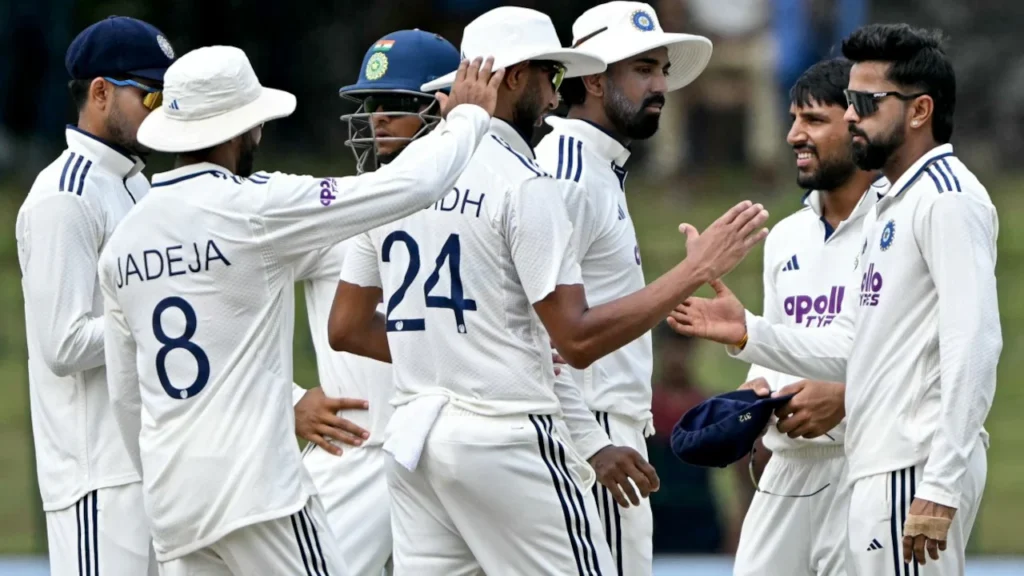
India captain Shubman Gill leads his team during the second Test against Sri Lanka at the Sinhalese Sports Club in Colombo. Image Credit: NDTV Sports
IND vs SL 2nd Test: India captain Shubman Gill enforced the follow-on after Sri Lanka were bowled out for 290 in their first innings on Day 4 of the second Test at Colombo’s Sinhalese Sports Club. Sri Lanka trailed India’s first-innings total of 503/9 declared by 213 runs, giving Gill the option to ask the hosts to bat again rather than sending India back in.
Sonal Dinusha scored a defiant 103 to rescue Sri Lanka from a difficult position, but India’s bowlers completed the innings soon after the morning session began. Debutant off-spinner Saransh Jain took his maiden Test wicket when he dismissed Lahiru Kumara for 12, while later removing Dinusha for his first international scalp.
The decision to enforce the follow-on is a strong statement of intent from Gill. India, already 1-0 ahead in the two-Test series, is pushing for a series-clinching win while also trying to beat the weather in Colombo.
How Sri Lanka Reached 290
Sri Lanka resumed Day 4 at 265/8, still 238 runs behind India’s 503/9 declared. Sonal Dinusha was unbeaten on 85, and Lahiru Kumara was 8 not out.
The hosts needed 39 more runs to avoid the follow-on threshold. Dinusha, who had already shown resilience on Day 3, continued to bat with confidence and completed his century.
His partnership with Kumara helped Sri Lanka narrow the deficit and move beyond the follow-on mark. Kumara, who had spent significant time at the crease, was eventually dismissed for 12 by Saransh Jain.
Jain’s wicket was a major personal moment. The debutant had bowled 18 wicketless overs on Day 3 before finally breaking through on the fourth morning. This story was also covered by NDTV Sports.
Dinusha then became Jain’s next wicket, trapped lbw for 103. Sri Lanka was eventually dismissed for 290, still 213 runs short of India’s total.
The innings showed two contrasting stories:
Sri Lanka’s top order struggled against India’s pace-and-spin combination
Dinusha’s century provided much-needed resistance and ensured the hosts avoided an immediate follow-on
But avoiding the follow-on did not prevent Gill from enforcing it.
Why India Enforced the Follow-On
Under the Laws of Cricket, in a five-day Test match, a team with a first-innings lead of 200 runs or more can require the opposition to bat again. India’s 213-run lead gave Gill that option.
Gill chose to enforce the follow-on, a decision shaped by several factors:
India have a substantial lead and are in control of the Test
Sri Lanka have already spent long periods batting under pressure
The surface is expected to deteriorate further
India’s spinners may get more assistance in the final innings
Rain has already interrupted play in Colombo, so India need time to take 10 more wickets
India are seeking a 2-0 series win after their 165-run victory in Galle
The decision comes with some risk. India’s bowlers will have to return quickly after a long first-innings spell, and Sri Lanka now has a chance to reset mentally. But Gill appears to have prioritized time and match momentum over giving his own batters another inning.
This is a captaincy call that signals confidence in India’s bowling attack.
Sonal Dinusha’s Defiant Century
Sonal Dinusha was Sri Lanka’s standout performer in the first innings. His 103 came after he had rescued the team from a precarious situation on Day 3.
He had resumed on 85 and kept the Indian bowlers at bay long enough to cross the follow-on threshold. His innings was built on patience, controlled strokeplay and smart use of the lower order.
Dinusha’s century carried added significance because he had also scored a hundred in the first Test at Galle. His ability to perform under pressure has been one of Sri Lanka’s few consistent positives in a difficult series.
But his dismissal for 103 also changed the tone of the morning. Once Jain trapped him lbw, India quickly completed the innings and prepared for the follow-on.
For Sri Lanka, Dinusha’s form is encouraging. For India, the challenge will be to ensure that no second-innings batter turns a rescue act into a match-saving effort.
Saransh Jain’s Maiden Test Wicket
Saransh Jain’s first Test wicket came when he dismissed Lahiru Kumara for 12.
The debutant had been unlucky on Day 3. He bowled 18 overs without a wicket and at one stage thought he had dismissed a batter, only for DRS to overturn the decision.
On Day 4, he finally got the breakthrough. Jain’s wicket of Kumara rewarded his persistence and gave India the ninth Sri Lankan wicket.
He then dismissed Sonal Dinusha for 103, adding another key scalp to his early Test career.
The two wickets were important not only for Jain’s confidence but also for India’s series planning. With Manav Suthar already making a major impact in the first Test at Galle, Jain’s emergence gives India additional spin options in subcontinental conditions.
India’s First-Innings Dominance
India’s strong position was built on their massive first-innings total of 503/9 declared.
Devdutt Padikkal scored 117, while Dhruv Jurel remained unbeaten on 115. Their centuries gave India the platform to dominate the Test.
The visitors declared after 138 overs, showing confidence in their bowlers and in the conditions at the Sinhalese Sports Club.
Sri Lanka’s reply began poorly. They were 8/2 early in the innings before Pasindu Sooriyabandara and Sonal Dinusha helped rebuild.
Sooriyabandara made 80, Kusal Mendis scored 32, and Dinusha’s 103 gave the hosts a respectable total. But India’s bowlers never allowed Sri Lanka to get close enough to challenge the first-innings lead.
Prasidh Krishna and Manav Suthar had taken three wickets each by the end of Day 3.
Also Read: IND vs SL 1st Test: Manav Suthar’s 10-Wicket Haul Powers India to 165-Run Win in Galle
Scorecard Snapshot
| Team | First innings | Key performers |
|---|---|---|
| India | 503/9 declared | Devdutt Padikkal 117, Dhruv Jurel 115* |
| Sri Lanka | 290 all out | Sonal Dinusha 103, Pasindu Sooriyabandara 80 |
| India lead | 213 runs | Gill enforces follow-on |
Timeline
August 23, 2026: The Second Test begins at Sinhalese Sports Club, Colombo.
India’s first innings: India declared at 503/9 after centuries from Devdutt Padikkal and Dhruv Jurel.
Sri Lanka’s early collapse: Hosts slip to 8/2 before their middle order rebuilds.
Day 3: Sri Lanka ended at 265/8, with Sonal Dinusha at 85* and Lahiru Kumara at 8*, still 238 runs behind.
Day 4, morning: Dinusha completes his century and Sri Lanka moves past the follow-on threshold.
Saransh Jain’s breakthrough: Jain dismisses Lahiru Kumara for 12 to take his maiden Test wicket.
Key dismissal: Jain traps Dinusha lbw for 103.
Sri Lanka all out: Hosts finish on 290, conceding a 213-run lead.
Gill’s decision: India enforces the follow-on and asks Sri Lanka to bat again.
Why This Matters
Yeh moment kaafi important hai because Gill’s follow-on decision could decide the series.
Series-clinching opportunity: India leads 1-0, and a victory in Colombo would complete a 2-0 sweep.
Weather factor: Rain has already interrupted the Test, so India needs maximum time to take 10 more wickets.
Captaincy statement: Enforcing the follow-on shows Gill trusts his bowlers to finish the match.
Spin advantage: As the surface wears, India’s spin options—Manav Suthar, Ravindra Jadeja and Saransh Jain—could become increasingly dangerous.
Sri Lanka’s survival test: The hosts must now bat for a long time to avoid defeat and prevent a series whitewash.
The follow-on does not guarantee victory. Sri Lanka now knows they have to fight for survival, and Dinusha’s century has shown that resistance is possible.
India Angle
For Indian fans, the Colombo Test is showing the depth of the new-look Test side.
Shubman Gill has made an aggressive captaincy decision
Devdutt Padikkal has followed his Galle success with another hundred
Dhruv Jurel has produced an unbeaten century
Manav Suthar continues to be a major spin weapon
Saransh Jain has taken his first Test wicket on debut
Yeh transition phase ka strong signal hai. India is not relying only on established names; younger players are contributing in high-pressure overseas Tests.
Gill’s follow-on decision also resembles the kind of proactive captaincy India needs in weather-affected games. Rather than batting again and losing time, he has put the responsibility on his bowlers to close the match.
Analysis
The follow-on decision is strategically logical because of the weather. India has a 213-run lead, the opposition has already batted for more than 90 overs, and time is more valuable than extra runs.
But the decision carries risks:
India’s bowlers have already delivered long spells
Sri Lanka’s batters have had time to understand the conditions
Dinusha is in excellent form
A long second innings could reduce India’s chance to force a result if rain returns
The first session after the follow-on will be critical. If India takes early wickets, the decision will look inspired. If Sri Lanka’s openers survive and build a partnership, the match could become a fight for time and weather.
In my view, Gill’s call is the right one for a team chasing a series win. But now India’s bowlers must back their captain by striking early.
What Next
The match now enters its decisive phase:
India’s goal: Take 10 Sri Lankan wickets quickly and seal a 2-0 series sweep.
Sri Lanka’s goal: Bat through sessions, neutralize India’s spinners and force a draw.
Key battle: Manav Suthar and Saransh Jain against Sri Lanka’s top order could determine the outcome.
Weather watch: Rain remains a major factor in Colombo and could influence the final result.
Dinusha factor: Sri Lanka will again rely heavily on Sonal Dinusha, who has been their most resilient batter in the series.
Gill’s captaincy: Field placements, bowling changes and how he manages tired bowlers will be under close scrutiny.
Conclusion
Shubman Gill has taken a bold and potentially match-defining decision by enforcing the follow-on after India bowled Sri Lanka out for 290.
Sonal Dinusha’s 103 and Pasindu Sooriyabandara’s 80 gave Sri Lanka some resistance, but India’s first-innings total of 503/9 declared was always too far ahead.
Saransh Jain’s maiden Test wicket and dismissal of Dinusha added a memorable personal milestone to India’s commanding position.
India now has a clear target: bowl Sri Lanka out again and complete a 2-0 series victory. Gill ne aggressive call liya hai—ab India ke bowlers ko usse result mein convert karna hoga.
Written By A. Jack