
Flash floods near the Nepal–Tibet border have cut communications and key travel routes, leaving over 130 Indian nationals untraceable; embassy and state helplines are activated as rescue operations continue.
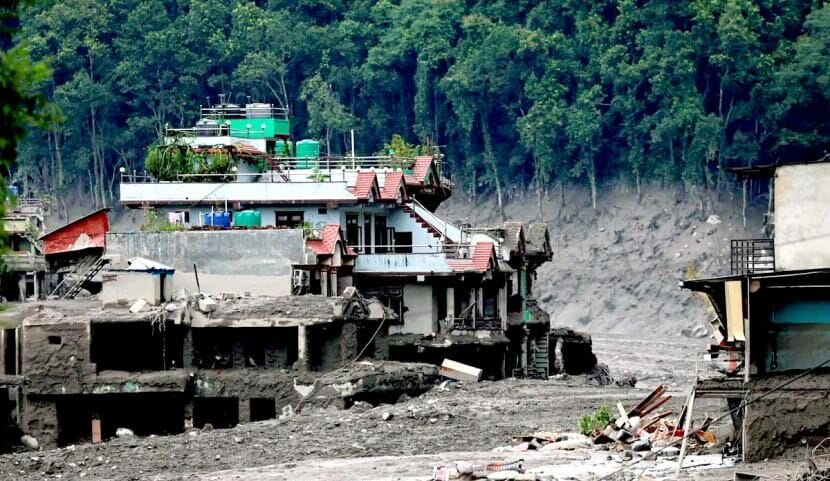
Flood-hit areas in Nepal’s Rasuwa region after flash floods disrupted roads. Image Credit: The Rediff
More than 130 Indian nationals, including at least 59 Kailash Mansarovar Yatra pilgrims, have been reported missing or out of contact after devastating flash floods swept through central Nepal and the Nepal–Tibet border region.
The flooding has severely disrupted communication networks, damaged roads and bridges, and cut off access to areas used by tourists and pilgrims returning from the Kailash Mansarovar route.
The Indian Embassy in Kathmandu, state governments and disaster-response authorities have activated emergency helplines to assist affected Indians and families searching for relatives. The situation remains fluid because communication with several affected locations is still down.
What Happened in Nepal
Flash floods struck Nepal’s central districts and border regions on Wednesday, affecting routes near Rasuwa, Timure, Rasuwagadhi and Gyirong/Kerung, which are commonly used by people traveling to and from Kailash Mansarovar.
The floods reportedly inundated an immigration facility near the Nepal–Tibet border and damaged roads, motorable bridges, power lines and communication networks. This story was also covered by The Rediff.
Because the flooding struck areas with difficult Himalayan terrain, rescue and verification efforts have been slow. Authorities are facing mud, debris, washed-out routes and poor weather conditions.
The number of Indians described as “missing” should be treated cautiously. In an unfolding disaster, “missing” may include people who are stranded; temporarily unreachable because of broken communication; separated from tour groups; awaiting evacuation; or whose exact location has not yet been confirmed.
The Indian Embassy and Nepalese authorities are working to establish the whereabouts of affected nationals.
59 Mansarovar Pilgrims Missing
Samrat Tours and Travel, an operator involved in Kailash Mansarovar travel, said at least 59 missing Indian nationals were pilgrims on the Mansarovar Yatra.
The Kailash Mansarovar Yatra attracts devotees from India and abroad who travel through remote Himalayan regions to visit Mount Kailash and Lake Manasarovar, revered in Hinduism, Buddhism, Jainism and Bon traditions.
The route through Nepal and Tibet includes high-altitude roads, immigration points and limited-access mountain settlements. When floods hit this region, travelers can quickly become cut off because alternative routes are scarce.
The tragedy has caused particular concern because many pilgrims are older adults or travelling in groups that include women and people with health vulnerabilities. High altitude, poor weather and medical-access limitations can make rescue operations especially difficult.
37 Tourists Still Unaccounted For
Tamil Nadu authorities said 57 tourists from the state were affected by the Nepal flooding. Of these, 20 had been accounted for, while the whereabouts of 37 remained unclear.
The tourists were reportedly traveling towards a temple in the Himalayas when they were affected by the flash floods.
Tamil Nadu’s response reflects the wider challenge faced by state governments: each must verify who is from its state, contact tour operators, coordinate with the Ministry of External Affairs and provide information to worried families.
The exact condition of the 37 tourists was not immediately known because phone and internet connectivity in the affected region had been severely disrupted.
77 Members Out of Contact
The Coimbatore-based Isha Foundation said 77 of its members who were at an immigration center during the floods were missing or uncontactable.
Sadhguru, founder of the Isha Foundation, said the group had been returning from the Kailash Mansarovar Yatra and was caught in the flooding around the immigration point.
“There has been no official information on the whereabouts of any of the people who were at the immigration office,” Sadhguru said.
According to Isha Foundation coordinator Maa Gambhiri, the group included people from 19 countries, more than 50 women and at least 53 people of Indian origin.
The foundation said that 495 people from its groups had returned safely, while others remained in Tibet or Nepal.
Nepalese authorities later said staff members at the immigration center were also out of contact, adding to uncertainty about people who were there when the flooding occurred.
Kolkata Group Unreachable
A 32-member group from Kolkata undertaking the Kailash Mansarovar Yatra was among those reported untraceable after the floods.
The group consisted of 30 tourists and two tour managers. They left Kolkata on August 21 and reached Nepal the next day.
On Wednesday morning, they reportedly reached Rasuwagadhi to cross into Tibet. The group was at or near the immigration office around 8.30 am when the flash flood struck the border area.
The West Bengal government has opened helplines for families seeking information about people who may have been stranded or affected:
033-24793311
9147890181
Officials also said residents of Chandannagar in Hooghly and Barasat in North 24 Parganas were believed to be among those affected.
Uttar Pradesh and Other States Respond
Uttar Pradesh has also issued an advisory for residents affected by the Nepal floods. Families with relatives stranded in Nepal can contact the Relief Commissioner’s Office helpline at 1070.
Farmer leader Rakesh Tikait, who had traveled to Nepal by road with associates, said he was stranded in Pokhara. He said the group planned to travel to Kathmandu by flight and then return to Delhi by air, leaving their vehicles behind because road travel had become impossible.
Maharashtra officials said seven tourists from the state were stranded in Nepal. Reports indicated that four of them were safe, while authorities continued to verify the whereabouts of the others.
Kerala, Rajasthan, Uttar Pradesh, Tamil Nadu, West Bengal, Sikkim, Odisha, Uttarakhand and Chhattisgarh are among states reported to have opened helplines or control rooms for affected residents and their families.
Emergency Contacts for Families
| Authority | Helpline / Contact |
|---|---|
| Indian Embassy, Kathmandu | +977 985 131 6807 |
| Indian Embassy, Kathmandu | +977 970 910 7500 |
| Embassy WhatsApp contact | +977 981 032 6117 |
| West Bengal state helpline | 033-24793311 |
| West Bengal state helpline | 9147890181 |
| Uttar Pradesh relief helpline | 1070 |
| Nepal Tourism Board | 1234 |
| Nepal emergency hotline | 1144 |
| Nepal Tourist Police | 9851289445 |
Families should share the traveler’s full name, passport details, mobile number, tour operator, route, hotel or camp details, last known location, and emergency contact information when calling a helpline.
Timeline
August 21, 2026: A 32-member Kolkata group leaves for the Kailash Mansarovar Yatra.
August 22: The group reaches Nepal; Indian pilgrims and tourists continue traveling through Nepal–Tibet border routes.
Wednesday, August 26: Flash floods hit central Nepal and the Rasuwa-border region, damaging roads, bridges, power lines and communication networks.
Wednesday morning: The Kolkata group reportedly reaches Rasuwagadhi and is near the immigration facility when flooding affects the area.
After flooding, Isha Foundation reports that 77 members at an immigration center are uncontactable; the group includes 53 people of Indian origin.
Initial assessments: More than 130 Indians, including at least 59 Kailash Mansarovar pilgrims, are reported missing or out of contact.
August 26–27: Indian Embassy in Kathmandu and multiple Indian states activate helplines and coordinate with Nepalese authorities.
Ongoing: Search, rescue, verification and evacuation operations continue amid damaged infrastructure and disrupted communications.
Why This Matters
Yeh disaster kaafi important hai because it involves Indian pilgrims and tourists stranded in remote Himalayan terrain where rescue is difficult and communication is limited.
Large number of Indians affected: More than 130 people have been reported missing or uncontactable, though the figures may change as communication is restored.
Pilgrim-route vulnerability: Kailash Mansarovar travel passes through remote, high-altitude zones where floods can cut off roads and border facilities quickly.
Family distress: Relatives in India are facing uncertainty because many travelers cannot be contacted.
Cross-border rescue coordination: India and Nepal must coordinate closely on rescue, relief, immigration records, medical care and evacuation.
Tourism safety: The incident raises questions about weather alerts, route monitoring, tour-operator communication and emergency planning for high-altitude travel.
The immediate priority is to locate those out of contact and provide food, medical support, shelter and evacuation to all stranded travelers.
India Angle
India and Nepal share a close geographical, cultural and people-to-people relationship. Thousands of Indians travel to Nepal each year for pilgrimage, tourism, trade and family visits.
The flood response is therefore a major test of cross-border coordination.
The Indian government has offered humanitarian assistance to Nepal, while the Indian Embassy in Kathmandu is coordinating with Nepalese authorities to trace missing nationals and assist stranded citizens.
For Indian states, the incident highlights the importance of maintaining databases of travelers on international pilgrimage routes. Tour operators should be required to maintain updated passenger manifests, emergency contacts, medical details and real-time location information.
Pilgrims should also be encouraged to
Register with official travel authorities before leaving
Share their itinerary with family
Carry satellite or offline communication options where possible
Keep passports and documents in waterproof pouches
Follow weather warnings and local instructions
Avoid travelling during high-risk weather alerts
Choose registered tour operators with emergency protocols
Yatra spiritual ho sakti hai, but mountain travel always requires serious safety planning.
Analysis
The most important point is that early missing-person counts in a disaster zone should be handled carefully.
Communication failures, damaged roads and disrupted immigration records can mean that people are temporarily untraceable rather than confirmed dead or permanently missing. Authorities must verify each person through tour operators, border logs, evacuation lists, hospitals and family contacts.
At the same time, officials should not downplay the seriousness of the crisis. In mountainous areas, delays in rescue can be dangerous because of weather, landslides, altitude and limited access to food or medical care.
In my view, the priority should be real-time information sharing. Families need a single, reliable source of updates rather than conflicting social-media posts. The embassy, state control rooms and tour operators should coordinate lists and issue verified bulletins at fixed intervals.
What Next
The next 24–72 hours are likely to be crucial.
Restoration of communication: Authorities will attempt to restore mobile, satellite and radio contact with affected border areas.
Verification of missing lists: Tour operators, immigration officials and state governments will cross-check passenger lists and last-known locations.
Search and rescue: Nepalese rescue teams, local authorities and international support agencies will continue search operations in flood-hit areas.
Medical evacuation: Stranded pilgrims and tourists may be moved by helicopter or airlift where roads remain blocked.
Indian assistance: The Embassy of India and the Ministry of External Affairs are expected to coordinate relief and evacuation for Indian nationals.
State-level support: Tamil Nadu, West Bengal, Uttar Pradesh and other states will continue helping families and compiling verified details.
Travel advisories: Authorities may issue fresh warnings for Kailash Mansarovar travelers and people planning to use Nepal–Tibet routes.
Conclusion
Nepal’s flash floods have created a major humanitarian and travel crisis, leaving more than 130 Indian nationals—including at least 59 Kailash Mansarovar pilgrims—missing or out of contact.
The situation is especially serious around the Nepal–Tibet border, where broken communication, damaged roads and flooded immigration facilities have complicated search and rescue efforts.
Abhi sabse zaroori kaam yahi hai: missing pilgrims aur tourists ko trace karna, stranded groups ko safely evacuate karna, aur families ko timely, verified updates dena. In a disaster of this scale, every restored phone connection can bring a family closer to answers.
Written By A. Jack