
Chief Minister Devendra Fadnavis announces a six-month pause on major state functions to cut fuel use and curb wasteful spending, following Prime Minister Narendra Modi’s call for austerity; one pre-planned event in Satara will still go ahead.
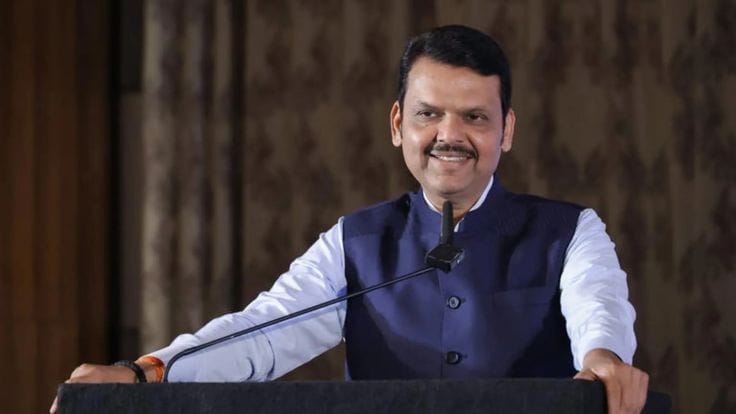
Chief Minister Devendra Fadnavis addressing reporters after announcing that Maharashtra will suspend large state functions for six months following the Prime Minister’s appeal to reduce fuel use and unnecessary expenditure.
The Maharashtra government on Thursday ordered a temporary halt to major state-level functions for the next six months, responding to Prime Minister Narendra Modi’s recent appeal to reduce fuel consumption and avoid unnecessary expenditure. Chief Minister Devendra Fadnavis clarified that one already-planned event in Satara, scheduled for Friday, will take place because preparations are complete. The move—announced from Mumbai—aims to reduce logistical costs, curb large-scale official travel, and set an example of prudent public expenditure amid continuing global economic and energy uncertainties.
Why and How the Decision Came About
The decision follows an appeal by PM Modi encouraging governments, organizations, and citizens to cut down on non-essential fuel use and extravagant spending during uncertain global markets and energy pressures. Maharashtra’s action is framed as an immediate, visible response intended to lead by example. Officials said the measure will primarily affect ceremonial events that typically involve large delegations, motorcades, extensive security deployments, and travel by dignitaries. News18 has covered the full story.
How it will work in practice:
The order applies to “major state functions”—large public ceremonies, government-sponsored cultural festivals, sizable inaugurations involving mass travel and logistics, and large-scale receptions hosted by state ministries.
Small, essential administrative meetings and statutory obligations will continue; emergency responses and relief operations will not be affected.
The Satara function will be the lone exception because logistical commitments and vendor contracts were already finalized; canceling would incur sunk costs and logistical complications.
Enforcement will be coordinated by the General Administration Department (GAD), with line departments notified to pause event approvals for six months. Civic bodies and district administrations will receive circulars outlining what qualifies as a major event and which approvals are temporarily suspended.
The government frames the move as both fiscal responsibility and environmental prudence: fewer events means less fuel used for transport and protocol, lower emissions from motorcades and aircraft, and reduced spending on hospitality and logistics.
Statements and Reactions
Chief Minister Devendra Fadnavis: “After the Satara program, no big function will be planned for the next six months by the state government. Preparations for tomorrow’s event were already complete; hence, we will go ahead with it. Elsewhere, we must follow the Prime Minister’s guidance to cut unnecessary expenditure and fuel use.”
A senior official from the General Administration Department noted: “This is a temporary, pragmatic step. We will re-evaluate after six months. The aim is to minimize avoidable travel and logistical expense while maintaining governance and public services.”
Opposition and political reactions will likely vary. A regional leader commented on the condition of anonymity that “symbolism is good, but real savings depend on strict enforcement and scope—not just optics.”
Background and Context
India has seen periodic central and state appeals for austerity and prudent spending during times of economic stress. The current directive follows PM Modi’s recent nationwide appeal linking international fuel market volatility and geopolitical tensions to domestic policy responses such as cutting wasteful expenditure.
Historically:
Governments have often used temporary halts on functions as symbolic measures during national crises (natural disasters, wars, or high fuel prices).
State governments, including Maharashtra, have previously scaled back events during times of fiscal restraint—for instance, reduced-scale Republic Day protocols in economically difficult years.
Protocol-heavy events in Maharashtra regularly involve substantial logistical footprints—airlifts, helicopter sorties, long motorcades, multiple guest accommodations, and significant security deployments—leading to high fuel and administrative costs.
Timeline
Early May 2026: Prime Minister Narendra Modi issues an appeal urging reductions in fuel use and non-essential expenditures across government bodies and organizations.
Mid-May 2026: Maharashtra ministers discuss state response; proposal to suspend major events formulated.
May 14–15, 2026: Chief Minister Devendra Fadnavis announces the six-month suspension, with one exception—the Satara event already in preparatory stages.
Next steps (expected): GAD issues formal circulars to departments, district administrations receive guidelines, and monitoring structures are set up to ensure compliance.
Also Read: NEET Paper Leak: CBI Raids Across India, 5 Arrested Targeting Masters of Leak
Why This Matters
This policy move matters for several reasons:
Fiscal impact: Large state functions often carry sizable price tags—venue rentals, catering, accommodation, transport, and protocol. Suspending them can free up funds for development, welfare schemes, or fiscal stabilization.
Environmental impact: Reduced official travel and large motorcades lower fuel consumption and related emissions—an immediate, albeit temporary, environmental benefit.
Political signaling: The government projects fiscal prudence and solidarity with a national call for austerity. This can enhance credibility if actions match rhetoric.
Administrative ripple effects: Contractors, event planners, caterers, and local businesses that depend on government events may face income impacts; civil servants handling protocol may see reduced workloads.
Public perception: Citizens may view the order positively as a responsible use of public money, but the measure could also be seen as symbolic if not accompanied by deeper fiscal reforms.
India Angle
Maharashtra ka yeh faisla desh bhar ke liye ek message hai—”chhote kadam, bade asar. For Mumbai, Pune, Nashik, and other cities that regularly host government events, suspending functions could reduce traffic snarls, cause fewer VIP convoy disruptions, and lessen fuel use on the roads. Local contractors in Satara and other districts may feel mixed emotions—Satara will proceed, giving vendors temporary relief, while others await new bookings.
For citizens, especially those dealing with rising fuel prices and cost-of-living pressures, the move is relatable: agar sarkar apni spending rok sakti hai, toh aam aadmi ko bhi relief mil sakta hai. Politically, Maharashtra’s decision sits within a broader national conversation about prudent governance—yeh issue kaafi important hai for voters watching fiscal discipline.
Analysis
On the pragmatic side, suspending elaborate ceremonial spending likely yields measurable short-term savings. For example, a single high-profile state event with ministerial travel can cost lakhs of rupees in logistics; aggregating dozens of such events over months can free meaningful fiscal space.
However, symbolism only goes so far. To translate this into lasting fiscal discipline, the state must:
Publish estimated savings and reallocate funds transparently to development or relief.
Extend efficiency measures to other high-cost domains like official vehicular fleets, nonessential travel allowances, and protocol spending beyond ceremonies.
Provide support to small vendors who lose business due to cancelled events—either through alternate procurement policies or temporary relief packages.
Potential pitfalls:
Enforcement gaps: Departments may find workarounds (relabel events as “essential” or smaller functions).
Political optics: Opponents may accuse the government of political calculation if exceptions proliferate.
Economic displacement: Event contractors and local service providers may suffer without compensatory measures.
What’s Next?
Short-term (next 1–2 months):
Circulars and departmental guidelines were formalized; the Satara event occurred as planned.
Monitoring mechanisms initiated by GAD; periodic compliance reports expected.
Opposition parties may call for a full list of cancelled events and estimated savings.
Medium-term (3–6 months):
If strictly enforced, the government could report quantifiable savings and reduced fuel usage; these figures will be scrutinized by media and auditors.
Departments may propose virtual or lower-footprint alternatives (webinars, local-level inaugurations without high-profile travel).
Vendors and contractors might lobby for compensation or alternate work.
Long-term (post six months):
If the suspension proves effective and publicly credible, it may become a template for longer-term protocol reform—reducing habitual extravagance and embedding fuel-efficient practices into state operations.
Conversely, if exceptions increase or savings are negligible, the measure may be criticized as symbolic PR without structural change.
Conclusion
Maharashtra’s six-month suspension of major state functions, prompted by PM Modi’s request to curb fuel use and wasteful expenditure, is a clear signal of short-term fiscal and environmental restraint. The one-off Satara event underscores a practical approach—honor contractual realities while starting a moratorium on new, high-footprint functions. This move can reduce costs and emissions and send a message of disciplined governance, but its real value will depend on transparency, enforcement, and whether the state pairs symbolism with systemic reforms.
Yeh decision shuruaat hai—not an end. If Maharashtra publishes clear savings and channels them into public welfare or efficiency projects, the pause on pomp could become a meaningful step toward leaner governance. Otherwise, there’s a risk it will be remembered as a temporary show of thrift. For now, citizens and stakeholders will watch the follow-through closely.
Written By A. Jack