A major fire broke out in an air-conditioned coach of the Delhi-bound Rajdhani Express in Madhya Pradesh’s Ratlam on Sunday morning, forcing an emergency response and the safe evacuation of all passengers. Officials said no one was injured, and the affected coach was detached from the train before the journey resumed with alternative arrangements.
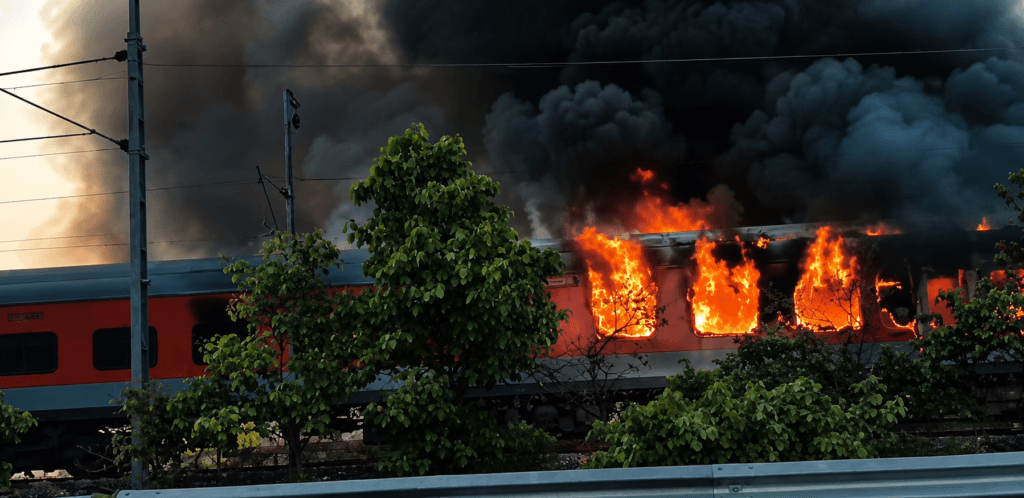
Thick black smoke rises from a detached coach of the Rajdhani Express in Ratlam after a fire broke out early Sunday morning.
Massive Fire
A frightening incident unfolded on the Delhi-bound Rajdhani Express when a fire broke out in one of its AC coaches near Ratlam in Madhya Pradesh early Sunday morning. The train, which was traveling from Thiruvananthapuram to Hazrat Nizamuddin, was about 650 kilometers away from Delhi when the fire was noticed around 5:15 am. Officials said the blaze erupted in the B-1 coach carrying 68 passengers, but all of them were safely rescued and no injuries were reported.
The quick response by railway staff helped prevent what could have been a far more serious disaster. The affected coach was detached, the overhead electric supply was switched off, and passengers were shifted safely to other coaches. The incident has once again highlighted the importance of fire preparedness on long-distance trains, especially high-profile services like the Rajdhani Express that carry large numbers of travelers across multiple states.
What Happened
According to railway officials, the fire started between Vikramgarh Alot and Lunirichha stations under the Kota division. Thick black smoke was seen billowing from the detached rake, and the fire reportedly spread to some trees near the tracks. The B-1 coach, which was carrying 68 passengers, became the center of the emergency response as railway staff acted quickly to prevent the fire from spreading further. NDTV has covered the full story.
The train was operating as Rajdhani Express 12431, which had departed from Kerala’s Thiruvananthapuram on Friday. It was scheduled to reach Delhi’s Hazrat Nizamuddin station at 12:30 pm on Sunday. By the time the fire broke out, the train had already covered around 2,500 kilometers, meaning it was deep into a long interstate journey. That detail matters because fires on long-distance trains can become more dangerous due to the number of passengers, the length of the route, and the challenge of coordinating emergency response in remote stretches.
How the Situation Was Contained
Railway officials said the first priority was safety. The affected coach was immediately detached from the rest of the rake, and the overhead electric supply was switched off to eliminate further risk. That step is crucial in railway fire incidents because it reduces the possibility of the fire spreading through electrical systems or causing additional hazards for passengers and staff.
All passengers were safely deboarded, and arrangements were made to shift them to other coaches so that the journey to Kota could continue. The train is expected to reach Kota station around 11 am, where an additional coach will be attached to restore full capacity. This kind of mid-journey reconfiguration is not ideal, but it shows that railway teams are prepared to handle operational disruptions when emergencies occur.
In simple terms, the response was quick, practical, and focused on damage control. The fact that no one was injured suggests that the emergency protocols worked as intended, even though the incident itself was alarming. Jahan fire train ke andar shuru ho, wahan seconds matter karte hain, and the railway staff appear to have acted in time.
Reported Statements
Railway officials said the cause of the fire is under investigation. That is the most important unanswered question right now. Until the exact cause is known, it is difficult to say whether the fire was linked to an electrical fault, overheating, a technical issue, or some other source.
The railways also confirmed that the passengers were safe and that alternate arrangements had been made for the remainder of the journey. This official assurance is important because train passengers often become anxious after such incidents, especially when they see smoke or hear about a coach being detached. A clear and calm response from the authorities helps prevent panic and restores confidence.
Background
Fire incidents on trains are rare but not unheard of, and when they happen in long-distance premium services like the Rajdhani Express, they immediately draw national attention. Such trains usually run on tight schedules and carry passengers on cross-country routes, making them highly visible and operationally important.
The Indian Railways has improved safety systems over the years, including better maintenance protocols, electrical checks, and emergency response procedures. Still, any fire aboard a moving train raises questions about inspection routines and mechanical reliability. This case is particularly noteworthy because the train had traveled thousands of kilometers before the fire broke out, suggesting that the issue may have emerged en route rather than at the point of departure.
There was also another fire incident reported recently in Hyderabad involving an empty coach of the Hyderabad-Jaipur Special Train at a railway station. In that case, no passengers were aboard, no injuries were reported, and the fire was brought under control immediately. These back-to-back incidents may prompt fresh scrutiny of railway safety checks, even though the two cases are separate.
Timeline
Friday: The Thiruvananthapuram-Hazrat Nizamuddin Rajdhani Express departed Kerala.
Sunday around 5:15 am: Fire broke out in the B-1 coach near Ratlam.
Immediately after detection: The coach was detached, and the OHE supply was switched off.
After evacuation: All passengers were safely moved to other coaches.
Around 11 am expected: The train is likely to reach Kota, where an additional coach will be attached.
Also Read: Delhi May Make Pink Saheli Card Mandatory for Free Bus Travel From July
Why This Matters
This matters because train travel remains one of the most important modes of transportation in India. Millions of passengers depend on long-distance trains every day, and they expect safety as much as punctuality. When a fire breaks out in a premium train, it naturally raises concerns about whether enough is being done to prevent such emergencies from happening in the first place.
It also matters from a public trust point of view. Rajdhani Express trains are considered among the flagship services of Indian Railways. If passengers feel that even these trains can face fire-related threats, it can affect confidence in the wider network. The good news here is that the passengers were evacuated without injuries. But the larger lesson is clear: safety systems must stay sharp, especially on routes that carry hundreds of people over long distances. Yeh issue kaafi important hai because one failure on a moving train can turn into a major tragedy very fast.
India Angle
For Indian travellers, this incident is a reminder of how heavily the country relies on its rail network. From students and workers to families and senior citizens, railway passengers come from every section of society. That makes train safety not just a technical issue but also a public concern.
The incident also reflects the scale of Indian Railways’ challenge. With such a vast network and so many coaches running across different divisions, continuous monitoring becomes essential. In India, people often assume that bigger trains mean better safety, but that is only true if maintenance, inspection, and emergency response remain strong. This fire in Ratlam will likely push fresh conversations about coach checks, electrical systems, and thermal safety on long-haul trains.
Analysis
My view is that the railway response deserves credit here, especially since no injuries were reported. But the incident also shows why safety must be treated as an ongoing process, not a one-time checklist. A fire in a premium long-distance train can happen anywhere along the route, which means the risk cannot be limited to one state or one railway zone. The broader editorial takeaway is that Indian Railways must keep investing in detection systems, coach maintenance, and staff readiness.
What’s Next?
The immediate next step is the investigation into the cause of the fire. Railway officials will likely inspect the coach, electrical fittings, and onboard systems to determine what triggered the blaze. That information will matter not only for accountability but also for future prevention.
There may also be an operational review of maintenance and safety checks on long-distance coaches, especially for premium services. If investigators find a technical fault, railways may issue fresh advisories or inspection rules. Passengers on the route will continue their journey after the train reaches Kota and the extra coach is attached. The bigger question is whether this incident leads to stronger preventive measures across the network.
Conclusion
The fire on the Delhi-bound Rajdhani Express in Ratlam could have been far worse, but quick action by railway staff helped ensure that all 68 passengers in the affected coach were safely evacuated. No injuries were reported, and arrangements were made to keep the journey going with alternative coaches.
Even so, the incident is a serious reminder that fire safety on trains remains a critical issue in India. As the investigation continues, passengers and railway authorities alike will be watching closely for answers about what caused the blaze and what can be done to prevent a repeat.
Written By A. Jack