Meta has responded to a BBC Eye investigation alleging that Instagram ran paid advertisements promoting Child Sexual Abuse Material (CSAM) in India, saying its systems had already taken down several violating ads and accounts prior to the report’s publication. After the problem surfaced, the company took further action, including disabling more accounts and blocking associated URLs.
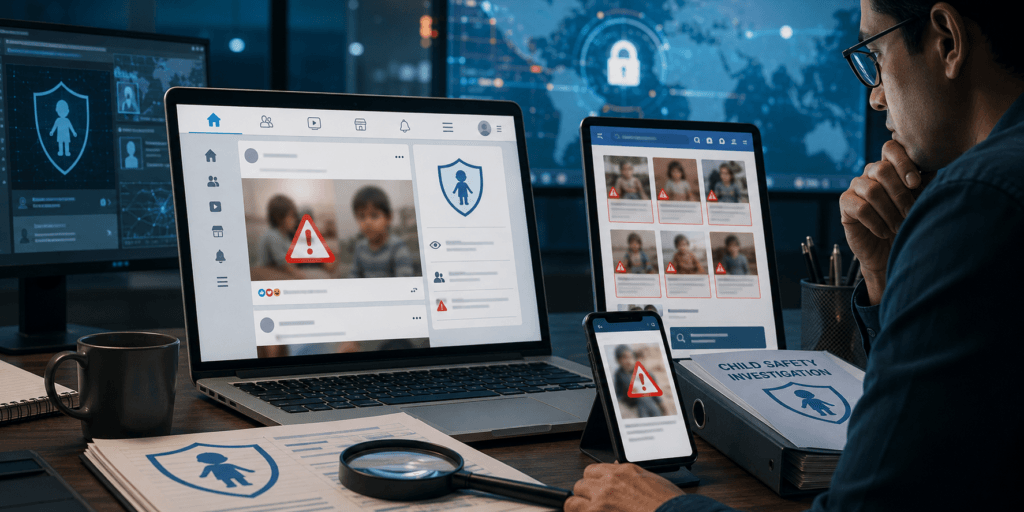
Meta is criticized for allegedly running ads on Instagram and Facebook that exploit children. This is an AI generated picture.
Meta, the parent company of Facebook and Instagram, said it removed a number of accounts and ads linked to child exploitation before a BBC Eye investigation was made public on 7 July. The BBC report said Instagram was running paid ads in India that promoted child sexual abuse material and expressed concern over how such content could have spread on the platform.
The issue has raised questions about how social media companies identify, block and report exploitative content. Meta has vehemently denied knowingly allowing such material and said it took action both before and after the investigation. Yeh matter kaafi serious hai because it involves child safety, digital policing, and the responsibilities of major tech platforms operating in India.
What The BBC Investigation Alleged
As reported by BBC Eye, paid advertisements on Instagram were allegedly directing users to Telegram channels where sexually explicit material involving children was being sold. The report also said Meta’s recommendation systems could have amplified videos linked with child sexual abuse material.
That charge is particularly disturbing in that it suggests the problem was not confined to a handful of rogue accounts. If recommendation systems or ads can nudge users toward harmful content, then the platform itself is part of the distribution chain, albeit inadvertently. That is the reason the report has drawn so much interest. For more latest news, check out SBKI news.
Meta’s Response
Meta said it had already identified and disabled some of the offending ads and the accounts behind them before the BBC raised the cases. The company said its investigation led to further measures, including removing additional ads, disabling more accounts and blocking URLs that linked to content that violated its policies.
Meta said in a statement that it takes child exploitation “very seriously” and does not want the content on its platforms. It also called it “categorically inaccurate” to say that it knew it was targeting ads to people based on “inappropriate interest in children,” which included children in them. The company said it uses technology to detect suspicious activity on accounts and that its systems automatically removed more than 4 million such accounts worldwide in the past year.
Meta’s Safety Claims
Meta said it has a zero-tolerance policy for child nudity, abuse and exploitation. This includes child exploitation imagery, inappropriate contact with teens, and the sexualisation of minors. The company also said it removed more than 36 million pieces of content worldwide related to child exploitation through automation last year.
These are big numbers, but they are not necessarily the solution to the problem. A small detection gap can mean dire consequences for a platform managing billions of posts, ads and interactions. But while Meta trumpets the size of its enforcement, the BBC allegations imply the question is not just volume but efficacy.
India And The Reporting System
Meta said it reports suspected child exploitation in India to law enforcement through the National Center for Missing and Exploited Children, in line with law and the Protection of Children from Sexual Offenses Act, 2021 and related rules. It said the content is reported on its behalf to the national cybercrime reporting portal.
This section is important for Indian readers, as it indicates how global social media platforms are expected to work within Indian legal frameworks. In practice, that means companies are expected not only to remove harmful material but also to report it quickly and to cooperate with authorities. For India, jahan digital safety ab bahut bada issue ban chuka hai, this is a critical point.
Why This Matters
It is important because child sexual exploitation is one of the most serious forms of online abuse, and social platforms have a direct responsibility to prevent it. If paid ads or recommendation tools are linked to harmful content, the problem is much bigger than a moderation failure.
It matters also because India is one of Meta’s biggest markets, with millions of Facebook and Instagram users. Here the weakness in content moderation can impact a huge user base. This is not about one investigation. It’s about trust in the digital ecosystem itself. Yeh issue kaafi important hai because families, children, and regulators all depend on platforms to do better.
Meta and the Ongoing Challenge of Child Safety Online
Social media companies have long been criticized for harmful content, especially involving minors. They are too big to moderate manually, so they have to depend on automated systems, AI detection, user reporting, and policy enforcement teams. But those systems are never perfect, and sophisticated exploitative networks often try to hide behind coded language, platform hopping and private channels like Telegram.
The BBC Eye allegations fall into this larger pattern. If the ads on one platform can push users to another encrypted or semi-private platform, then the abuse network is harder to detect and disrupt. That is why online child safety remains one of the most difficult challenges facing tech companies.
How the Meta CSAM Controversy Unfolded
Last year: Meta says it removed millions of suspicious accounts globally and 36 million child exploitation-related pieces of content through automation.
Last six months in India: Meta says 160,000 suspicious accounts were removed.
Before July 7, 2026: Meta says it had already removed some violating ads and accounts before the BBC report.
July 7, 2026: BBC Eye publishes its investigation.
After publication: Meta issues a detailed response, denying deliberate targeting and promising further enforcement.
This timeline reveals the company’s response was as much retrospective as it was defensive: it says it had already acted, but the public scrutiny only intensified after the report.
What Meta’s Response Means for Child Safety Online
Meta’s statement is meant to suggest that it had enforcement mechanisms in place before the story ran. It is a handy defense, but it does not deal with the broader issue: how did the ads get there in the first place, and how long were they running?
The company’s claim to have automatically removed 4 million suspicious accounts globally sounds good, but large moderation figures can sometimes mask real enforcement failures. A high number of takedowns doesn’t mean harmful content never reached users. The real question here is whether the detection was early enough to prevent exposure.
AI detection and off-platform signals are also noteworthy. Meta says it watches for suspicious links and patterns of activity to spot exploitative conduct. In theory, that’s good but the BBC report suggests the system may still need stronger oversight, especially when paid ads and recommendation algorithms come into play. The real test is not whether platforms can say they are trying. It is whether they are stopping abuse quickly enough. The news minute has covered this story.
India’s Digital Safety Challenge on Social Media
This is especially serious for users in India as the content allegedly spread through ads targeted at India. India’s failure at moderation here could affect millions, including vulnerable users, with a large and growing digital population.
It also poses questions for Indian regulators and parents. If the major global platforms are still fighting the child exploitation content then in India digital literacy and more monitoring become more important. Parents, schools and law enforcement need to be alert because the damage that happens online is often faster than offline policing can keep up with.
What Happens Next for Meta and Child Safety Oversight
Journalists, regulators and child safety advocates are expected to scrutinize the next phase more closely. Meta may be asked to explain exactly how the ads got through, how quickly they were removed and what additional safeguards are being implemented.
This case could also lead Meta and other platforms to tighten ad screening, recommendation controls and reporting mechanisms in India. If the allegations are further validated, it could result in a more robust policy push for platform accountability and quicker law enforcement coordination. The story is far from over and the pressure on social media companies is likely to grow.
Conclusion
Meta’s response to the BBC Eye investigation reveals how keen the company is to present itself as proactive on child safety. It says it has already removed offending ads and accounts, took further action after the issue was identified and has a zero-tolerance policy on child exploitation content.
But the BBC allegations pose a big question: if harmful ads were allowed to run at all, what does that suggest about the robustness of the platform’s safeguards? For India with its massive user base and growing concerns over child safety online, the answer matters a lot. The debate now is not just about one investigation but about whether social media platforms can really keep children safe at scale.
–Written by A. Aisha–