
The suspension was part of a statewide FDA drive under the Food Safety and Standards Act, 2006 on July 7 and 8. Officials said the Churchgate outlet was found to have violated hygiene rules under the Food Safety and Standards regulations leading to action against the business.
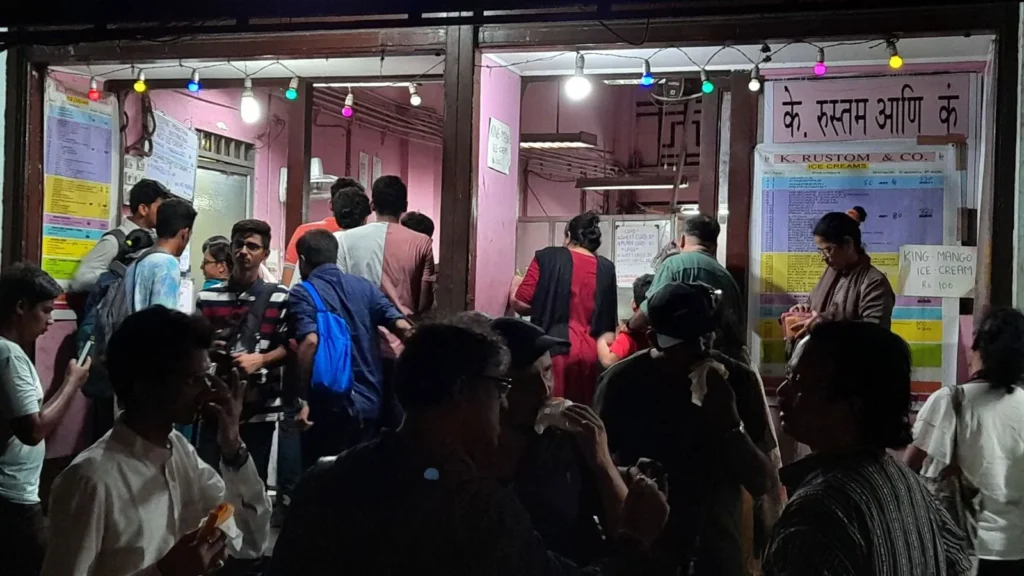
K Rustom & Co. in Mumbai’s Churchgate area came under scrutiny after FDA inspectors found major food safety lapses during a surprise inspection. Image Credit: IndianExpress
One of Mumbai’s most iconic food names, K Rustom & Co, has faced a major setback after the Maharashtra Food and Drug Administration suspended its food business licence over alleged food safety and hygiene violations. According to the FDA, inspectors found live rats, houseflies, expired food items and lapses in cold chain maintenance during an inspection of the Churchgate outlet.
The action was taken during a statewide enforcement drive on July 7 and 8 under the Food Safety and Standards Act, 2006. The case is significant because K. Rustom is not just another ice cream shop — it is a well-known Mumbai institution associated with generations of customers and a distinctive food identity. Yeh news kaafi shocking hai because it involves a brand people trust emotionally, not just commercially.
What Happened
According to the FDA press statement, the inspection team found multiple serious violations at the outlet. These included live rats inside the premises, houseflies in the food environment, expired food products and problems in maintaining the cold chain, which is crucial for food safety in ice cream businesses. The department said the outlet had violated hygiene norms prescribed under Schedule 4 of the Food Safety and Standards (Licensing and Registration of Food Businesses) Regulations, 2011.
In simple terms, the inspection suggests that the outlet was not meeting the basic sanitary and storage standards required for a business that serves perishable food. For an ice cream shop, cold chain maintenance is especially important because even a short lapse can affect quality and safety. Expired food products and pest presence only make the issue more serious. This story is also covered by The IndianExpress.
This is not a minor procedural warning. A licence suspension means the regulator believes the food operation cannot continue in its current form until compliance issues are addressed. That is a strong signal from the authorities and one that could have both legal and reputational consequences for the business.
Why the Inspection Mattered
The FDA’s statewide drive under the Food Safety and Standards Act was clearly designed to strengthen compliance across food businesses. These inspections often target establishments where public trust is high but hygiene risks can be hidden from regular customers. In this case, the result was especially notable because the outlet is so well known in Mumbai.
Food safety checks are particularly important in cities like Mumbai, where busy outlets serve large numbers of customers every day. Even a single lapse in storage or sanitation can affect hundreds of people. When an establishment sells dairy-based products like ice cream, the risks become even more sensitive because such products require strict temperature control. Agar cold chain weak hai, toh consumer safety directly at risk ho sakti hai.
There is also a larger public-health angle here. Pest infestation, expired stock and poor hygiene are not just regulatory technicalities. They can lead to food contamination, stomach infections and long-term trust issues if not addressed quickly. That is why the FDA appears to have acted firmly.
What Officials Said
The FDA’s press statement said that the inspection uncovered serious breaches of hygiene norms and maintenance standards. While the statement itself focused on regulatory violations, the nature of the findings — live rats, houseflies and expired food items — speaks for itself.
A food safety expert would likely describe this as a “critical compliance failure” rather than a routine violation. In practical terms, such findings usually indicate shortcomings in cleanliness, pest control, stock rotation and temperature monitoring. For a legacy brand, that is especially damaging because public confidence is built over decades but can be weakened very quickly.
As one could reasonably say in such a case, “For an outlet serving dairy-based products, even a short failure in cold storage or sanitation is enough to create a serious compliance concern.” That statement reflects the standard food safety logic behind the FDA action.
Background and Context
K Rustom & Co. has long been one of Mumbai’s most recognisable dessert destinations, especially known for its ice cream sandwiches. For many city residents, the outlet has cultural value beyond its menu. It represents old Mumbai, a kind of nostalgic food memory that people associate with college days, family outings and the city’s street-food history.
That is what makes this case bigger than a normal licence suspension. When a heritage-style food outlet runs into hygiene trouble, the story becomes one of legacy versus accountability. A long-standing reputation does not exempt a business from modern food safety rules. In fact, well-known outlets are often expected to maintain even higher standards because customers place greater trust in them.
The FDA’s action also comes at a time when food regulation is becoming more visible in India. Customers are no longer relying only on taste, brand name or popularity. They are increasingly concerned about cleanliness, storage and compliance. That shift has made inspections more consequential for all kinds of food businesses, from small vendors to iconic city restaurants.
Timeline
July 7–8, 2026: Maharashtra FDA conducts a statewide enforcement drive under the Food Safety and Standards Act, 2006.
During inspection: Officials report finding live rats, houseflies, expired food products and cold chain lapses at K. Rustom & Co.’s Churchgate outlet.
After inspection: The FDA suspends the outlet’s food business licence.
Same drive: Two other food business licences are also suspended statewide.
Next stage: The outlet will likely need to address compliance issues before any reinstatement decision is considered.
Why This Matters
This matters because food safety is a daily public-health issue, not just a bureaucratic formality. People trust restaurants and iconic food outlets with their health every single day. When regulators find pests, expired food or cold storage issues, that trust is broken in a very direct way. Yeh issue kaafi important hai because one bad inspection can reveal risks that customers never see.
It also matters because Mumbai’s food culture is closely tied to everyday civic life. Residents often assume that famous outlets are automatically safe, but this case is a reminder that popularity does not replace inspection. A city with a huge food culture needs equally strong enforcement; otherwise, the gap between image and reality can become dangerous.
For the wider food industry, this serves as a warning. Hygiene standards are not optional, and legacy brands are not above scrutiny. The message from the FDA is clear: compliance has to be maintained every day, not just when a health inspector is expected.
India Angle
For Indian readers, this story connects directly with the broader debate on food safety in urban India. In Hinglish, seedhi baat yeh hai: agar ek famous outlet mein bhi aisi problems mil rahi hain, toh normal consumers naturally aur cautious ho jaayenge. That is why the case will resonate beyond Mumbai.
It also highlights how state food authorities are becoming more active in enforcement. Across India, FDA and FSSAI-linked inspections are becoming more frequent as consumer awareness rises. That is a healthy development because it puts pressure on businesses to maintain standards rather than rely only on brand loyalty. The public now expects clean kitchens, proper storage and transparent operations, and that expectation is only growing.
Mumbai in particular has a strong emotional relationship with its food outlets. From Irani cafes to old ice cream shops, these places are part of the city’s identity. But identity cannot be a substitute for hygiene. That is a lesson many Indian cities are now learning the hard way.
Analysis
My opinion is that the FDA did exactly what a regulator is supposed to do if the inspection findings are accurate. A food business serving perishable items cannot afford basic sanitation failures. If live rats and expired products were present, then immediate action was appropriate because the risk to consumers would be real, not hypothetical.
At the same time, the reputational damage to K Rustom will be serious, especially because it is one of Mumbai’s iconic names. In food journalism, heritage businesses often enjoy a kind of goodwill cushion. But that cushion disappears fast when hygiene concerns surface. The brand will now have to rebuild trust through visible corrective action, not just public relations statements.
I also think this story reflects a bigger shift in consumer expectations. People are no longer satisfied with “famous” or “old” as proof of quality. They want proof of cleanliness and compliance. That is a positive change for the market, because it pushes even legacy businesses to modernise their operations.
What Next
The next step will likely involve corrective action from the outlet if it wants its licence restored. That could include pest control, deep cleaning, cold chain repairs, stock disposal, staff retraining and a fresh compliance check. The FDA will probably want to see documented improvements before reconsidering the suspension.
There is also a possibility that the business may respond publicly to reassure customers and explain the situation. In cases like this, transparency matters a lot. A clear explanation and a visible cleanup effort can help reduce reputational damage, but only if the fixes are real.
The statewide drive may also lead to more inspections at other food businesses in Mumbai and across Maharashtra. This is important because one high-profile case often signals a broader enforcement push. Other outlets will likely tighten their own standards in response.
Conclusion
The suspension of K Rustom & Co’s food licence is a major development for Mumbai’s food scene and a serious reminder that reputation cannot replace hygiene. FDA inspectors reportedly found live rats, houseflies, expired food products and cold chain lapses during a statewide drive, leading to immediate action against the Churchgate outlet. For customers, the case raises important questions about food safety, trust and compliance. For the industry, it is a clear signal that old-city charm will never excuse basic violations. In the end, good food businesses must earn trust every day — and that begins with cleanliness, discipline and accountability.
Written By A. Jack