
The demolition of a religious structure in Mumbai’s Aarey Colony on Monday during an anti-encroachment drive has revived a long-standing dispute over alleged illegal occupation of government land. Officials say notices were served on trustees but they failed to prove the structure was legal.
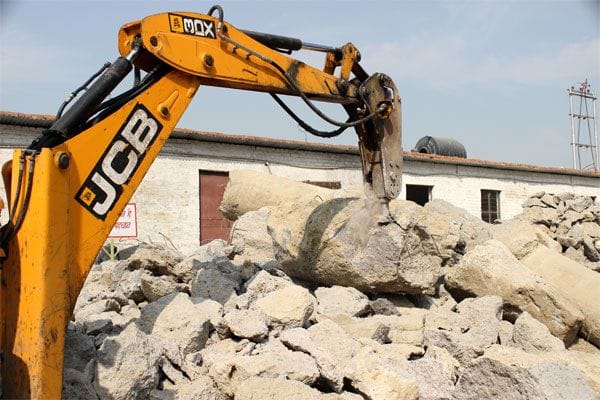
This image is for representation only.
The demolition of a religious structure in Mumbai’s Aarey Colony has brought an old and sensitive land dispute back into public view. Officials said the action was taken as part of an anti-encroachment drive after the trustees of the structure failed to establish its legality despite being served notices.
According to police, the structure stood on government land and had already been declared an encroachment. The demolition, carried out on Monday, has stirred political attention and local debate because the site has been contested for years and sits in one of Mumbai’s most environmentally sensitive zones. Yeh issue kaafi important hai because it involves not just land use but also religion, governance, and conservation in the same space.
What Happened
Deputy Commissioner of Police Gajanan Rajmane said the trustees were given time and formal notices but neither removed the structure themselves nor provided proof of legality. He stated that the demolition was therefore carried out by the authorities as part of a legal anti-encroachment operation.
The action was reportedly close to completion by Monday afternoon. Officials also confirmed that another religious structure in the same area had been removed a day earlier under the same drive. That suggests the operation was not a one-off act but part of a broader clearance effort in the locality. NDTV has covered the full story.
The structure in question was locally known as the Hazrat Syed Pir Baba Dargah. According to officials, it stood about 400 meters from Aarey Police Station and had previously been demolished in 2017 and 2018, only to be reconstructed and expanded later. That history is central to the current dispute because it shows the site has been contested more than once.
Why the Site Is Sensitive
Aarey Colony is not an ordinary urban neighborhood. Originally developed by the Maharashtra government for dairy activities, it includes cattle sheds, grazing areas, and large green tracts. Because of its ecological role, Aarey is often called one of Mumbai’s “green lungs.”
That status has made it a hotspot for long-running arguments over development and conservation. The area has already been at the center of major public debate, including the Metro-3 car shed controversy. So when any structure in Aarey becomes a legal or political flashpoint, the issue quickly grows beyond one local site.
The current demolition is therefore not just about one dargah. It is also about what kind of land use is allowed in a protected or semi-protected area, who has the right to occupy it, and how authorities balance religious sentiment against public land rules. In a city like Mumbai, where every square foot of land is contested, such disputes become highly charged very quickly.
Political Attention and the Complaint
The issue regained attention in April this year when BJP leader and former MP Kirit Somaiya visited the site and demanded action. In a letter dated April 9, 2026, addressed to the Chief Executive Officer of Aarey Colony, he alleged that land belonging to the Sanjay Gandhi National Park had been encroached upon in the name of the dargah.
His letter claimed that illegal fencing and boundary walls had been built around the site, temporary sheds and other structures had been constructed, and the plot was being occupied under the cover of a religious institution. The complaint also stated that the land had been transferred from Aarey Colony to Sanjay Gandhi National Park in 2022, and that officials from Aarey, the national park, the revenue department, police, and civic administration were aware of the encroachment.
Somaiya urged authorities to demolish the structures, restore the land to the national park, and initiate criminal proceedings against those responsible. His intervention turned the issue from a local land matter into a wider political and administrative controversy.
On the other side, AIMIM leader Waris Pathan criticized the demolition as hurried and said there were over 400 illegal religious structures in the area, yet only the dargah was being targeted. That is a significant counterpoint because it reflects a common criticism in such drives: that enforcement is selective or uneven.
Security and Ground Situation
Given the sensitivity of the site, authorities deployed a large police presence before and during the demolition. In addition to officers from Aarey Police Station, an additional police platoon and riot-control units were stationed in the area.
Officials said the operation remained peaceful until the afternoon. That matters because demolition drives involving religious structures often carry a risk of tension, protest, or crowd mobilization. After previous protests in Bandra East, authorities appear to have taken extra precautions this time by increasing deployment and limiting the spread of visuals related to the action on religious structures.
That response shows that the government and police were aware of the possibility of escalation. In a city like Mumbai, where social media can amplify local disputes within minutes, managing both the site and the narrative becomes part of the operation.
Background
The dargah dispute did not begin this week. It has been unfolding for years and has resurfaced in different forms depending on legal action, political attention, and local developments.
Timeline
2017: The dargah structure was reportedly demolished earlier.
2018: It is reportedly demolished again, but later reconstructed and expanded.
2022: The land is transferred from Aarey Colony to Sanjay Gandhi National Park, according to the complaint.
April 9, 2026: Kirit Somaiya writes to Aarey authorities alleging encroachment and demanding demolition.
Monday, current year: Authorities carry out the demolition as part of an anti-encroachment drive.
Following the action: The demolition reignites public and political debate over religious structures on government land.
This timeline shows that the dispute is less about a single day and more about repeated occupation, repeated objections, and repeated enforcement. That is why the issue keeps returning to headlines.
Also Read: Maharashtra Government Acquires Iconic Air India Building for Rs 1,601 Crore in South Mumbai
Why This Matters
This matters because government land is a public asset, especially in a city where usable land is limited and environmentally sensitive zones are under pressure. If encroachments are tolerated or unresolved, it creates a precedent that weakens land governance across the city.
It also matters because the issue sits at the intersection of faith and legality. Religious structures carry strong emotional value for communities, but they also cannot override land laws if the structure is built illegally. Yeh issue kaafi important hai because it tests whether the state can enforce rules fairly while handling sensitive places with care.
The environmental angle is equally important. Aarey Colony is not just a patch of land; it is part of Mumbai’s ecological balance. Any encroachment there can affect conservation, land management, and long-term planning. For a city already under pressure from congestion and overdevelopment, preserving such green spaces is a major public interest issue.
India Angle
The India angle here is very clear because this is a story about how Indian cities handle unauthorized structures, religious sentiments, and public land disputes at the same time. Similar controversies have played out in many states, where local encroachments, conservation concerns, and political pressure intersect.
In Hinglish, seedhi baat yeh hai: agar government land par bina proper legality ke structure khada ho, toh us par action lena zaroori hai, lekin woh action transparent aur even-handed bhi hona chahiye. That balance is what many citizens look for. If enforcement seems selective, public trust suffers. If it is too weak, illegal occupation becomes normalized.
For Indian readers, this story is also a reminder that urban governance is not just about roads and buildings. It is also about protecting public land, ensuring fair process, and avoiding conflict in politically sensitive spaces.
Analysis
My opinion is that the core issue is not simply the demolition itself, but the long delay and repeated reconstruction that allowed the conflict to deepen. If the structure was demolished in 2017 and 2018 and then rebuilt, that suggests enforcement had not resolved the underlying problem. The government may be legally right to remove an encroachment, but public confidence depends on whether the process is consistent, transparent, and applied across all similar cases. In a place like Aarey, where environmental and legal concerns are already delicate, even a lawful action needs careful communication. Otherwise, the story quickly becomes political rather than administrative.
What Next
The immediate next step is likely to be a review of other alleged encroachments in Aarey and surrounding areas. Since authorities have already removed another religious structure a day earlier, the drive may continue in the short term.
There may also be legal or political responses from groups who believe the demolition was selective or insufficiently noticed. If that happens, the administration will have to defend its process by showing records of notices, land status, and the legal basis for the action.
In the longer term, the case may push Mumbai authorities to take a firmer and more documented approach toward encroachments on government land, especially in sensitive ecological zones. That could include clearer surveys, stronger notice procedures, and better inter-department coordination.
Conclusion
The demolition in Aarey Colony has reopened a long-standing and emotionally charged dispute over government land, religious structures, and urban governance in Mumbai. Officials say the action was legal, notice-based, and part of an anti-encroachment drive, while critics argue it raises concerns about consistency and selective enforcement.
At its heart, this is a story about how cities manage scarce land, sensitive institutions, and environmental priorities at the same time. Aarey Colony is too important ecologically and politically to be treated casually. If the authorities want to prevent future conflict, they will need not only to enforce the law but also to do so in a way that is transparent, even-handed, and clearly documented.
Written By A. Jack