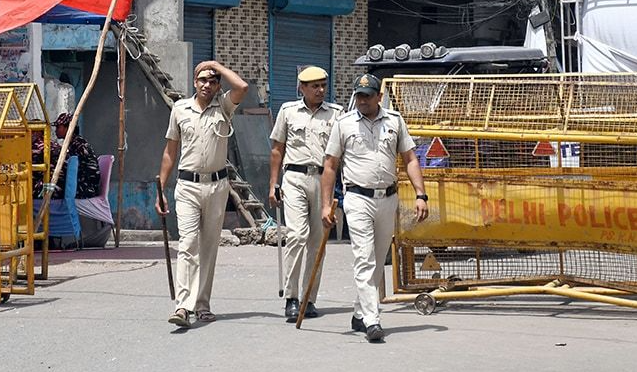
The Delhi High Court has strongly observed that in the case of unnatural death of a young married lady, the police is bound to investigate the case promptly and diligently, more so, when it is a case of alleged dowry harassment. The court refused to grant anticipatory bail to the husband and in-laws. The remarks came in the death of a 25-year-old woman within six months of marriage.

Delhi High Court’s strong remarks on delayed FIR registration in a dowry death case have put the spotlight on police response and women’s safety.
The Delhi High Court has come down heavily on the delay in filing an FIR in a dowry death case involving the death of a 25-year-old woman within six months of marriage. Justice Swarana Kanta Sharma, while rejecting anticipatory bail pleas filed by the husband and in-laws, observed that the registration of the FIR in this case took longer than the woman’s entire marriage.
The case has revived concerns over how police handle suspicious deaths of newly married women, especially when the family raises allegations of harassment, cruelty, or dowry demand. The court said that once the deceased’s parents suspected foul play, the matter needed immediate and effective police action. Yeh issue kaafi important hai because delayed action in such cases can weaken evidence, increase family trauma, and allow serious allegations to remain unresolved for months.
What the Court Said
Justice Sharma’s remarks were unusually sharp and direct. She noted that it was an “unfortunate reality” that the deceased’s father had to run from pillar to post before the FIR was eventually registered pursuant to a judicial order. The judge said the FIR took more time to be registered than the woman had spent in marriage, which underlined the seriousness of the delay.
The court also said that when a young married woman dies within a few months of marriage and the parents raise suspicion against the husband and in-laws, the police must act with urgency. In the court’s view, such cases cannot be treated like routine matters because they involve a possible pattern of domestic cruelty, coercion, or dowry-related harassment. The Hindu has covered the full story.
The judge further expressed hope that future applications seeking FIR registration in similar cases would be taken up with greater urgency and listed on shorter dates. That observation is important because it points not only to the facts of this case but also to a broader procedural failure that courts may need to address more aggressively.
The Case Background
According to the facts recorded by the court, the husband told the deceased’s father on July 2, 2025, that his daughter was in a hospital after she allegedly fell down the stairs. When the father reached the hospital, he suspected foul play. It was later found that the woman had died by suicide after hanging herself in the matrimonial home.
She succumbed to her injuries on July 3, 2025. However, the FIR was registered only on February 13, 2026, after a magisterial court directed it. That means there was an eight-month gap between the death and the filing of the FIR. In a case involving allegations of dowry-related cruelty, such a delay can seriously complicate the investigation.
This sequence is central to the court’s concern. When a death is suspicious and the family immediately raises concern, evidence needs to be preserved, statements recorded, and the scene examined without delay. A long gap can make it harder to build a clear case and easier for crucial details to get lost.
Why the Delay Matters
A delayed FIR can have a major impact on the outcome of a criminal case. In dowry death matters, the first few hours and days are often the most important because that is when medical records, witness accounts, communication trails, and physical evidence can be collected most effectively.
If the FIR is delayed for months, the investigation may lose speed and clarity. Witnesses may forget details, electronic evidence may be harder to trace, and the family may feel forced to fight not only for justice but for basic procedural recognition of their complaint. That is exactly the concern the Delhi High Court appears to have highlighted in this case.
The court’s remarks also reflect a wider legal principle: the death of a young woman shortly after marriage is not an ordinary tragedy when suspicions of dowry harassment are raised. Such cases demand careful scrutiny because they may involve coercion, abuse, and a systemic failure to protect the victim. This is why prompt police investigation becomes so essential.
Anticipatory Bail Rejected
The husband and in-laws had sought anticipatory bail, but the High Court denied the plea. While the full legal reasoning would be contained in the judgment, the court’s comments make clear that the seriousness of the allegations and the delay in FIR registration weighed heavily in the matter.
Anticipatory bail in such sensitive cases often depends on the nature of accusations, the stage of investigation, and the possibility of evidence tampering. Here, the court’s refusal suggests that it found enough concern in the allegations and circumstances to justify keeping the accused available for investigation.
In practical terms, this means the police now have a stronger basis to continue their probe without the immediate hurdle of pre-arrest protection for the accused. It also sends a signal that courts are likely to treat such cases with caution, especially when they involve a death within months of marriage and allegations of dowry pressure.
Legal Context
Dowry death and cruelty-related cases in India carry a heavy social and legal weight because they often reflect deep-rooted gender violence. Under Indian law, deaths of married women under suspicious circumstances within a certain period after marriage can trigger special scrutiny, especially if the family alleges harassment over dowry or cruelty from the husband’s side.
Delhi and other Indian cities continue to see cases where families allege that the woman was harassed after marriage and that police initially failed to treat the complaint with urgency. Courts have repeatedly emphasized that when a death appears unnatural and the family raises suspicion, the investigating agency must move quickly.
This case fits into that pattern. The woman died within six months of marriage; her father suspected foul play immediately, and yet the FIR came many months later. That delay is precisely the kind of gap that courts often criticize because it can create an impression that the system did not respond when it should have. In a country where women’s safety remains a major issue, that is a serious concern.
Timeline
Within six months of marriage: The woman dies under suspicious circumstances in the matrimonial home.
July 2, 2025: The husband informs her father that she is in the hospital after a fall from stairs.
July 2, 2025: The father reaches the hospital and suspects foul play.
July 3, 2025: The woman succumbs to her injuries after hanging herself, according to later findings.
February 13, 2026: FIR is registered after a magisterial court order.
June 1, 2026: Delhi High Court delivers its order and rejects anticipatory bail.
Why This Matters
This matters because delayed police action can deny justice at the very stage when it is most needed. In cases involving the death of newly married women, time is not just procedural—it is evidence, accountability, and protection. If officials do not act quickly, families are left struggling against both grief and bureaucracy.
It also matters because the court’s remarks may influence how police and lower courts handle future complaints. If courts begin taking FIR-registration delays more seriously, that could improve the response in suspicious death cases. Yeh issue kaafi important hai because it is not only about one case; it is about how the justice system treats vulnerable women and their families.
The impact extends beyond the courtroom. Public confidence in the police depends heavily on whether suspicious deaths are investigated seriously and promptly. If families feel they must “run from pillar to post” before an FIR is even filed, the system loses credibility.
India Angle
The India angle is deeply significant because dowry harassment remains a persistent social problem across many parts of the country. Even as laws exist to deter cruelty and dowry-related violence, families still report pressure, abuse, and suspicious deaths after marriage. This case will resonate widely because it reflects a painful pattern that many Indian families recognize.
In Hinglish, seedhi baat yeh hai: agar ek young woman ki death suspicious ho aur family ko turant action na mile, toh justice ka process already weak lagne lagta hai. That is why the High Court’s remarks matter not just for Delhi, but for the entire country. They remind police and courts that such cases need urgency, sensitivity, and seriousness.
The story also underlines the pressure on legal institutions in India to protect women after marriage, not just before it. For many readers, this will feel like a reminder that the law must respond quickly when the signs point to possible cruelty or dowry-related abuse.
Analysis
My view is that the court has delivered an important message. The phrase that the FIR took longer than the marriage itself is not just a sharp remark; it captures the absurdity of procedural delay in a case that demanded urgency from the start. If police had acted quickly when the father first raised suspicion, the investigation might have been stronger and the family might have felt less abandoned. The court’s hope that such matters be listed on shorter dates is also practical, because delays at the pre-FIR stage can make justice feel distant. In simple terms, the system should not force grieving families to fight for recognition before it even starts investigating. That is the real takeaway here.
What Next
The next step will depend on the continuing investigation and the trial process. Police will now need to build the dowry death case using the available evidence, witness statements, medical records, and any communication that may support the family’s allegations.
The rejection of anticipatory bail means the accused will have to face the investigation without the immediate shield of pre-arrest protection. If more evidence emerges, the case may move toward charges under relevant provisions dealing with dowry death, cruelty, and abetment. The court’s comments may also influence how future petitions of a similar nature are handled, especially where families complain about police inaction.
There may also be wider administrative introspection about why the FIR was delayed so long. If authorities examine this seriously, the case could become a reference point for how not to handle suspicious deaths of young married women.
Conclusion
The Delhi High Court’s remarks in this dowry death case are a strong reminder that the unnatural death of a young married woman cannot be treated casually or slowly. Justice Swarana Kanta Sharma has clearly signaled that prompt police investigation is essential, especially when the family raises concerns from the start.
The eight-month delay in registering the FIR is at the heart of the criticism, and the court’s decision to deny anticipatory bail shows the seriousness with which it views the matter. Beyond this one case, the message is larger: when a young woman dies suspiciously within months of marriage, the system must move fast, listen carefully, and investigate fully. That is the only way justice can feel real, not delayed.
Written By A. Jack