
A demolition drive in Mumbai’s Bandra East turned violent on Wednesday as residents hurled stones at police, injuring three personnel. The clash erupted when authorities demolished an allegedly illegal mosque during an anti-encroachment drive in the Gareeb Nagar slum area of Western Railway.
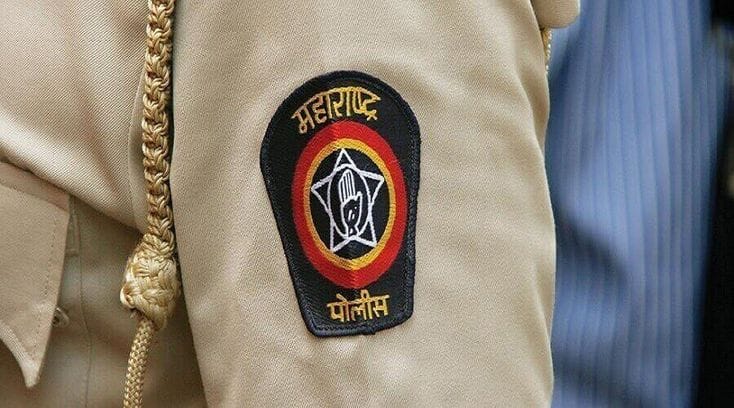
Police and demolition teams at the site of anti encroachment drive in Bandra East, Mumbai, after tension ran high and stones pelted during the drive.
A tense anti-encroachment drive in Mumbai’s Bandra East area turned into a law-and-order situation on Wednesday after three police personnel were injured in stone-pelting by angry residents. The incident took place in the Gareeb Nagar slum area, where Western Railway was carrying out a demolition exercise on railway land following directions from the Bombay High Court.
According to officials, the confrontation began when authorities started pulling down an alleged illegal three-story mosque on the second day of the drive. A large crowd gathered at the site, the situation escalated, and police had to resort to a lathi charge to disperse the mob. At least ten people were detained. This is a serious development because it shows how sensitive anti-encroachment drives can become when they involve places of worship, dense settlements, and long-standing local claims. Yeh issue kaafi important hai because it combines legality, public order, and political tension in one fast-moving incident.
What Happened
The anti-encroachment operation was launched by Western Railway on Tuesday in the Gareeb Nagar slum, close to Bandra railway station’s eastern side. The drive is aimed at clearing encroached railway land after directions from the Bombay High Court. Officials said the plan is to remove illegal structures from around 5,200 square meters of railway land over five days, and nearly 60 percent of the encroached structures had already been cleared by Wednesday. NDTV has covered the full story.
The situation escalated when demolition teams began removing an allegedly illegal mosque structure in the area. Residents claimed they were not given enough time to remove belongings before the demolition started. As tempers rose, police attempted to control the crowd. Some residents were reportedly injured in the lathi-charge, and the confrontation worsened when a section of the crowd started throwing stones at police personnel. Three policemen were injured in the stone-pelting, and ten people were detained.
In situations like this, a demolition drive can shift from a civic enforcement action to a public order crisis very quickly. That appears to be what happened in Bandra East. The combination of a large crowd, emotional attachment to the structure, and uncertainty over timing created conditions where the situation got out of control.
Official Response
Additional Commissioner of Police Abhinav Deshmukh said the drive was being carried out under the jurisdiction of Nirmal Nagar police station as per high court orders. He said “anti-social elements” attempted to obstruct the demolition by throwing stones at the squad, and the police used appropriate force to disperse them.
He also confirmed that the process of registering an FIR was underway and that strict legal action would be taken against those involved in the violence. The police deployment was substantial, with more than 1,000 personnel on the ground, including around 400 city police officers along with Railway Protection Force and Government Railway Police personnel. That level of deployment shows authorities were aware the operation could face resistance, especially in a densely populated slum pocket.
Why the Drive Became Sensitive
Encroachment drives are never just about land. In urban India, they often touch on housing insecurity, livelihoods, religion, and political symbolism all at once. Bandra East is a crowded and politically sensitive area, and the demolition of an alleged illegal mosque made the matter even more emotionally charged.
Residents claimed they were not given enough time to collect belongings, which is a common flashpoint in such drives. Even when the action is legally backed, the human side of the story can quickly turn a planned operation into an emotional confrontation. On the other hand, the railway authorities are under pressure to clear land that is officially encroached upon and required for public infrastructure. That creates a direct conflict between enforcement and local resistance.
The fact that this action followed Bombay High Court directions is also important. It means the drive was not random or sudden; it was part of a legal process. But legal authority does not automatically reduce on-ground tension, especially when people feel their homes, religious spaces, or community structures are being targeted. In simple words, it wasn’t just a demolition case—it became a battle between law, emotion, and ground reality.
Background
Mumbai has seen many anti-encroachment drives in the past because railway land and public land are often heavily occupied by informal settlements and unauthorized structures. Around stations like Bandra, Kurla, Mankhurd, and other suburban hubs, encroachment issues are especially complex because the land is valuable, the population is dense, and the human stakes are high.
Western Railway said the goal is to clear a large stretch of land in Gareeb Nagar over five days. The drive is being seen as part of a broader push to reclaim public land for rail operations and urban planning. Such operations are usually backed by court orders and administrative coordination, but they can still become flashpoints when they intersect with community structures.
Political reactions also surfaced quickly. Local MLA and Shiv Sena (UBT) leader Varun Sardesai accused the ruling BJP of trying to create a narrative that the Maharashtra government was acting against illegal Bangladeshi migrants in the area. He clarified that the action was taken by Western Railway under a court order and that neither the BMC nor the state government was directly involved. His comments show how quickly a local enforcement issue can become a broader political debate in Mumbai.
Timeline
Tuesday: Western Railway begins anti-encroachment drive in Gareeb Nagar, Bandra East.
Wednesday: Demolition reaches the alleged illegal three-story mosque.
During the operation: A Large crowd gathers, tension escalates, and police use a lathi charge.
After that: Stones are thrown at police, injuring three personnel.
Later: Ten people are detained, and FIR registration begins.
Ongoing: Authorities continue the five-day encroachment clearing operation.
Also Read: Seven-Year-Old Boy Dies After Getting Trapped Between Lift Door and Wall in Sinhagad Road Society
Why This Matters
This matters because anti-encroachment drives in big cities like Mumbai are increasingly about more than land clearance. They affect families, local communities, and public trust in how urban governance is carried out. When violence erupts, it raises questions about planning, communication, and crowd management.
It also matters because rail land is public land, and clearing encroachments is linked to safety, future infrastructure use, and city planning. But if such drives are seen as abrupt or politically loaded, they can intensify mistrust. For ordinary citizens, this becomes a reminder that urban development often comes with difficult trade-offs. Yeh matter is important because it affects both city infrastructure and social harmony.
India Angle
For Indian readers, the Bandra East incident reflects a familiar urban reality: public land disputes are one of the most difficult issues in crowded cities. From Delhi to Mumbai to Kolkata, encroachment drives often trigger tension because they involve the loss of space, uncertainty about rehabilitation, and questions over fairness.
There is also a strong India angle in how quickly such incidents become politically charged. A local demolition drive can turn into a debate about migration, religion, and governance within hours. That pattern is common across Indian cities and shows how civic issues are rarely just civic issues anymore. In Hinglish, it’s not just a bulldozer and police scene—it becomes a bigger conversation about rights, legality, and public sentiment.
Analysis
My view is that the biggest challenge in such operations is not legal approval but on-ground execution. If the public is not adequately informed, and if enough time is not given for people to move belongings or seek clarification, confrontation becomes much more likely. At the same time, the state cannot let illegal encroachments remain indefinitely, especially on railway land. So the real issue is balance: lawful action with better communication, better sequencing, and stronger sensitivity on the ground.
What’s Next?
The next step will likely involve FIR registration, identification of those involved in stone-pelting, and further security deployment at the site. Western Railway may continue the clearance operation over the planned five-day period, but police presence will probably remain heavy to prevent further violence.
If tensions persist, authorities may need to increase communication with local residents and community representatives to reduce the risk of more unrest. Political leaders could also weigh in more strongly depending on how the demolition progresses. The larger question now is whether the drive can continue without more clashes or whether it will force a broader review of how such operations are managed in dense urban settlements.
Conclusion
The anti-encroachment drive in Mumbai’s Bandra East turned violent when stones were thrown at police during the demolition of an alleged illegal mosque in the Gareeb Nagar slum area. Three police personnel were injured, several residents were also hurt during the lathi charge, and ten people were detained as authorities tried to restore order.
The incident highlights the difficult reality of urban enforcement in India: even legally backed drives can escalate when they intersect with emotions, religion, and local displacement fears. For Mumbai, this is not just a one-day clash. It is a reminder that successful governance in crowded cities needs both firmness and sensitivity.
Written By A. Jack