
The FDA has stopped the Malad Blinkit facility from selling or distributing food during the suspension period, while laboratory testing will determine further action against the seized sweets from a Reliance Retail outlet.
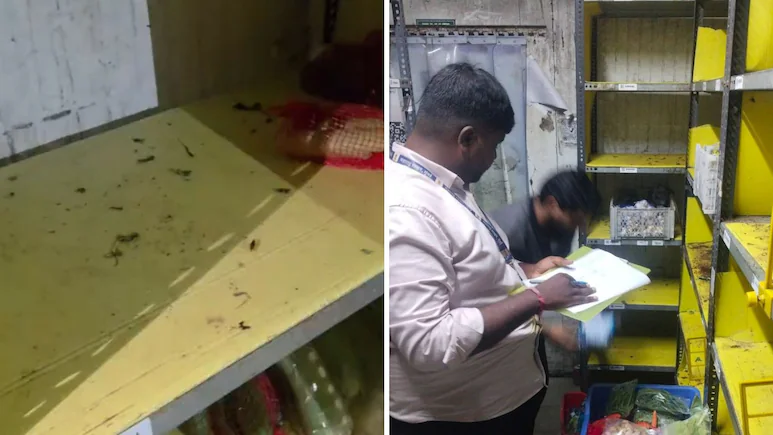
Maharashtra FDA officials inspect food storage and retail premises after finding serious hygiene violations at a Blinkit facility in Mumbai. Image Credit: NDTV
In Mumbai, the Maharashtra Food and Drug Administration suspended the food license of Blink Commerce Pvt. Ltd., which operates Blinkit, after an inspection at its facility in Sarvodaya Bhuvan, Malad West, found extensive cockroach infestation and severely unhygienic conditions.
The inspection also identified improperly stored food, expired and damaged packaged products, inadequate pest control, poor cold-storage cleanliness and gaps in food-handler health records.
In Buldhana district, the FDA inspected a Reliance Retail outlet at ARD Cinemall after receiving a consumer complaint about fungus and live worms allegedly found in Laxmi Narayan brand kaju katli. Officials seized 54 boxes weighing 11.34 kilograms and sent a sample to an authorized food laboratory for analysis.
The two actions are separate. The Blinkit license suspension was based on conditions found at the facility, while the case involving the kaju katli remains subject to laboratory results.
What the FDA found at Blinkit’s Malad facility
According to the Maharashtra FDA, inspectors found the facility in an extremely unhygienic condition. A large-scale cockroach infestation was detected in areas where fruits and vegetables were stored.
The presence of cockroaches in food-storage zones creates a serious contamination risk. Cockroaches can move between waste areas, drains, floors, storage racks and food products, potentially spreading bacteria and other contaminants.
The inspection also found food products stored on racks and floors, poor cleanliness in the cold-storage area and inadequate maintenance of food-handling sections. Some racks were reportedly rusty, which can make cleaning difficult and create additional risks for packaged and unpackaged food. This story was also covered by NDTV.
The FDA said expired, damaged and tampered packaged food was found in the cold room alongside other stock. This raised questions about inventory segregation and the system used to prevent unsuitable products from being delivered to customers.
Authorities also reported inadequate pest and rodent control, poor waste management and a failure to follow FIFO and FEFO principles.
Why the Blinkit action is serious
A quick-commerce facility is not just a storage room. It functions as a food business where products are received, stored, picked, packed and dispatched to consumers.
Customers may assume that food listed on an app has already passed basic safety and storage checks. If a facility has pest infestation, expired products or poor temperature control, that trust can be damaged quickly.
The FDA also pointed to shortcomings involving food handlers. Medical examination records and health records were reportedly absent, while workers lacked adequate personal hygiene and protective equipment.
The agency suspended the license with immediate effect under Section 32(3) of the Food Safety and Standards Act, 2006, along with relevant food-business licensing regulations. During the suspension, the facility cannot sell, distribute or conduct food business from the premises.
The suspension is an administrative and regulatory action. It does not necessarily mean that every product delivered from the facility was unsafe, but it indicates that the premises did not meet the required food-safety standards at the time of inspection.
Kaju katli complaint in Buldhana
The second case began after consumers complained on August 8 about Laxmi Narayan brand kaju katli sold at a Reliance Retail outlet at ARD Cinemall in Buldhana district.
The complaint alleged that fungus growth and live worms were found in the sweets. The FDA conducted an immediate inspection after receiving the complaint. Officials said the batch mentioned in the complaint was no longer available at the outlet. They collected a sample from the available stock and sent it to a food laboratory for testing.
As a precautionary measure, the FDA seized 54 boxes of the product. The total weight was recorded as 11.34 kilograms and the value was reported at approximately ₹10,238. The seizure prevents the identified stock from being sold while the authorities wait for the laboratory findings. Further action will depend on whether the sample is found to violate food-safety and quality standards.
The FDA’s statement did not establish that all Laxmi Narayan products were contaminated. The complaint relates to specific stock available through the outlet, and the laboratory analysis will be important in determining the next legal step.
FDA statement and regulatory action
The Maharashtra FDA said the Blinkit facility had committed serious violations of food safety requirements. The agency highlighted the combination of pest infestation, improper storage, expired and tampered products, inadequate waste management and missing health records.
On the Buldhana complaint, the FDA said, “On 8 August 2026, a complaint was received from consumers regarding fungus growth and the presence of live worms in Laxmi Narayan brand kaju katli. Pursuant to the complaint, an immediate inspection was conducted.”
The authority said action would be taken under the Food Safety and Standards Act, 2006, based on the laboratory report.
The statement reflects two different regulatory approaches. The Malad facility was immediately suspended because the inspection identified ongoing conditions that posed a food-safety risk. The kaju katli case requires scientific testing before a final conclusion can be reached.
Background: growing scrutiny of food facilities
The latest action comes during a wider enforcement drive by the Maharashtra FDA. Between August 7 and August 9, the department reportedly seized food products worth more than ₹3.5 crore across the State.
The scrutiny of quick-commerce warehouses has increased as these facilities become a major channel for groceries, fruits, vegetables, dairy products, snacks and ready-to-eat items.
Unlike traditional supermarkets, quick-commerce “dark stores” are often not open to consumers. Customers may never see the storage conditions before placing an order. This makes regulatory inspections particularly important.
The FDA has also taken action against other food facilities in Maharashtra in recent weeks. Reports said a Blinkit warehouse in Pune’s Viman Nagar had faced action, while another Pune facility had previously been found with fungal growth concerns.
These cases do not automatically indicate a problem across the entire quick-commerce industry. However, they show why companies need strict controls at every stage of the supply chain.
Also Read: Pune FDA Inspects 415 Restaurants; 43 Licenses Suspended, 13 Restored
Timeline
On August 7, Maharashtra FDA officials inspected the Blink Commerce Pvt Ltd facility at Sarvodaya Bhuvan in Malad West, Mumbai.
During the inspection, officials reported large-scale cockroach infestation, poor storage, expired and tampered products, weak pest control, inadequate waste management and missing health records.
The FDA subsequently suspended the facility’s food license with immediate effect, prohibiting it from selling, distributing or conducting food business from the premises.
On August 8, consumers complained about fungus and live worms allegedly found in Laxmi Narayan kaju katli sold at the Reliance Retail outlet at ARD Cinemall in Buldhana.
The FDA inspected the outlet, collected a sample and seized 54 boxes weighing 11.34 kilograms.
The sample was sent to an authorized food laboratory. Final action in the kaju katli case will depend on the test report.
Why This Matters
This matters because food contamination can cause illness, particularly among children, older people and consumers with weaker immune systems. Fungal growth and insects in packaged sweets may indicate problems with manufacturing, packaging, storage or shelf-life monitoring.
The Blinkit case matters for another reason: quick-commerce orders are often delivered within minutes, but food safety cannot be rushed. Speed of delivery must not come at the cost of pest control, temperature monitoring or inventory checks.
Customers also need accurate information about product expiry dates, packaging condition and storage requirements. Damaged or tampered packages should never reach the delivery stage.
The action highlights the importance of the “last mile” in food safety. Even if a product is manufactured correctly, poor storage at a warehouse or retail outlet can make it unsafe.
For businesses, the case is a reminder that a food license is not a one-time formality. It requires continuous compliance with hygiene, pest control, worker health and storage standards.
India’s angle
For Indian consumers, the issue is especially relevant because packaged sweets are purchased frequently during festivals, family events and religious occasions. Kaju katli is a popular product, and consumers often buy sealed boxes believing they are safer than loose sweets.
Yeh issue kaafi important hai because consumers usually cannot inspect the full supply chain behind a product. They depend on retailers, brands and food-delivery platforms to maintain quality.
The case also raises questions about the changing nature of grocery shopping in India. Quick-commerce platforms are now handling fresh produce, chilled items and ready-to-eat products from small storage facilities located inside residential and commercial areas.
Regulators may need to establish more frequent inspections for dark stores, clear standards for cold-chain maintenance and stronger rules for separating expired or damaged stock.
Consumers can also take basic precautions. They should check manufacturing and expiry dates, inspect packaging for tampering, avoid products with unusual odors or visible mold, and keep bills or photographs if a complaint is filed.
Analysis
Cockroaches are alarming, but the broader problem is the apparent combination of infestation, weak pest control, expired products, poor waste handling and inadequate worker records. Together, these findings suggest that the issue may not be limited to one isolated pest sighting.
The suspension gives the regulator an opportunity to require corrective action before the facility resumes operations. Blink Commerce should conduct a full sanitation process, remove unsafe stock, repair storage infrastructure, improve pest-control contracts and train food handlers.
The company should also explain whether any products were delivered from the facility after the inspection and whether customers who received potentially affected items will be notified.
In the kaju katli case, it is important to avoid declaring the sweets unsafe before the laboratory report is released. Consumer complaints must be taken seriously, but a scientific test is needed to determine contamination, shelf-life failure or other violations.
The FDA should publish the laboratory outcome and final action promptly. Transparency will protect consumers and prevent unnecessary claims against the brand or retailer.
What Next
The Blinkit facility will remain prohibited from selling, distributing or conducting food business during the license suspension. The company is likely to be required to correct the violations before seeking permission to resume operations. The FDA may conduct a follow-up inspection to verify pest control, waste disposal, cold-storage cleaning, stock segregation and employee health documentation.
The department may also review whether expired or tampered products were supplied to customers before the inspection. If so, a product recall or consumer advisory could become necessary.
In Buldhana, the kaju katli sample will undergo laboratory analysis. If the report confirms contamination or other violations, the FDA could initiate proceedings under the Food Safety and Standards Act, 2006. Additional stock may also be seized if it is linked to the same batch.
Reliance Retail and the product manufacturer may be asked to provide purchase records, batch details, storage information and distribution records.
Consumers who bought the product should preserve the packaging, batch number, bill and photographs if they believe they received contaminated sweets. They should report suspected food-safety violations to the State FDA or relevant consumer authorities.
Conclusion
The Maharashtra FDA has suspended the food license of a Blinkit facility in Malad West after finding extensive cockroach infestation, unhygienic storage, expired and damaged products, weak pest control and other violations. The facility is barred from conducting food business during the suspension period.
Separately, the FDA seized 54 boxes of Laxmi Narayan kaju katli from a Reliance Retail outlet in Buldhana after a complaint alleged fungus and live worms in the sweets. A laboratory report will determine whether further legal action is required.
The two cases highlight a common concern: food safety depends not only on manufacturing but also on storage, handling, worker hygiene and inventory management. For consumers, fast delivery and attractive packaging mean little if basic safety standards are ignored.
The FDA’s action is an important enforcement step, but long-term trust will depend on follow-up inspections, public disclosure of test results and genuine corrective measures by the companies involved.
Written By A. Jack