Cloudbursts and intense monsoon rain caused the Tamak drain to swell rapidly, damaging the strategically important Malari-Niti road and isolating villages near the international border.
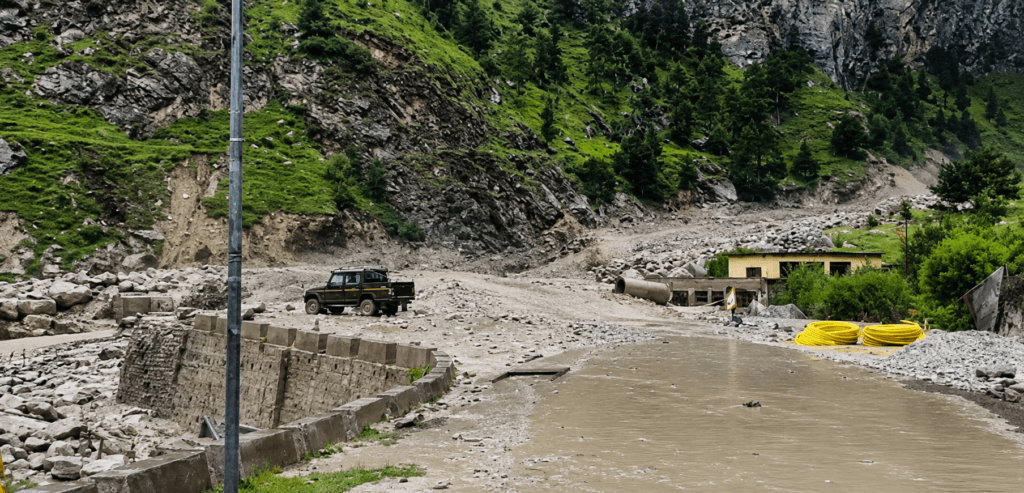
Flash floodwaters surge through the Tamak drain in Chamoli’s Niti Valley after washing away a Bailey bridge on the Joshimath–Malari–Niti route. Image Credit: India Today
Uttarakhand Flash Flood: A sudden surge of floodwater in Chamoli’s Tamak drain turned a key mountain crossing into a dangerous torrent on Monday, August 10. The powerful flow washed away a Bailey bridge on the Malari-Niti National Highway, along with a vehicle and a Border Roads Organization driver identified as Pankaj.
The bridge connected Jyotirmath with the Niti Valley and the border area. Its collapse has disrupted road access to around a dozen villages, including Jumma and Niti, and temporarily cut off movement towards the frontier.
According to officials, Pankaj, a resident of Pithoragarh district, was near the site and watching the rising water when the bridge suddenly collapsed. He was swept away by the current and remained missing as rescue operations continued.
The district administration, State Disaster Response Force, National Disaster Response Force and police teams were deployed to search for him and assess the damage. The Border Roads Organisation has begun working on alternative arrangements to restore connectivity.
How the bridge collapsed
The Tamak drain experienced a sudden and dramatic rise in water levels after intense monsoon rain and reported cloudburst activity in the surrounding upper catchment areas. Mountain streams and drains can rise within minutes when heavy rain falls over steep slopes. Water carries mud, stones, branches and other debris downhill, creating enormous pressure on bridges, retaining walls and roads.
The Bailey bridge was unable to withstand the force of the torrent. The structure was swept away as water and debris surged through the drain. A BRO vehicle was also carried away. The bridge collapse occurred at a strategically important point on the Jyotirmath-Malari-Niti route. The road is used by residents, security personnel, workers and officials travelling towards villages near India’s border. This story was also covered by India Today.
Officials are checking whether the bridge’s support structures were weakened by earlier floods, erosion or repeated debris flow. At this stage, the confirmed cause is the sudden flood surge, while the exact contribution of structural damage or erosion will be determined through a technical assessment.
Driver missing as rescue teams search
The missing BRO driver, Pankaj, was reportedly near the bridge when the floodwaters increased. Witnesses said he was watching the rising flow when the bridge gave way. The force of the water swept him away, and rescue teams began searching downstream. Search operations in mountain drains are especially difficult because visibility is poor, currents are unpredictable and large rocks and debris can block access.
The SDRF and NDRF teams are expected to use ropes, boats where possible, search equipment and local knowledge to trace the missing driver. Police and district officials are also collecting information from people who were near the site.
The search will depend on water levels falling sufficiently for rescuers to enter dangerous sections safely. Officials will need to balance urgency with the risk of sending personnel into another sudden surge.
The vehicle swept away in the flood is also being searched for, although the primary concern remains locating the missing driver.
Connectivity to border villages disrupted
The bridge collapse has cut the road link between Jyotirmath and several villages in the Niti Valley. Villages affected include Jumma and Niti, while nearby settlements along the route may also face transport difficulties.
The disruption is important because the road serves both local communities and the border region. Residents depend on it for food, medicines, education, government services and access to markets.
The route is also strategically significant for the movement of personnel and supplies. Any prolonged closure can affect logistics near the frontier, particularly during the monsoon season when alternative routes are limited.
The district administration has suspended traffic on nearby roads and advised people to avoid travel in the affected area until conditions improve.
Officials said they were assessing the damage and working on temporary alternatives. Chamoli District Disaster Management Officer N. K. Joshi said traffic could be restored within a day or two if conditions remain favorable, although the timeline will depend on water levels, site access and the feasibility of temporary construction.
The chief minister orders relief measures
Uttarakhand Chief Minister Pushkar Singh Dhami directed officials to intensify relief and rescue operations in Chamoli.
He asked the administration to take precautionary measures in lower-lying areas because water and debris can travel rapidly downstream after a flash flood. He also directed officials to ensure that rations, food, medicines and other essential commodities continue to reach the affected villages.
The government is expected to monitor river and drain levels, inspect roads and bridges and coordinate with the BRO on alternative connectivity.
The Chief Minister’s office has also urged local officials to remain alert as the monsoon remains active in Uttarakhand. The possibility of additional rainfall could slow rescue work and create fresh risks in already weakened areas.
Background: repeated flooding in the Tamak drain
The Tamak drain and the Joshimath-Niti road have faced repeated disruption from heavy rain, flash floods and landslides over the past several years. Flood debris has repeatedly choked nearby sections of the Dhauli Ganga and damaged roads leading towards the Niti Valley. The steep terrain makes the region vulnerable to landslides, falling rocks, erosion and sudden water surges.
The route passes through a fragile Himalayan landscape where roads and bridges are exposed to intense weather. Even a short period of heavy rain can block access to remote villages.
The latest incident is therefore not an isolated weather event. It reflects a broader pattern of recurring monsoon damage in mountain districts, where infrastructure must withstand both normal traffic and extreme hydrological events.
Bailey bridges are widely used in difficult terrain because they can be assembled quickly and provide temporary or emergency connectivity. However, they still require strong foundations, regular inspections and protection from scouring around the supports.
Also Read: Pune Rain: Fire Brigade Shifts 70 Families From Flooded Ekta Nagar Using Boats
Timeline
On Monday, August 10, heavy monsoon rain and reported cloudburst activity caused the Tamak drain in Chamoli’s Niti Valley to swell rapidly.
Around the evening, a powerful water surge hit the Bailey bridge on the Malari-Niti route.
The bridge collapsed and was washed away, while a BRO vehicle was swept into the floodwaters.
The driver, Pankaj, was reported missing after being caught near the bridge.
The district administration, police, SDRF, and NDRF launched search and rescue operations.
Traffic on nearby routes was suspended, cutting off road connectivity to the border region and around a dozen villages.
The BRO began making alternative arrangements, while the administration assessed the possibility of restoring traffic within one or two days.
Why This Matters
This matters because the bridge was a lifeline for people living in remote border villages. A road closure can quickly affect the supply of food, medicines, fuel and other essentials.
For families in Jumma, Niti and nearby settlements, the disruption may mean longer travel times, difficulty reaching hospitals and limited access to markets. If the closure continues, authorities may need to arrange temporary supply routes or helicopter support.
The incident also matters from a national-security perspective. The Malari-Niti route connects the interior areas of Chamoli with the border region. Reliable roads are essential for both civilian access and strategic mobility.
The disappearance of a BRO driver highlights the danger faced by workers maintaining roads and bridges in extreme terrain. These personnel often operate during difficult weather because connectivity cannot be allowed to fail for long.
The event is also a warning about climate and infrastructure. As intense rainfall events become more disruptive, temporary bridges and mountain roads need stronger designs, better warning systems and more frequent safety inspections.
India’s angle
For India, the Chamoli flash flood is another reminder that Himalayan development must account for the region’s natural vulnerability.
Uttarakhand has seen repeated cloudbursts, flash floods and landslides over the past decade. Roads, bridges and settlements built near streams or unstable slopes face significant risk during the monsoon.
The incident is relevant to people across the country because Uttarakhand is a major pilgrimage and tourism destination. Weather-related road closures can affect pilgrims, tourists, transport operators and local businesses.
Yeh issue kaafi important hai because mountain infrastructure cannot be planned like infrastructure in flat areas. Drainage, slope stability, flood channels and emergency access must be part of every road and bridge project.
India also needs stronger real-time warning systems for communities living near vulnerable drains. Local residents should receive alerts when rainfall upstream causes water levels to rise suddenly.
At the same time, authorities must ensure that emergency supplies continue to reach isolated villages. A bridge collapse should not become a food or medical crisis.
Analysis
The immediate priority is locating Pankaj and ensuring that rescue personnel are not exposed to further danger. Search teams should receive updated information about rainfall, water levels and possible debris movement before entering downstream areas.
The second priority is temporary connectivity. The BRO and district administration must create a safe crossing or alternate route, but speed should not come at the cost of another accident.
The third priority is a technical review. Officials should inspect the bridge foundations, flood channel, nearby slopes and upstream drainage pattern. If the bridge were repeatedly exposed to debris and erosion, a replacement structure might need deeper foundations and greater water clearance.
The administration’s statement that traffic may be restored within a day or two is encouraging, but the timeline should remain conditional. Mountain weather can change quickly, and temporary repairs may fail if another surge occurs.
The repeated history of damage in the Tamak drain suggests that authorities should move from emergency repair to long-term planning. This may include strengthening the road, widening flood channels at carefully selected points, installing warning gauges and identifying permanent alternate routes.
What Next
The immediate next step is the continued search for the missing BRO driver. Rescue teams will examine the drain and downstream areas once water conditions allow safe operations.
Officials will also survey the damaged bridge site and nearby roads to identify further risks. Traffic restrictions are likely to remain in place until engineers confirm that travel can resume safely.
The BRO may install temporary Bailey sections, culverts or other emergency arrangements to restore access. The administration may also organize supply movement to villages cut off by the collapse.
If heavy rain continues, additional road closures and landslides remain possible. Residents may be advised to avoid traveling near streams, bridges and unstable slopes.
In the longer term, the damaged bridge may need to be replaced with a stronger permanent structure. Authorities may also review other bridges on the Jyotirmath-Malari-Niti route before the next major rainfall event.
The government will need to balance rapid restoration with safety. A temporary road link that fails again could endanger residents, workers and security personnel.
Conclusion
A flash flood in Chamoli’s Tamak drain has washed away a Bailey bridge on the strategically important Malari-Niti National Highway, swept away a vehicle and left BRO driver Pankaj missing. The collapse has cut off road connectivity to the border region and around a dozen villages, including Jumma and Niti.
SDRF, NDRF, police, district officials and the BRO are conducting rescue and restoration operations. Chief Minister Pushkar Singh Dhami has directed officials to intensify the search, protect lower-lying areas and ensure that essential supplies reach affected communities.
The immediate story is about finding a missing worker and restoring a vital route. The larger issue is the vulnerability of Himalayan infrastructure to intense rainfall, cloudbursts, erosion and debris flows.
For residents of the Niti Valley, the bridge is more than a structure over a drain. It is a lifeline. The government must restore connectivity quickly, but the long-term answer will require safer bridge design, stronger weather monitoring and infrastructure planning suited to the realities of the Himalayas.
Written By A. Jack