
Thousands of mourners gathered in Iraq’s holiest Shia cities, Najaf and Karbala, to pay their final respects to Iran’s late Supreme Leader Ayatollah Ali Khamenei before his burial in Mashhad, marking a significant moment for the Shia Muslim world amid heightened regional tensions.
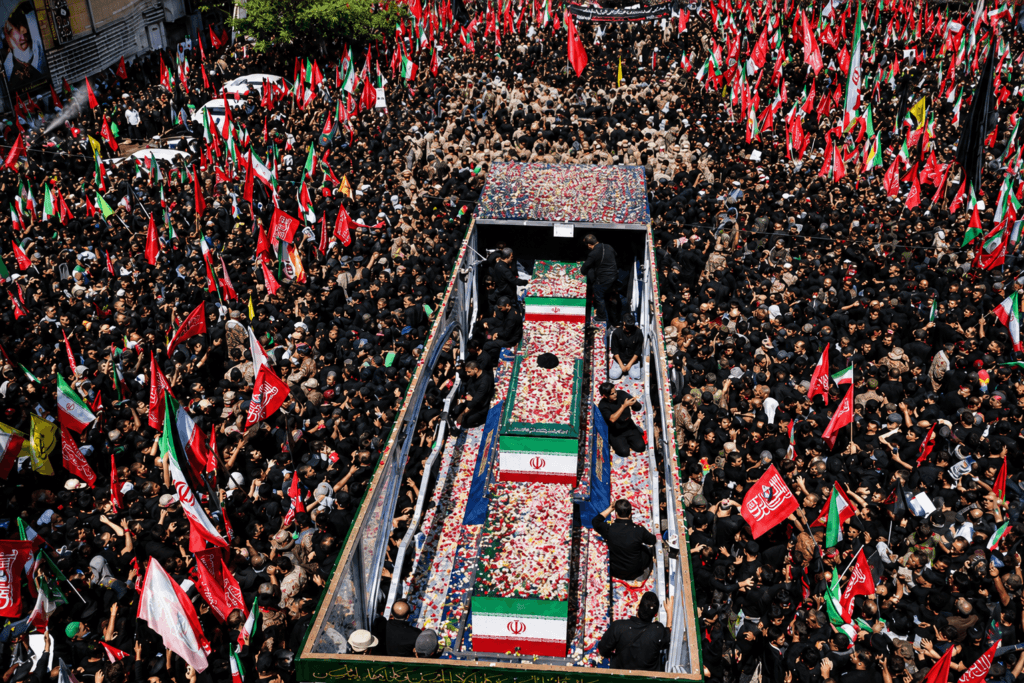
The coffin of Iran’s late Supreme Leader Ayatollah Ali Khamenei is carried through the holy Shia shrines in Najaf and Karbala as thousands of mourners gather to pay their final respects.
Iran’s late Supreme Leader Ayatollah Ali Khamenei’s funeral ceremonies entered day five as his body was being carried through two of Shia Islam’s holiest shrines in neighboring Iraq. Mass crowds gathered in the holy cities of Najaf and Karbala to pay their respects to one of the most influential religious and political figures in the modern Middle East. The ceremonies come on the first day of the recent war between Iran, the United States and Israel, which has radically reshaped the political landscape of the region, following the killing of Khamenei.
The emotional procession kicked off in the city of Najaf, where thousands of mourners lined the streets leading to the mausoleum of Imam Ali, who is regarded by Shia Muslims as the first Imam and the rightful successor to Prophet Muhammad. Many worshippers tried to touch the coffin before funeral prayers were said in a shrine that was filled with devotees. The remains were then flown to Karbala, where they were greeted by another massive crowd at the shrine of Imam Hussein, the Prophet Muhammad’s grandson and one of the most revered figures in Shia Islam.
Iranian officials say Ayatollah Ali Khamenei will be buried on Thursday in Mashhad, the holy city in northeastern Iran where the shrine of Imam Reza, the eighth Shia Imam, is located. The burial is expected to be attended by millions of mourners from across Iran and several neighboring countries.
Why and How the Funeral Ceremonies Reached Iraq
Choosing to carry Ayatollah Ali Khamenei’s remains through Iraq’s sacred Shia sites is a matter of deep religious and political significance. Millions of Shia pilgrims visit Najaf and Karbala every year, the spiritual homes of the faith. The bringing of the coffin of the late leader to these cities is symbolic of his lifelong association with the wider Shia community beyond the borders of Iran.
The Iranian and Iraqi authorities organized the funeral processions in a manner that would guarantee security, considering the current instability in the region. Despite fears of possible threats after the recent conflict between Iran, Israel and the United States, thousands turned out peacefully in both cities.
Witnesses described scenes of intense emotion as people waved Iranian and Iraqi flags, recited religious prayers and chanted slogans in praise of the late Supreme Leader. Inside the shrine of Imam Ali, the mourners jostled to reach the coffin and touch it as a final act of respect and devotion.
Holding funeral prayers at the shrines of Imam Ali and Imam Hussein is one of the highest honors that can be bestowed upon a prominent Shia leader, according to the religious scholars. These ceremonies also underscore the close religious bonds between Iran and Iraq despite their troubled political history.
Also read: US Strikes 10 Targets Iran, Tehran Launches Attacks on Kuwait and Bahrain as West Asia war Escalate
Funeral Reflects Khamenei’s Influence Across the Shia World
Ayatollah Ali Khamenei was Iran’s Supreme Leader for decades and during his rule he remained Iran’s ultimate political, military and religious authority. His influence was felt far beyond Iran’s borders, shaping its foreign policy and strengthening ties with various Shia communities across the Middle East.
In his time Khamenei became a defining figure in Iran’s approach to regional conflicts, nuclear negotiations and relations with the West. His leadership style was a magnet for both strong support and sharp criticism from around the world, making him one of the most closely scrutinized political figures in international affairs.
His death at the beginning of the Iran-US-Israel conflict has been another unknown in the already unstable Middle East. Analysts say the funeral ceremonies are not only a religious occasion but also a show of unity for Iran’s supporters amid major geopolitical shifts.
Reported Statements
Iranian religious officials said the massive crowds in Najaf and Karbala were a testament to the respect many Shias had for Ayatollah Khamenei in his life.
One senior cleric was quoted as saying the thousands of mourners’ presence “reflects the spiritual bond of the believers beyond the borders and shows the need for unity in difficult times.”
Regional experts have also said the ceremonies have symbolic meanings beyond religion.
“The funeral is performing two functions,” said a Middle East analyst. It pays homage to a major religious leader, but it also sends a message of continuity and stability at a time when Iran faces huge political and security challenges.”
Background: A Leader Who Shaped Modern Iran
Ayatollah Ali Khamenei became Iran’s Supreme Leader following the death of Ayatollah Ruhollah Khomeini in 1989. He was the country’s top leader for more than 30 years, overseeing major internal reforms, military tactics, nuclear talks and partnerships in the region.
During his leadership, Iran experienced international sanctions, diplomatic negotiations, technological development, economic challenges, and a number of military confrontations. Khamenei always insisted Iran should be independent and not subject to foreign interference.
The recent standoff between Iran, Israel and the United States has dramatically raised tensions across the Middle East. Khamenei’s death is one of the most important developments in the recent history of the region. Official reports say he was killed on the first day of the war.
The death of the general has sparked a wave of mourning across Iran, with funeral rites taking place in several cities before the final burial in the northeastern city of Mashhad.
Timeline of Key Events
The confrontation between Iran, Israel and the United States began with a rapid escalation of military hostilities, with a significant number of casualties and global apprehension. On the first day of the conflict, Iranian authorities announced that Supreme Leader Ayatollah Ali Khamenei had died.
Once officially confirmed, funeral ceremonies took place throughout Iran, with millions of mourners in attendance. On the fifth day of mourning, Khamenei’s body was taken to Iraq for processions at the shrines of Imam Ali in Najaf and Imam Hussein in Karbala.
His burial will be in Mashhad, one of Iran’s holiest religious cities, and will end the funeral.
Why This Matters
The funeral ceremonies go far beyond a state funeral. They are an important moment for Shia Muslims around the world and also reflect the wider political realities facing the Middle East.
Khamenei’s death creates a major leadership vacuum at a time when Iran is going through one of its most difficult geopolitical periods. The new leadership will have an effect not only on Iran’s domestic politics but also on its relations with neighboring countries, global powers and regional allies.
The ceremonies in Iraq also underscore the continuing religious ties between Iran and Iraq, with millions of Shia pilgrims traveling annually. This problem is very important because these events can influence future diplomatic relations, regional security policies and religious cooperation.
To international observers, the funeral offers a glimpse of Iran’s enduring sway among Shia communities, even as tensions persist in the region.
India Angle: Why Indians Should Follow This Story
Developments in Iran have significant strategic and economic implications for India. India has a long-standing diplomatic relationship with Iran and needs stability in the Middle East for its energy security, trade routes and the welfare of millions of Indian citizens working in the Gulf region.
Any political shifts in Tehran could have implications for future energy markets, oil prices, shipping lanes through the Strait of Hormuz and wider regional stability. Indian businesses, policymakers and energy planners will watch these developments keenly, given the Middle East’s importance in often impacting India’s fuel imports and inflation.
Also, India has invested in infrastructure projects such as Chabahar Port and it is strategically important for India to continue to engage with Iran. If regional tensions simmer on and escalate, it could have a collateral impact on India’s trade ambitions and economic interests in West Asia.
Indian pilgrims going to important Shia religious sites in Iraq too closely follow developments regarding key religious events like these funeral ceremonies.
Analysis
This story is important news-wise and SEO-wise because it touches upon religion, geopolitics, diplomacy and international security in one developing story. People everywhere want to know not just about the funeral but what it means for Iran’s future leadership and the wider implications for the region.
The symbolism of transporting the remains of Khamenei through Najaf and Karbala bears a message of religious legitimacy and unity that has been carefully constructed. Funeral processions, of course, are occasions for paying tribute to a departed leader, but they are also potent political moments that reinforce national identity and institutional continuity.
At the same time, the world will be watching closely how Tehran handles the transition after Khamenei’s death. Over the coming weeks the regional agenda is likely to be dominated by questions of succession, foreign policy and military strategy.
This is a story for digital audiences that goes beyond the funeral itself. People want to know what will happen next, who might become Iran’s next leader and whether the current tensions with Israel and the United States will get worse or gradually subside.
What Next?
Now the focus will be on Mashhad, where Ayatollah Ali Khamenei will be buried in one of Iran’s holiest cities. One of the largest public gatherings in the country’s recent history, millions are expected to attend the burial ceremony.
After the burial, the focus of Iran’s political establishment will likely turn to the need for institutional stability and questions of future leadership. International governments, too, will be watching closely what Tehran does diplomatically and militarily.
The coming weeks will be pivotal in a determination of whether the Middle East will experience further escalation or renewed diplomatic engagement, regional analysts say. BBC Also covered it.
Conclusion
The ceremonies of the funeral of the Ayatollah Ali Khamenei have become one of the biggest religious and political events in the Middle East this year. His large crowds in Najaf and Karbala are testament to the influence he wielded over many Shia Muslims. His burial in Mashhad marks the end of a chapter in Iranian history.
But beyond the emotional farewell, the ceremonies have profound geopolitical ramifications. They come at a time of heightened regional uncertainty after the Iran-US-Israel conflict, with the world’s attention increasingly on what Tehran will do next. As Iran enters a new era, the legacy of Khamenei’s rule—and the questions of his succession—will continue to shape Middle Eastern politics for years to come.