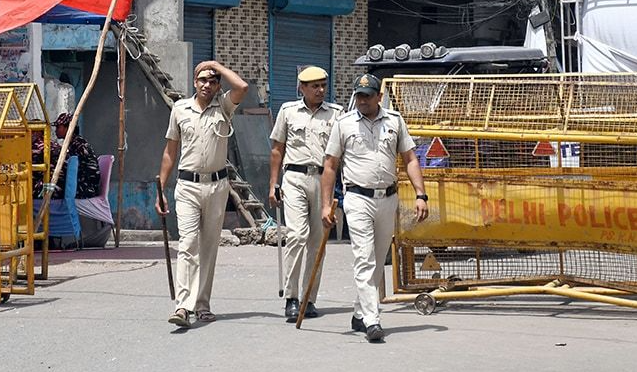
Police say five people, including the victim’s mother-in-law and a former domestic worker’s family, were arrested after a suspected murder was allegedly staged as a bathroom fall.
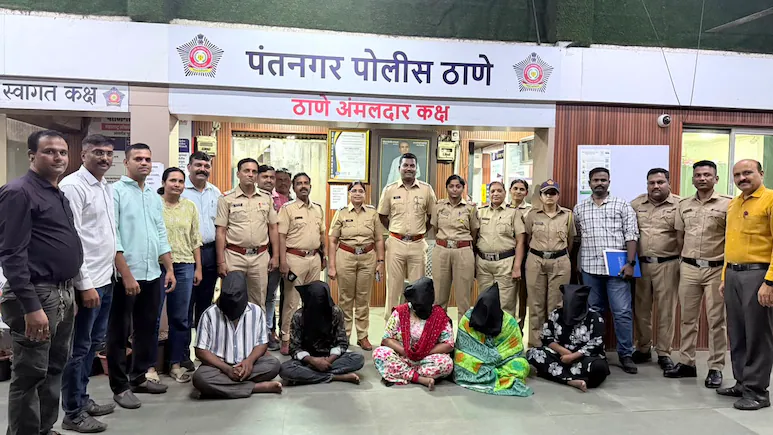
Five people have been arrested after police alleged that the victim’s mother-in-law arranged a ₹3 lakh contract killing. Image Credit: NDTV
Mumbai Police have arrested five people, including a woman accused of plotting the murder of her daughter-in-law, Sapna Pramod Ganji, in Ghatkopar and allegedly paying ₹3 lakh to a domestic worker and her family to carry out the crime.
Police allege that 35-year-old Sapna was killed at her Ghatkopar home after returning alone from Dubai, where her husband was working. The accused allegedly tried to make her death look like an accidental fall in the bathroom.
The victim’s mother-in-law, Dhanalakshmi Ganji, initially claimed that Sapna was drunk and had suffered a fatal head injury after falling in the bathroom, police said. However, injuries found on Sapna’s body and the complaint filed by her father led investigators to suspect foul play.
The case has brought renewed focus on domestic violence, the vulnerability of women returning to hostile marital homes and the urgent need for credible investigation when an alleged “accidental death” shows signs of assault.
Who Has Been Arrested
Police have arrested five people in connection with the alleged murder:
| Accused | Alleged role |
|---|---|
| Dhanalakshmi Bhikshapati Ganji | Victim’s mother-in-law; accused of planning and financing the murder |
| Mangalabai Suresh Jadhav | Former domestic worker; allegedly involved in the plot |
| Suresh Ganpat Jadhav | Mangalabai’s husband; allegedly involved |
| Shivani Suresh Jadhav | Mangalabai’s daughter; allegedly involved |
| Sajan Suresh Jadhav | Mangalabai’s son; allegedly involved |
Dhanalakshmi was arrested first and remanded to police custody until August 24, according to reports. The other accused were arrested as the investigation developed. This story was also covered by NDTV.
All allegations are subject to investigation and judicial scrutiny. Charges, evidence and final responsibility will be determined through the legal process.
How the Alleged Murder Plot Unfolded
According to police, Sapna was found dead at her Ghatkopar residence after an alleged attack that was later presented to her family as a bathroom accident.
Around midnight, Sapna’s father allegedly received a call from his son-in-law, Pramod Ganji, informing him that his daughter had fallen in the bathroom and suffered a serious head injury.
When Sapna’s father reached the hospital, doctors had already declared her dead. He allegedly noticed a deep head injury and visible marks on her face, neck and shoulders. Those injuries raised doubts about the family’s claim that she had died in an accidental fall. he then approached the police and filed a complaint, prompting an investigation into possible murder.
Police allege that Dhanalakshmi had paid ₹3 lakh to Mangalabai Jadhav and members of her family to carry out the killing. Investigators also suspect that the accused attempted to destroy evidence and stage the scene to support the story of an accidental bathroom fall.
Some reports, citing police investigation, say Sapna was allegedly attacked with chilli powder thrown into her eyes, struck on the head with a glass object and strangled with a dupatta. These details remain part of the police case and will need to be established through forensic evidence, postmortem findings and court proceedings.
Long-Running Domestic Violence Case
Police say the alleged murder was linked to a domestic violence case filed by Sapna against her husband and in-laws.
Sapna married Pramod Ganji in 2013. According to the police version, the first two years of the marriage were stable, but she later faced alleged physical and mental harassment from her husband, mother-in-law, father-in-law and two brothers-in-law.
Two years ago, Sapna reportedly filed a case against her in-laws for domestic violence, assault, outraging modesty and criminal intimidation. The case was pending before a court.
In August 2024, the family allegedly apologised to Sapna and gave assurances that she would not face further trouble. Following that understanding, Sapna and Pramod moved to a separate residence in Vikhroli.
However, they later returned to the family home in Ghatkopar. Investigators allege that the underlying conflict did not end and that the pending legal case remained a source of resentment.
According to the Indian Express report, police said Dhanalakshmi allegedly began planning the crime after learning that Sapna was returning from Dubai to India alone, without her husband.
Why the “Bathroom Fall” Story Raised Suspicion
In cases of unexplained death, a claim that a person “fell in the bathroom” is not automatically proof of wrongdoing. Accidental falls do happen. But investigators are required to examine whether the injuries, medical evidence and scene conditions match the explanation given.
In Sapna’s case, her father reportedly noticed injuries beyond a single head wound, including marks on her face, neck and shoulders. These observations led him to believe that the death might not have been accidental.
A thorough probe in such a case typically requires:
Postmortem examination
Forensic assessment of injuries
Crime-scene inspection
CCTV footage review
Call-detail record analysis
Recovery of alleged weapons or objects
Statements from relatives, neighbours and domestic workers
Examination of prior domestic violence complaints
Digital communication and financial trail analysis
Police reportedly relied on technical evidence, call records and investigation findings to identify the alleged involvement of the former domestic worker and her family.
Sapna’s Return From Dubai
Sapna’s husband, Pramod, was reportedly working in Dubai, while Sapna had gone there for a holiday.
Police allege that Dhanalakshmi learnt Sapna was returning to Mumbai alone. That information is said to have triggered the alleged plan involving a former domestic worker and her family.
Sapna’s return without her husband was significant because it allegedly made her more vulnerable. Without a spouse present, she would have had fewer immediate sources of support within the marital household.
This detail highlights a wider concern in domestic violence cases: a survivor may remain at risk even after filing a complaint, reaching a compromise or moving to a separate home. Legal cases can continue for years, and settlements may not always eliminate threats.
Timeline
2013: Sapna Ganji marries Pramod Ganji.
2015 onwards: According to police, Sapna allegedly begins facing mental and physical harassment from her husband and in-laws.
Around 2024: Sapna files a case against her in-laws alleging domestic violence, assault, outraging modesty and criminal intimidation. The matter remains pending in court.
August 2024: The Ganji family allegedly apologises and assures Sapna that she will not face further harassment; Sapna and Pramod move to a separate home in Vikhroli.
Later period: Sapna and her husband return to the Ghatkopar family home.
Before alleged murder: Sapna travels to Dubai, where her husband is working, and returns to Mumbai alone.
August 16, 2026: Sapna is found dead at her Ghatkopar residence; police allege she was murdered and the death was staged as a bathroom fall.
August 17: Dhanalakshmi is arrested and later remanded to police custody.
Following investigation: Former domestic worker Mangalabai, her husband and two children are arrested.
Ongoing: Police continue forensic, digital and financial investigations into the alleged ₹3 lakh murder plot.
Also Read: Delhi CNG Pump Blast: 3 Killed, 3 Injured as Truck Cylinder Explodes Near Tikri Kalan Metro
Why This Matters
Yeh case kaafi important hai because it highlights how domestic violence can escalate into lethal violence, particularly when legal complaints remain unresolved and survivors are forced to return to unsafe environments.
Domestic violence survivors remain at risk: Filing a complaint does not automatically ensure safety, especially when the survivor continues to have contact with accused family members.
Importance of forensic investigation: Visible injuries and a family member’s suspicion helped challenge the initial accident narrative.
Need for witness and survivor protection: Women pursuing legal action against family members may require safety planning, counselling and institutional support.
Role of financial evidence: The alleged ₹3 lakh payment trail could become crucial in establishing conspiracy and motive.
Family violence is not “private”: When allegations include violence, threats and coercion, timely intervention by police, courts and community networks can be life-saving.
Sapna’s case is a painful reminder that “ghar ka matter” is not a harmless phrase when there are allegations of abuse, intimidation or repeated violence.
India Angle
Across India, many women file domestic violence complaints only after enduring prolonged harassment. The decision to approach police or court can itself increase risk if the accused feels challenged or fears legal consequences.
This is why systems must do more than register a case. They should assess immediate risk and provide practical support.
Key measures may include:
Protection orders and quick enforcement
Safe temporary accommodation
Access to legal aid
Counselling and trauma support
Emergency helpline access
Monitoring in high-risk cases
Financial support for women leaving abusive homes
Better coordination between police, courts and women’s support services
For families, neighbours and friends, warning signs should never be ignored. Repeated injuries, isolation, threats, forced compromise, unexplained “accidents” and fear of returning home can all indicate danger.
A woman’s right to seek legal remedy should not leave her more exposed to harm. Yeh system ki responsibility hai ki complaint ke baad survivor ko protection mile, sirf paperwork nahi.
Analysis
This is a serious criminal investigation, not simply a sensational family dispute.
The allegations suggest a possible pattern:
A history of alleged domestic harassment
A pending legal case
A return to the marital home
A suspicious death explained as an accident
Physical injuries that allegedly do not match the explanation
A suspected payment arrangement involving outsiders or former staff
The police must now prove every link through evidence. The alleged payment, communication between accused persons, forensic findings and the postmortem report will be central.
In my view as a news writer, the biggest lesson is that domestic violence cases require long-term safety planning. Reconciliation, apology or a temporary settlement should not be treated as proof that risk has disappeared.
What Next
The investigation is expected to proceed through several stages:
Postmortem and forensic reports: These will help establish the medical cause of death and assess whether injuries were consistent with an accidental fall.
Financial investigation: Police may trace the alleged ₹3 lakh payment, including cash withdrawals, transfers or communication about the payment.
Digital evidence: Call records, WhatsApp messages, CCTV footage and location data may be examined.
Statements and reconstruction: Investigators will likely question family members, neighbours, hospital staff and the arrested accused to reconstruct the timeline.
Chargesheet: Police will submit evidence and charges before a court after completing the investigation.
Legal proceedings: The accused will have the right to defend themselves in court, while the prosecution must establish guilt beyond reasonable doubt.
Domestic violence case review: The earlier pending case and alleged compromise may be examined for context, motive and risk assessment.
Conclusion
The alleged murder of Sapna Ganji in Ghatkopar has transformed from a claimed bathroom accident into a major criminal investigation involving five arrests, a suspected ₹3 lakh contract payment and an alleged domestic violence motive.
Police will now need to establish whether the mother-in-law and four others planned and carried out the crime, whether the accident story was fabricated, and whether the alleged payment trail confirms conspiracy.
For Sapna’s family, the case began with a father noticing injuries that did not fit the explanation he was given. That suspicion triggered a police complaint and, ultimately, an investigation that may reveal a far more disturbing truth.
Domestic violence ko ignore karna dangerous ho sakta hai. Sapna Ganji’s case underlines why every complaint, threat and suspicious injury must be taken seriously.
Written By A. Jack