
In a major scare during a Muharram procession in Mumbai, police arrested a man suspected of handing out poisonous capsules among worshippers. At least 11 people are said to have fallen ill after taking the pills but quick work by volunteers and police averted what officials say could have been a mass poisoning.
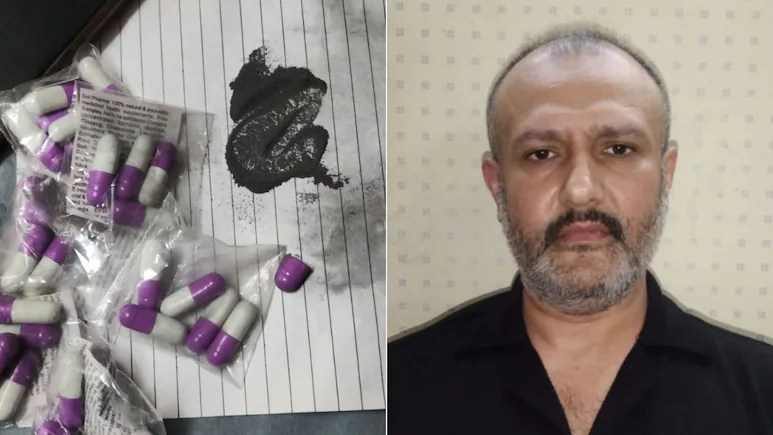
During a Muharram procession in Mumbai after a man was allegedly caught distributing toxic capsules among the crowd in Byculla. Image Credit: NDTV
Mumbai saw a chilling security scare during a Muharram procession on Friday when a man allegedly tried to distribute poisonous pills to people taking part in the Ashura gathering near Rehmatabad Cemetery at Reay Road. The accused, identified as Fayyaz Premji, was detained in the Byculla area after several participants who consumed the capsules reportedly became ill. Officials say the pills contained zinc phosphide, a toxic chemical commonly used in rat poison, and could have caused a far larger tragedy if not stopped in time.
The incident has shocked the city because it unfolded in a crowded public religious event, where trust and community participation are normally at the center. Police say Premji later confessed that he intended to kill thousands of people. That claim, if fully established in court, would make this one of the most alarming attempted mass poisoning cases in recent memory. Yeh case kaafi serious hai because it involves not just public safety but also the possibility of a planned attack on a religious gathering.
What Happened at the Procession
According to officials, Premji allegedly took advantage of the large crowd and began handing out capsules while presenting them as painkillers or immunity boosters. In events like Muharram processions, people often move in close groups, accept water, medicine or food from volunteers, and do not always suspect malicious intent. That trust appears to have been exploited here. NDTV has covered the full story.
Sources said at least 11 people fell ill after consuming the capsules, and they were immediately rushed to a nearby hospital. Fortunately, all of them are now reported to be out of danger. One of the affected individuals, Salman Sayed, reportedly experienced stomach pain and vomiting after taking the pill. That quick medical response likely prevented the situation from becoming much worse.
Police later confirmed that the accused had mixed zinc phosphide in the capsules. This substance is highly dangerous and can become lethal when ingested. The accused was also found to have no authorization to distribute any pills. After his detention, police seized his capsule stock, which reportedly included at least 14,900 pills. Officials believe a large number of them may already have been handed out.
How the Plot Was Stopped
The case might have ended very differently if not for the alertness of three women volunteers. According to reports, one volunteer first noticed the accused distributing the pills in a suspicious and improper manner. The volunteers then stopped him, checked the capsules, and alerted police. A loudspeaker announcement was also made asking people not to consume the pills.
That moment was crucial. The volunteers reportedly cracked open one of the pills and found powder inside, which made them suspicious enough to act immediately. In public safety incidents, fast human observation can matter as much as formal security. This was one of those situations where everyday vigilance quite literally saved lives.
When confronted, the accused allegedly claimed the capsules were immunity boosters. That explanation collapsed once the contents were checked and the police were informed. The stock was seized on the spot, and forensic analysis is expected to determine the exact composition of the capsules. The speed of the intervention prevented what officials believe could have been a large-scale poisoning event.
Why Zinc Phosphide Is So Dangerous
Zinc phosphide is a highly toxic chemical used in rodent control and pest management products. When swallowed, it reacts with stomach acid to produce phosphine gas, which is extremely harmful to the human body. The poison can damage the heart, lungs, liver, kidneys and brain, and in severe cases, it can cause death.
One of the biggest problems with zinc phosphide is that there is no specific antidote. That means doctors cannot simply reverse the poison with a single treatment. Instead, patients require immediate hospitalization, intensive symptom-based care and ventilator support if needed. In simple words, if someone consumes it, time becomes the biggest factor between life and death.
That is why this case triggered so much alarm among investigators and medical staff. If the capsules had been consumed by a larger number of people, the consequences could have been catastrophic. The fact that the victims are now stable is reassuring, but the underlying danger remains deeply serious.
Background and Context
Muharram processions are among the most sensitive and crowded public gatherings in India, especially in cities like Mumbai. They involve large numbers of participants, volunteers and bystanders, and they often move through dense urban areas. That makes crowd management and public trust especially important.
In such gatherings, people often accept items like water, food or tablets from volunteers, believing they are meant to help with fatigue, headache or general discomfort. That normal practice appears to have been exploited in this case. This is what makes the incident so disturbing: it was not random street violence but an alleged attempt to weaponize trust at a religious event.
Police say Premji’s foreign travel history is also under review, with officials noting previous trips to Iran and Iraq. Investigators are now trying to determine whether there is any wider conspiracy or terror link behind the alleged act. At this stage, the case remains under investigation, but the scale of the alleged plan has made it a major priority.
Timeline
Friday, during the Muharram procession: Premji allegedly begins distributing pills among the crowd.
Soon after: At least 11 people reportedly fall ill after consuming the capsules.
Swift intervention: Three women volunteers notice suspicious behaviour, inspect a pill and alert police.
Police response: The accused is detained in Byculla and the stock of capsules is seized.
Hospitalization: The affected individuals are taken to the hospital and later confirmed to be out of danger.
Following arrest: Police register a case and begin probing possible terror links and conspiracy angles.
Also Read: Airbag Goes Off in Parked Car, Kills 25-Year-Old Mumbai Car Dealer in Shocking Mishap
Why This Matters
This matters because it was not just an isolated poisoning scare. It was an alleged attempt to cause mass harm in a crowded public setting where people expected safety, not danger. A single act like this can shake public confidence in religious processions and community gatherings. Yeh issue kaafi important hai because it shows how vulnerable large crowds can be if one person uses deception with harmful intent.
It also matters because the quick response by volunteers and police prevented a potential mass casualty event. That means the case is both a warning and a reminder that community vigilance works. At a time when people often worry about fake medicines, food adulteration and public safety, this incident adds another layer of concern.
The broader impact is also emotional. Events like Muharram are deeply significant for participants, and any attempt to exploit them for harm is likely to trigger fear and outrage. Public safety depends on trust, and cases like this can damage that trust if safeguards are not strengthened.
India Angle
For Indian readers, this case is especially unsettling because it happened in the middle of a major religious procession in Mumbai, a city known for its diversity and large public events. In Hinglish, seedhi baat yeh hai: crowd ke beech agar koi aise toxic pills baante, toh threat bahut bada hota hai. This is not just about one man; it is about how easily public spaces can be misused if people are not alert.
The story also highlights the importance of local volunteer networks in India. In many Indian cities, volunteers are the first line of safety at religious and civic gatherings. Their quick thinking in this case likely saved many lives, which is why their role deserves real recognition.
For families and community leaders across India, the incident is a reminder to be cautious about any medicine or supplement handed out in crowded settings. Even if something is described as harmless, people should know where it came from and who authorised it. That simple habit can prevent tragedy.
Analysis
My opinion is that the most striking part is not just the alleged confession but the method. Passing off poison as painkillers or immunity boosters is especially sinister because it relies on trust. That is a calculated form of harm, not a spontaneous outburst. If investigators confirm the details, this will likely become a major case in discussions about crowd safety and public-event security.
Another important point is the confession, but This story could have ended very differently if the volunteers had not paused, checked, and alerted authorities. That shows how community awareness can act as a powerful defense when formal systems are stretched by large gatherings.
The alleged stock of 14,900 pills and the order history for 30,000 empty capsules and 50 kg of phosphorus also suggest planning. Even without jumping to conclusions, those numbers are enough to justify a serious, detailed investigation. Authorities will need to establish exactly what was intended, how the materials were sourced and whether others were involved.
What Next
The next step will be forensic testing of the seized capsules to confirm the ingredients and concentration of zinc phosphide. Police are also likely to dig deeper into Premji’s communications, purchase records and travel history.
If investigators find evidence of a larger conspiracy or terror link, the case could expand significantly. Additional arrests are possible if others helped arrange materials or logistics. Courts will also review the custody period and the evidence gathered so far.
For the public, the immediate outcome should be stronger vigilance at large gatherings. Organizers may need stricter rules for distributing anything to the crowd, especially tablets or food items. The case may also prompt authorities to issue fresh safety guidance before future processions.
Conclusion
Mumbai narrowly avoided a major tragedy during the Muharram procession when police and volunteers stopped a man allegedly distributing poisonous capsules in the crowd. With at least 11 people falling ill and a large stock of pills seized, the case has raised serious questions about public safety, trust and possible conspiracy. The quick thinking of three women volunteers and the hospital response prevented a larger disaster. As the investigation continues, the incident stands as a sobering reminder that even the most ordinary-seeming object can be weaponized with deadly intent.
Written By A. Jack