
The violence began after a family objection to loud music in Rahul Nagar, Vikhroli; police are investigating a possible long-standing family dispute and searching for the knife allegedly used in the attack.
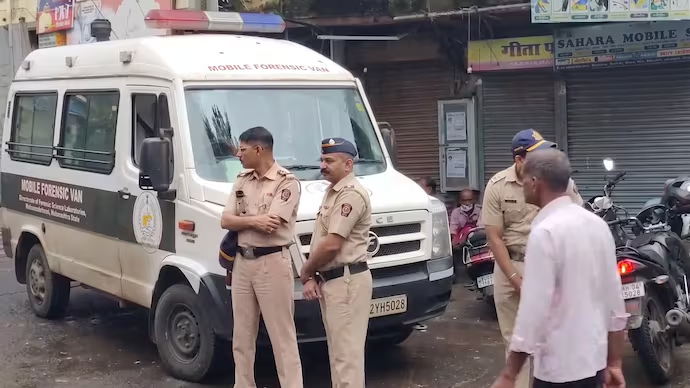
Police and forensic personnel outside a residence in Rahul Nagar. Image Credit: India Today
A family dispute over loud music has resulted in a double death and left two people critically injured in Mumbai’s Vikhroli West. The incident took place in the Rahul Nagar area under the jurisdiction of Parksite Police Station during the early hours of Thursday, August 6.
Police said the argument began after objections were raised over loud music being played inside the home. What started as a verbal exchange allegedly escalated into a physical fight involving fists and kicks before a sharp-edged weapon was used.
Sunil Vishwakarma, 40, and his teenage son Shlok Vishwakarma, 14, suffered grievous injuries. They were rushed to Rajawadi Hospital, where doctors declared both dead. Sunil’s wife, Anju Vishwakarma, and the couple’s younger son, Vivaan Vishwakarma, also suffered serious stab wounds and remain under treatment.
Parksite Police and forensic personnel reached the residence, secured the crime scene and began collecting evidence. Surendra Vishwakarma and Suraj Vishwakarma were detained in connection with the case. Police are questioning them while investigating the exact sequence of events and the motive behind the attack.
How the argument turned violent
According to the preliminary investigation, the dispute began when loud music was played inside the family residence late at night. A police officer said Sunil was allegedly playing music on his mobile phone, which upset other family members who were trying to sleep.
The objection reportedly led to a heated exchange between the brothers. Police suspect that the argument then turned physical, with the parties allegedly exchanging blows before knives were used.
Reports indicate that Sunil was attacked first and that his son Shlok was stabbed when he attempted to intervene. Sunil’s wife and younger son were also injured during the confrontation.
Police have not yet publicly established who used the knife first or whether more than one weapon was involved. Investigators are attempting to recover the knife allegedly used in the crime and are examining bloodstains, witness statements, medical reports and forensic material from the scene. This story was also covered by The IndiaToday.
The incident has been described as a family dispute, but reports have also pointed to a possible long-standing property disagreement between the brothers. Police have not yet confirmed whether the property issue was the main motive or whether it contributed to the escalation.
Yeh issue kaafi important hai because a seemingly ordinary household disagreement ended in irreversible violence and the deaths of a father and his child.
Police investigation
After receiving information about the attack, Parksite Police sent a team to the residence in Rahul Nagar. The injured family members were taken to Rajawadi Hospital, where Sunil and Shlok were declared dead.
The police then sealed the residence and called forensic experts to examine the site. Investigators are expected to collect:
Blood samples and other biological evidence.
Fingerprints from the suspected weapon.
Clothing worn by the victims and detained men.
Mobile-phone records and audio or video evidence.
Statements from neighbours and relatives.
Hospital records detailing the injuries.
Evidence related to the alleged property dispute.
The police are also reconstructing the timeline. Investigators want to know when the loud music began, who raised the objection, how the physical fight started and when the knife was introduced.
The two detained men are being questioned. Their formal legal status and the charges that follow will depend on the evidence collected and the findings of the investigation.
What police and reports indicate
A senior police officer said the preliminary investigation pointed to a family dispute triggered by objections over loud music. The officer said the confrontation escalated after the volume became a source of tension late at night.
Another report suggested that the three brothers had been involved in a property dispute for nearly a year. If confirmed, this could indicate that the loud music argument was only the immediate trigger for deeper family tension.
However, investigators must establish the motive through evidence rather than assumptions. A property dispute may have contributed to the violence, but the final charges and police theory will depend on witness accounts, forensic results and the statements of the injured survivors.
The police have also not disclosed whether the detained men have confessed or whether they have given different accounts of the incident. Their statements will need to be tested against independent evidence.
Background and context
Domestic disputes over noise, property, money and living arrangements are common sources of conflict in crowded urban neighbourhoods. In densely populated areas, multiple family members may live in close quarters, leaving little private space and increasing the chances of repeated confrontation.
In this case, the dispute reportedly involved three brothers living near one another. A complaint about loud music may have been manageable under normal circumstances, but existing tensions appear to have increased the risk of a violent response.
The incident also highlights how late-night disputes can escalate quickly. Fatigue, anger, alcohol use or previous hostility may intensify reactions, although police have not confirmed whether alcohol or other factors were involved.
Mumbai has strict laws and civic regulations relating to noise pollution, but most domestic noise complaints are resolved through family or neighbourhood intervention. The Vikhroli incident shows the danger of allowing a heated dispute to continue without outside help.
Timeline
Late night, August 5: Loud music is reportedly played inside the family residence in Rahul Nagar, Vikhroli West.
Early hours, August 6: Family members object to the music; a verbal argument begins.
Shortly afterwards: The argument allegedly becomes physical, involving punches and kicks.
During the confrontation: A sharp-edged weapon is used; multiple members of the family suffer stab injuries.
After the attack: Police and emergency personnel reach the residence; the injured are taken to Rajawadi Hospital.
Later: Sunil Vishwakarma and his son Shlok are declared dead. Anju Vishwakarma and Vivaan Vishwakarma remain under treatment.
Same day: Parksite Police detain Surendra and Suraj Vishwakarma and begin forensic investigation.
Also Read: Rs 6.4-Crore Salary, 10 Ghost Employees: Mumbai Police’s Payroll ‘Scam’ Exposed
Why This Matters
This matters because two people, including a 14-year-old child, lost their lives in a dispute that began over loud music. It is a grim reminder that minor disagreements can become deadly when underlying anger and family tensions remain unresolved.
It also matters because the surviving family members are facing both physical injuries and emotional trauma. Anju Vishwakarma and Vivaan will have to recover while dealing with the loss of their husband and father.
The incident raises questions about conflict resolution in crowded residential areas. Families often ignore repeated disputes until violence occurs. A timely intervention by neighbours, relatives or local authorities could sometimes prevent escalation.
For the police, the case involves both a double murder investigation and a potential attempt to murder the surviving family members. The evidence must be collected carefully because several members of the same family may have been involved or witnessed different parts of the incident.
In simple Hinglish, chhoti baat jab purane gusse ke saath jud jaati hai, toh situation bahut dangerous ho sakti hai.
India angle
For Indian readers, the Vikhroli incident reflects a broader problem in urban family and neighbourhood disputes. Millions of people live in crowded homes where several generations or relatives share limited space. Small arguments about noise, parking, cooking, property and money can become repetitive and emotionally charged.
The case also highlights the importance of accessible community mediation. Residents often hesitate to call the police over family disputes because they consider them private matters. But when threats or physical violence begin, early intervention is essential.
Noise disputes are common across Indian cities, particularly during festivals, weddings and late-night gatherings. Most are resolved peacefully, but the Vikhroli case demonstrates that loud music can become a flashpoint when relations are already strained.
The incident also concerns child safety. Shlok was reportedly attacked while trying to intervene in a fight involving adults. Children must not be placed in the middle of violent family confrontations, and adults have a responsibility to remove them from danger instead of allowing them to become witnesses or participants.
Analysis
It would be misleading to conclude that the entire tragedy was caused by music alone. A proper investigation must establish whether the alleged property dispute played a role, whether the accused planned the attack and how the conflict progressed from words to violence.
The police response will be judged by the quality of the evidence. Detaining two suspects is only the first step. Investigators must establish the sequence of events, recover the weapon, record the statements of the injured survivors and examine whether the attack was premeditated.
The case also shows why family disputes should not be dismissed as private matters when violence or threats are involved. Early warnings, repeated arguments and property conflicts should be addressed before they become fatal.
What Next
The immediate next step will be the medical treatment of Anju Vishwakarma and Vivaan Vishwakarma. Their condition and statements could become crucial to the investigation if doctors determine that they are fit to speak with police.
Forensic teams will examine the residence and the suspected weapon. Police are likely to collect CCTV footage from nearby lanes, question neighbours and verify the movements of the detained men before and after the attack.
Investigators will also look into the reported property dispute. Documents, ownership records and previous complaints may help establish whether the brothers had been in conflict for a long period.
The police may register or strengthen charges based on the evidence. If the investigation establishes that the detained men intentionally killed Sunil and Shlok and attacked the other family members, they could face serious charges under the Bharatiya Nyaya Sanhita.
Longer term, the case may prompt renewed calls for faster intervention in family disputes involving threats, weapons or property conflicts. Local authorities and community organisations could also promote mediation and support services for families facing repeated violence.
Conclusion
The deaths of Sunil Vishwakarma and his 14-year-old son Shlok in Vikhroli after a dispute over loud music have shocked Mumbai’s Rahul Nagar locality. The attack also left Anju Vishwakarma and Vivaan Vishwakarma critically injured, while two men were detained by Parksite Police.
Although loud music was reportedly the immediate trigger, investigators are examining the possibility of deeper family tensions and a long-standing property dispute. The exact motive, role of the detained men and sequence of events remain under investigation.
The case is a painful reminder that violence can erupt from everyday disputes when anger and unresolved conflict are allowed to build. For the victims’ family, the priority now is medical care and justice. For the authorities, the responsibility is to conduct a thorough investigation and ensure that the surviving family members receive protection and support.
Written By A. Jack