
Nayara Energy has become the first company to cut retail fuel prices in over two years, reducing petrol by Rs 5 a litre and diesel by Rs 3 a litre across its countrywide network. The move comes as global crude oil prices cool down after the easing of tensions in West Asia and the reopening of a key maritime route, improving supply conditions.
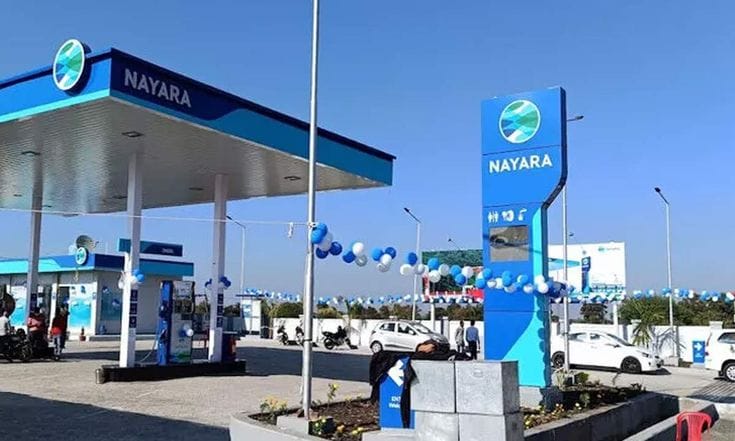
A fuel station under the Nayara Energy network, where petrol and diesel prices have been cut following a decline in global crude oil rates. Image Credit: PTI
Nayara Energy, India’s largest private fuel retailer, on Wednesday, July 1, 2026, announced a cut in petrol and diesel prices across its nationwide network. Petrol has been reduced by ₹5 per litre, while diesel has been cut by ₹3 per litre, marking the first retail fuel price reduction by any company in more than two years. The move comes after global crude oil prices retreated as tensions in West Asia eased and a key maritime route reopened, reducing fears of supply disruption.
For Indian consumers, this is the kind of development that gets immediate attention because fuel costs influence almost everything from daily commuting to transport fares and household budgets. Yeh news kaafi important hai because even a small fuel price cut can create some breathing room for families, businesses and logistics operators. It also sends a broader signal that retail prices in India can soften when international conditions improve.
Why the Cut Happened
The main reason behind the price reduction is the decline in global crude oil prices. In recent weeks, geopolitical tensions in West Asia had pushed markets to worry about possible disruptions in oil and liquefied natural gas supplies. But with hostilities easing and a key maritime route reopening, those supply concerns have reduced, and international oil prices have started to cool. The Hindu has covered the full story.
That matters because India imports most of its crude oil needs. When global crude prices rise, domestic fuel companies face higher costs and usually pass that pressure through the supply chain. When crude prices fall, the benefit can eventually reach retail consumers, depending on company pricing decisions and market strategy. Nayara’s move suggests it is responding directly to this softer global environment.
This also reflects how closely Indian pump prices are linked to international events far beyond the country’s borders. A shipping route reopening or a reduction in tensions thousands of kilometers away can still change what drivers pay at the fuel station in Delhi, Mumbai, Lucknow or Bengaluru.
What This Means for Consumers
For ordinary consumers, the immediate impact is simple: fuel has become cheaper at Nayara outlets. Petrol being cut by ₹5 a liter is especially significant for two-wheelers, private cars and small commercial vehicles. Diesel, meanwhile, matters more for goods transport, tractors, generators and fleet operators, so a ₹3 cut could offer some cost relief in logistics and rural transport.
Even though the announcement comes from one private retailer and not the entire market, it still matters because it could influence consumer sentiment and possibly push competitors to review their pricing stance if global crude stays soft. For many households, fuel costs are tied to monthly planning, so any reduction is welcome.
There is also an indirect effect. Lower diesel prices can ease transport costs over time, which may reduce pressure on prices of vegetables, grains and other essentials moved by road. That said, the pass-through to consumers may not be immediate or uniform. Markets usually adjust in stages, not overnight.
Background and Context
India’s fuel pricing system has long been sensitive to global oil movements, exchange rate shifts and company-level decisions. Since Nayara Energy’s reduction is the first retail cut in more than two years, it stands out as a notable moment in an otherwise sticky pricing environment. Drivers in India have grown used to fuel rates staying high even when crude eases only slightly, so a visible cut will naturally draw attention.
Nayara Energy is a major private player in the Indian fuel retail market, and its decision may also be seen as a strategic one. By lowering pump prices ahead of some rivals, it could attract more customers to its network. In a competitive retail market, pricing can sometimes be used not only as a response to costs but also as a market-positioning move.
The timing is also interesting because global oil markets are currently more stable than they were during the recent tension spike. If that stability continues, retail fuel rates in India could remain softer for longer. But oil markets are notoriously sensitive, and any renewed geopolitical shock could quickly reverse the trend.
Timeline
Recent weeks: West Asia tensions ease and global crude oil prices begin to fall.
Key maritime route reopens: Supply concerns over crude oil and LNG reduce.
July 1, 2026: Nayara Energy cuts petrol by ₹5 per litre and diesel by ₹3 per litre.
Now: Consumers and industry watchers assess whether rival retailers may follow.
Also Read: Petrol Price Hike Hits Delhi at ₹102, Mumbai at ₹111 as Fuel Rates Rise Again Across Major Cities
Why This Matters
This matters because fuel prices touch nearly every part of the economy. When petrol and diesel become cheaper, even slightly, the effect can ripple through commuting costs, freight bills and business margins. Yeh issue kaafi important hai because fuel is not just a transport cost; it is a core input for the broader economy.
It also matters because this is a rare reduction after a long gap. In a time when consumers often feel squeezed by inflation and everyday expenses, even a limited fuel cut feels significant. For low-margin businesses like delivery services, local transport and small logistics operators, diesel relief can make a practical difference.
On a bigger level, the decision shows how external geopolitical events can translate into direct relief for Indian households. That link between international oil markets and local prices is one of the most important realities of India’s energy system.
India Angle
For Indian readers, the main question is how far this cut will travel beyond Nayara’s network. If other retailers or broader market dynamics follow, commuters in major cities and smaller towns could see meaningful savings. In Hinglish, seedhi baat yeh hai: agar oil sasta ho raha hai, toh aam aadmi ko fayda milna chahiye.
This is especially relevant for middle-class families, small business owners and fleet operators who feel fuel costs every single day. A car owner may save on refueling, a delivery rider may stretch earnings a bit more, and a truck operator may see some relief in route costs. For India, where road transport carries a huge share of goods movement, diesel pricing is always a serious issue.
It also matters for inflation psychology. When people hear that fuel is cheaper, it can slightly improve consumer confidence, even if the impact on overall inflation is gradual. That is why fuel announcements often get outsized attention in India.
Analysis
My opinion is that the cut is significant not just for the size of the reduction but also because of the signal it sends. A private retailer is effectively saying the input environment has improved enough to pass on a benefit to consumers. That may not happen at every company or every city, but it shows that the market has room to move.
At the same time, readers should understand that fuel pricing in India is not always a straight pass-through. Companies consider taxes, margins, inventory costs and competitive pressure. So while global crude matters a lot, retail prices may not change uniformly across all outlets or states.
Another important point is that the cut could prompt public debate about why consumers do not always see faster relief when crude prices fall. That is a fair question and one that tends to return whenever pump prices move downward after a long freeze. The short answer is that fuel pricing is shaped by many layers, not just crude oil alone.
What Next
The next thing to watch is whether other fuel retailers respond with similar cuts. If global crude remains soft, there may be pressure for broader retail relief across India.
Consumers should also watch whether the drop is sustained or temporary. Oil markets can change quickly, especially if geopolitical tensions flare again or shipping routes face new disruption. If that happens, the current relief could be short-lived.
For the government and industry, this is also a moment to monitor how lower fuel prices affect inflation, transport costs and consumer sentiment. Even a modest price cut can matter if it lasts long enough to influence logistics and household spending.
Conclusion
Nayara Energy’s decision to cut petrol by ₹5 a liter and diesel by ₹3 is a meaningful relief for consumers after a prolonged period of stable high fuel prices. The move comes as global crude oil rates ease following reduced tensions in West Asia and the reopening of a key maritime route, which helped restore supply confidence. While the cut applies through one retail network, it is still a noteworthy sign that fuel pricing can soften when international conditions improve. For Indian motorists and businesses, that is welcome news — and a reminder of how tightly local pump prices remain tied to global oil markets.
Written By A. Jack