In cold, challenging weather at Scotstoun Stadium, Neeraj’s 85.83m was enough for second place as Pathirage’s second-round throw set a new benchmark. Yash Vir’s bronze completed a strong showing by India in the men’s javelin.
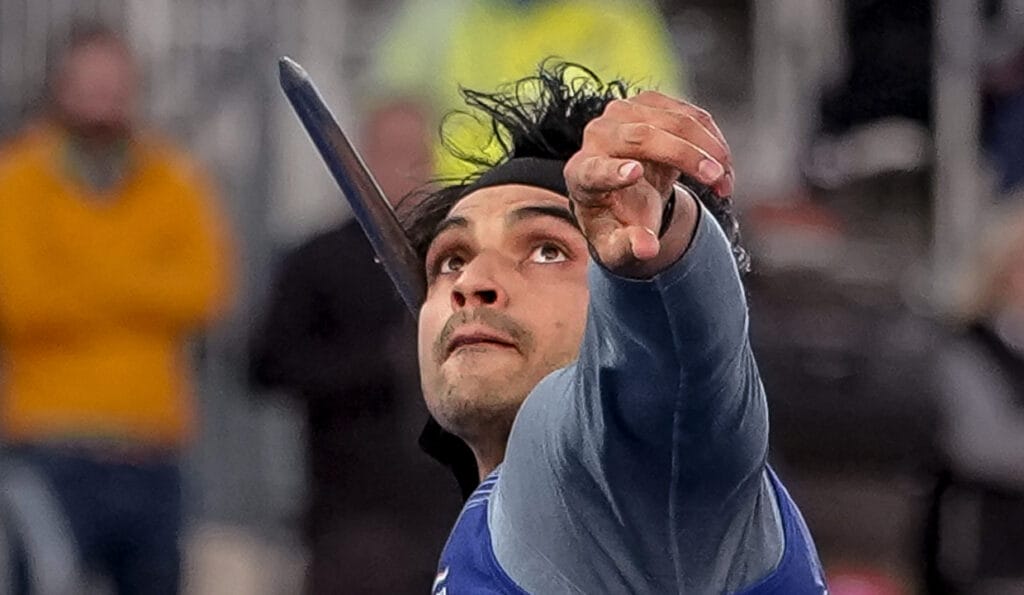
Neeraj Chopra winning the silver medal in men’s javelin throw at the Commonwealth Games 2026 in Glasgow. Image Credit: Daily Pioneer
In front of a large and vocal crowd at Scotstoun Stadium in Glasgow, Neeraj Chopra added another medal to his illustrious career, winning silver in the men’s javelin throw at the Commonwealth Games 2026. The 28-year-old Tokyo Olympics and world champion produced a season-best throw of 85.83m in his second attempt, which ultimately secured him second place.
However, it was Sri Lanka’s 23-year-old Rumesh Tharanga Pathirage who stole the show with a stunning second-round throw of 89.75m that seized the gold medal. In chilly conditions hovering around 14 degrees Celsius, Pathirage adjusted quickly to the tough weather, while Neeraj fought hard to maintain his rhythm and finish on the podium. Yash Vir’s bronze medal throw ensured India had two athletes on the podium, marking a strong day for the Indian javelin.
What happened in the final
The men’s javelin final in Glasgow was always going to be a headline event, given Neeraj’s global stature. Residents of Glasgow, including a sizeable number of Indians, turned out in large numbers to witness the Olympic and world champion compete. But the weather was far from ideal, with cold temperatures and likely crosswinds making it difficult for throwers to find their rhythm. This story was also covered by The Hindu.
In such conditions, the competition often becomes a mental game as much as a physical one. Athletes must adjust their run-up, release angle and grip to account for the cold and wind. Pathirage did this brilliantly, producing his 89.75m throw in the second round to take the lead. That mark proved to be the difference-maker, as no one else could surpass it over the remaining attempts.
Neeraj’s best throw of 85.83m came in the second attempt as well, showing that he too was able to find a good rhythm early. However, he could not improve on that mark in the subsequent rounds, leaving him in second place. Yash Vir’s consistent performance across his attempts earned him the bronze, ensuring India had two medals in the event.
Why Pathirage won gold
Pathirage’s gold-winning throw of 89.75m is a significant mark, especially in cold conditions. Javelin throwers often struggle to generate the same speed and release angle when the air is cold and the javelin feels stiffer in the hand. That he could produce a near-90m throw in such conditions speaks to his technical proficiency and adaptability.
For Neeraj, the challenge was to match or exceed that mark while managing his own rhythm and energy across six attempts. In major finals, it is common for athletes to hold back slightly in early rounds to avoid fouls or injury, then push harder in the later attempts. But on this day, Pathirage’s second-round throw set a high bar that no one could clear.
Yeh issue kaafi important hai because it shows how quickly a competition can turn on one exceptional throw. In javelin, a single big mark can change the entire podium, regardless of how consistent the other athletes are.
Background and context
Neeraj Chopra is already an iconic figure in Indian sports, having won gold at the Tokyo Olympics and multiple global titles in the years since. His presence at the Commonwealth Games drew large crowds, and many spectators came specifically to see him compete.
Yash Vir’s emergence as a medal contender adds depth to India’s javelin programme. For years, India’s javelin success was heavily reliant on Neeraj alone. Having a second Indian on the podium at a major multi-sport event signals that the country is developing more high-level throwers, which is crucial for long-term success.
The Commonwealth Games javelin competition has historically been strong, with athletes from India, Pakistan, Canada, Australia and Sri Lanka often battling for medals. Pathirage’s gold is a reminder that South Asian rivals can push each other to higher levels, raising the overall standard of the event.
Timeline
Early rounds: Pathirage produces a stunning 89.75m throw in the second round to take the lead.
Second attempt: Neeraj throws 85.83m, his season best, to move into second place.
Middle rounds: Neeraj and other finalists attempt to improve, but no one surpasses Pathirage’s mark.
Final rounds: Yash Vir secures bronze with a consistent performance; Neeraj holds silver.
End of final: Pathirage gold (89.75m), Neeraj silver (85.83m), Yash Vir bronze.
Also Read: Tejaswin Shankar Overcomes Knee Injury To Script Historic First For India In Athletics At CWG 2026
Why This Matters
This matters because it shows that India can produce multiple medallists in the same event at a major Games. For years, the conversation around the Indian javelin revolved almost entirely around Neeraj. Now, with Yash Vir on the podium, there is evidence of a broader talent pool.
It also matters because Neeraj continues to deliver at the highest level, even when conditions are not ideal. A season-best throw in a final shows that he can peak when it counts, which is the hallmark of a champion.
For Indian athletics, the one-two finish is a morale booster. It sends a message to young throwers that with the right training and mindset, they can compete and win on the global stage. In simple Hinglish, jab do Indian athletes podium par aa rahe hain, toh yeh future ke liye accha signal hai.
India angle
For Indian readers, this story is deeply relevant because Neeraj Chopra is one of the country’s most celebrated athletes. His performances are followed closely across the country, and every medal he wins adds to his legacy.
The India angle also includes Yash Vir’s bronze. His medal shows that India’s javelin programme is not dependent on a single athlete. That is important for sustainability, because long-term success requires multiple athletes capable of reaching finals and winning medals.
There is also the inspiration factor. School and academy-level athletes often look for role models who have succeeded internationally. Neeraj and Yash Vir together provide a powerful example of what is possible with dedication, coaching and competition exposure.
Analysis
My opinion is that Pathirage’s throw was the defining moment of the final. Once he produced 89.75m in the second round, the pressure shifted to everyone else to respond. Neeraj’s 85.83m was strong, but in javelin, gold often goes to the one athlete who can produce a standout mark on the day.
I also think Yash Vir’s bronze is underappreciated in the broader narrative. While Neeraj’s silver was expected by many, Yash’s medal shows that India’s depth is improving. That is a positive sign for future competitions, including the World Championships and Olympics.
What Next
For Neeraj, the focus will likely shift to the next major global championships, where he will aim to add more titles to his collection. At 28, he is in the prime of his career, and another strong season could set him up well for future Olympics.
Yash Vir’s bronze will boost his confidence and ranking, potentially giving him more opportunities to compete at elite meets. With continued coaching and exposure, he could become a regular finalist at global events.
For Indian athletics, the challenge is to build on this momentum. More investment in javelin coaching, sports science, and competition opportunities can help produce the next generation of throwers. If the system supports athletes like Neeraj and Yash Vir, India can remain a power in javelin for years to come.
Conclusion
Neeraj Chopra’s silver and Yash Vir’s bronze in the men’s javelin at the Commonwealth Games 2026 mark a strong day for Indian athletics. In challenging, chilly conditions at Scotstoun Stadium, Neeraj produced a season-best 85.83m to finish second, while Pathirage’s stunning 89.75m throw secured gold.
The result is a reminder that even the greatest champions face tough competition and that one exceptional performance can change the podium. For India, the one-two finish is a sign of growing depth in javelin and a source of inspiration for young athletes across the country.
Written By A. Jack