Most affected travelers are from Mumbai and Pune, with many on the Kailash Mansarovar Yatra; Maharashtra’s SEOC is coordinating with the center as 61 people remain untraceable amid a communication blackout.
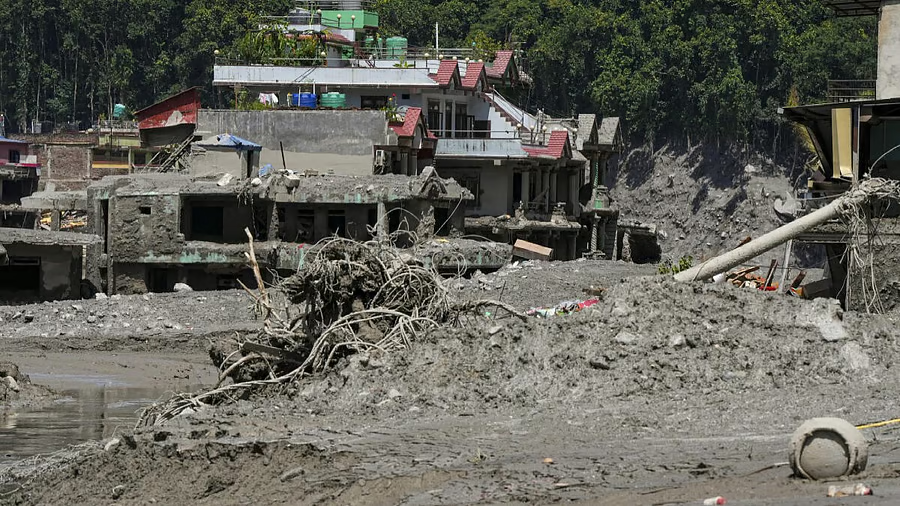
Flood damage near the Nepal–Tibet border after a glacial-collapse-triggered surge devastated roads, bridges and communications. Image Credit: Deccan Herald
Nepal Flash Flood: At least 114 people from Maharashtra, mostly tourists and Kailash Mansarovar Yatra pilgrims from Mumbai and Pune, are stranded in flood-hit Nepal after a catastrophic ice-rock avalanche and glacial collapse triggered destructive flash floods in the Himalayan region.
Maharashtra authorities have confirmed that 53 of the 114 stranded travellers are safe in the Saga–Mansarovar sector, while 61 remain untraceable because roads, bridges, power systems and communication networks have been severely damaged.
The State Emergency Operations Center (SEOC) is coordinating with the Ministry of External Affairs (MEA), Ministry of Home Affairs (MHA), Indian missions and Nepalese authorities to trace people, verify group locations and plan evacuation.
Around 150 additional citizens from Maharashtra who were at Mansarovar in Tibet have reportedly been contacted and are safe, according to state authorities.
What Happened in Nepal
The flash floods struck Nepal’s Rasuwa and Bhote Koshi regions near the Nepal–Tibet border after an ice-rock avalanche and glacial collapse in the Himalayas.
The surge damaged key roads, bridges, immigration infrastructure and communication lines along a route used by tourists and pilgrims travelling to Kailash Mansarovar.
For travelers in remote areas, the biggest immediate issue is not always physical injury—it is the communication blackout. Families in Mumbai, Pune, Jalgaon, Thane, Navi Mumbai and other Maharashtra districts have been unable to contact relatives because mobile networks and road links are disrupted. This story was also covered by The Deccan Herald.
Officials have cautioned that the term “untraceable” does not automatically mean a person is confirmed missing or harmed. It may mean the traveler is stranded, moving through an alternative route, separated from the main group, staying in a shelter or unable to access mobile networks.
However, the uncertainty has caused intense anxiety for families back home.
Maharashtra Government’s Response
Chief Minister Devendra Fadnavis said the Maharashtra government is working with the Centre to bring stranded citizens home safely.
“We are trying to contact people who are present there or are likely to be there. We have also been able to establish contact with some people who had traveled further into Tibet and with some tourists,” Fadnavis said.
State Disaster Management Minister Girish Mahajan is coordinating the response. He said authorities had established contact with four people from Jalgaon, who were safe and had informed officials that more than 37 people traveling with them were also safe.
Maharashtra’s disaster-management system has also activated a 24-hour control room at Mantralaya to help relatives report stranded family members and share travel details.
The control room can be contacted through:
| Authority | Contact details |
|---|---|
| Maharashtra State Emergency Operations Centre | 1070 |
| Maharashtra emergency control room | +91 9321587143 |
| controlroom@maharashtra.gov.in | |
| Indian Embassy, Kathmandu | +977 985 131 6807 |
| Indian Embassy, Kathmandu | +977 970 910 7500 |
Families should share the traveler’s name, passport number, mobile number, tour operator, itinerary, last known location, hotel or camp details and contact details of other group members.
Mumbai and Pune Travellers Most Affected
Most of the people reportedly stranded are from Mumbai and Pune.
Officials said several groups from Maharashtra were traveling through Nepal for the Kailash Mansarovar Yatra. Some groups had crossed into Tibet and are reported safe, while others were still in Nepal when the flash floods disrupted their route.
A passenger manifest reportedly identified 66 pilgrims traveling in three buses, with 22 people in each bus. Most were from Mumbai, while others were from different districts in Maharashtra.
The tour was reportedly led by Mumbai-based travel organizers. Authorities are now working with tour agencies, group leaders, relatives and Indian missions to confirm locations and ensure safe evacuation.
The situation is particularly difficult because Kailash Mansarovar routes pass through remote, high-altitude areas with limited transport alternatives. Once roads or bridges are washed away, travelers may have to wait for helicopters, emergency road clearance or escorted movement through safer routes.
Thane and Navi Mumbai Pilgrims
Authorities in the Thane district and Navi Mumbai have also been trying to trace pilgrims who became uncontactable during the Kailash Mansarovar Yatra.
At least nine pilgrims from Thane and Navi Mumbai were reported uncontactable after the floods affected Nepal’s Rasuwa and Bhote Koshi regions. Officials stressed that their deaths have not been confirmed and that efforts are underway to establish their last known locations.
This clarification is important. In a disaster zone, communication failure can produce alarming reports before officials are able to verify the facts. Families should rely on state control rooms, embassy helplines and official updates rather than unverified social media posts.
Why Communication Has Become the Biggest Challenge
The disaster damaged roads, bridges and communication infrastructure across parts of Nepal.
Travel groups may be affected in several ways:
Mobile networks may not be working
Roads may be blocked by landslides or debris
Vehicles may be stranded between checkpoints
Pilgrims may be moved to temporary shelters
Tour leaders may have limited satellite or radio communication
Immigration and border facilities may be inaccessible
Bad weather may delay helicopter evacuations
For Maharashtra officials, this means that passenger lists must be cross-checked repeatedly with tour operators, embassies, rescue agencies and relatives.
The figures can change quickly. Some people initially listed as missing may later be confirmed safe. Others may be identified through border records or evacuation lists.
The Kailash Mansarovar Route
Kailash Mansarovar Yatra is one of the most significant pilgrimages for Hindus, Buddhists, Jains and followers of Bon traditions.
Mount Kailash and Lake Mansarovar are located in Tibet, and pilgrims from India often travel through Nepal to reach the region. The route involves high altitudes, long road journeys, immigration formalities and unpredictable weather conditions.
The journey can be physically demanding even under normal circumstances. Flash floods, landslides, glacier-related disasters and road collapses can quickly transform a pilgrimage route into an emergency zone.
Tour operators generally organize travel in groups, with buses, guides, hotel arrangements and local support. But large-scale natural disasters can overwhelm normal travel plans.
The Nepal floods have highlighted the need for stronger emergency protocols, including real-time satellite communication, registered group manifests, medical screening, weather alerts and evacuation arrangements.
Also Read: Nepal Flash Floods: Nearly 160 Dead, 750 Missing as Glacial Collapse Devastates Border Region
Timeline
August 26, 2026: Ice-rock avalanche and glacial collapse trigger severe flash floods in Nepal’s Rasuwa and Bhote Koshi regions near the Nepal–Tibet border.
Immediately after flooding: Roads, bridges, communications and travel routes are disrupted, affecting tourists and Kailash Mansarovar pilgrims.
Initial Maharashtra assessment: State authorities identify at least 114 Maharashtra citizens stranded in Nepal.
Safety confirmations: Officials establish that 53 Maharashtra travelers are safe in the Saga–Mansarovar region.
Additional group update: Around 150 Maharashtra citizens at Mansarovar in Tibet are reported safe and in contact with Indian authorities.
Jalgaon contact: Authorities reach four tourists from Jalgaon, who say another 37 people traveling with them are also safe.
Communication concern: Sixty-one of the 114 identified Maharashtra travellers remain untraceable amid disrupted networks.
Government response: SEOC coordinates with MEA, MHA, Nepalese authorities and tour operators; Maharashtra activates a 24-hour control room.
Ongoing: Authorities work to verify locations, arrange rescue and enable evacuation through air or land routes as conditions permit.
Why This Matters
Yeh crisis kaafi important hai because it involves hundreds of families across Maharashtra waiting for information about relatives in a remote disaster zone.
High number of affected travelers: At least 114 Maharashtra residents are stranded in Nepal, while 61 are still untraceable.
Pilgrims at high altitude: Many affected people are undertaking the Kailash Mansarovar Yatra, which takes them through difficult Himalayan terrain.
Communication blackout: Families cannot contact their relatives, creating panic and uncertainty even where people may be safe.
Cross-border coordination: Maharashtra, the Indian government, Indian missions and Nepalese authorities must work together to trace and evacuate people.
Emergency travel planning: The incident highlights the need for better emergency communication systems for high-altitude international pilgrimages.
For families, every verified update matters. A single phone call or confirmed group list can reduce hours of fear.
India Angle
The Nepal floods have made this a national issue, but Maharashtra has a distinct role because so many affected tourists are from Mumbai and Pune.
The situation also raises wider questions for Indian pilgrimage travel.
Organizers of high-altitude yatra groups should maintain the following:
Updated passenger manifests
Passport and visa records
Emergency contact details
Health records and medication information
Group GPS or satellite communication systems
Weather-monitoring procedures
Evacuation and insurance arrangements
Clear communication protocols for families
Yatra ka spiritual importance apni jagah hai, lekin safety planning aur emergency communication equally important hain.
Analysis
Different numbers are emerging because groups are located in different regions: some are in Nepal, some are already in Tibet, some have been contacted directly and some have only been reported by relatives or travel companies.
Officials should publish regular verified updates distinguishing between:
Confirmed safe
In contact but awaiting evacuation
Stranded without road access
Uncontactable
Missing after verification
Hospitalised
Evacuated to India
This will help families understand the difference between “untraceable” and “confirmed missing.”
In my view, the Maharashtra government’s 24-hour control room is an important step, but its effectiveness will depend on prompt updates and direct coordination with affected families.
What Next
The next 24–72 hours will be critical for the stranded Maharashtra travelers.
Contact verification: Authorities will continue contacting tour operators, group leaders and relatives to update lists of stranded people.
Restoration of communication: Nepalese and Indian agencies will work to restore mobile, radio and satellite communication in affected areas.
Air evacuation: People stranded at high altitudes, including those near Mansarovar, may be airlifted if weather conditions permit.
Land evacuation: Travelers closer to border areas may be brought through available road or rail links once routes are reopened.
Medical assessment: Pilgrims may need health screening for altitude-related illness, dehydration, injury or respiratory conditions before travel.
Helpline support: Families should provide complete travel and identification details through Maharashtra’s 1070 helpline or the Indian Embassy contacts.
Travel advisories: Authorities may issue fresh restrictions or advisories for travel on the Kailash Mansarovar route until conditions stabilize.
Conclusion
At least 114 people from Maharashtra, largely from Mumbai and Pune, are stranded in Nepal after flash floods devastated routes used by Kailash Mansarovar pilgrims and tourists.
The confirmation that 53 travellers are safe and that around 150 more in the Mansarovar sector have been contacted offers some relief. But 61 people remain untraceable, and their families are still waiting for verified information.
The Maharashtra government, SEOC, MEA, MHA, and Indian missions are coordinating rescue and evacuation efforts. For now, families should use official helplines rather than rely on rumors.
Yeh situation serious hai, but rescue efforts are ongoing. The priority is to restore communication, confirm every traveler’s location and bring stranded pilgrims and tourists home safely.
Written By A. Jack