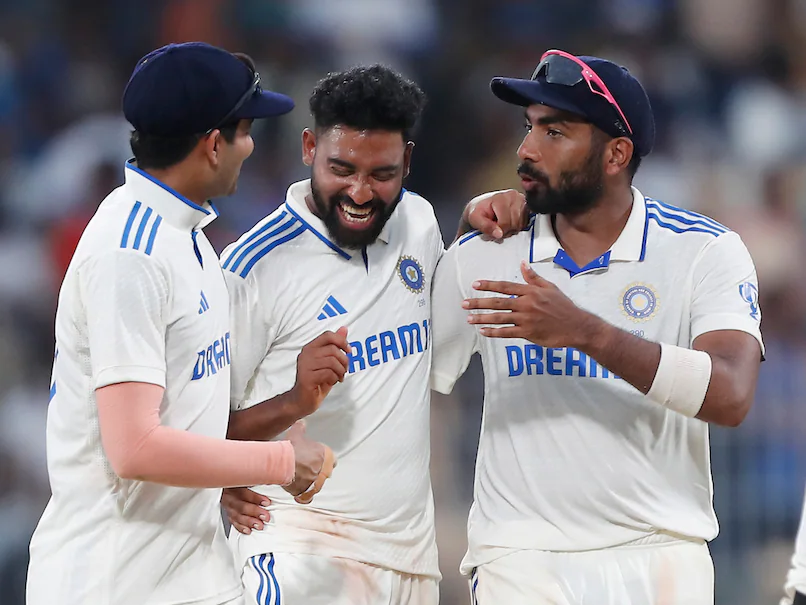
Sonal Dinusha’s unbeaten 133 and Sri Lanka’s 429/9 rearguard deny India a clean sweep; Gill’s side win the two-Test series 1-0 but lose valuable World Test Championship points.
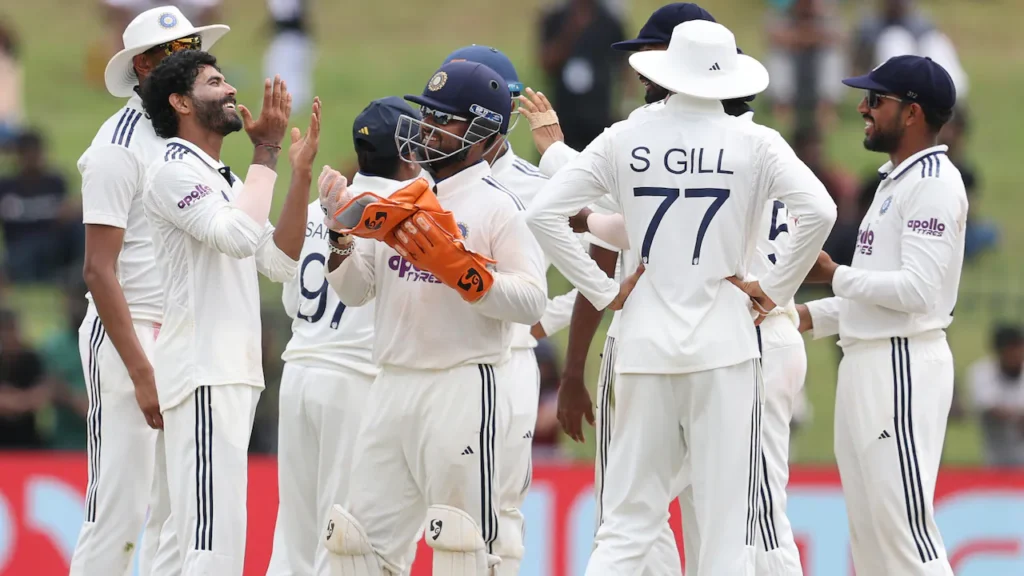
India secured the series 1-0, but Sri Lanka’s determined follow-on response forced a draw. Image Credit: NDTV Sports
Shubman Gill-Led India declared their first innings at 503/9, bowled Sri Lanka out for 290, and then enforced the follow-on with a 213-run lead. However, Sri Lanka mounted a remarkable fightback in the second innings, finishing at 429/9 with a lead of 216 before both captains agreed to call off the match.
Sonal Dinusha’s unbeaten 133 was the defining performance of the draw. His resistance, along with Pasindu Sooriyabandara’s 92 and Kamindu Mendis’s 55, denied India the 2-0 sweep they had appeared set to secure.
The result gave India a series victory, but it also cost them crucial World Test Championship (WTC) points. India dropped from 53.33 to 51.51 percentage points and remained fifth in the WTC standings after taking only four points from the draw instead of the 12 available for a win.
How India Lost a Winning Position
India began the second Test in control after posting 503/9, declared in the first innings. Devdutt Padikkal scored 117, while Dhruv Jurel remained unbeaten on 115.
Sri Lanka’s first-innings total of 290 gave India a strong 213-run lead. With two days still available and rain having threatened parts of the Test earlier, Gill took the aggressive route by enforcing the follow-on. This story was also covered by NDTV Sports.
The decision was logical. India had a large lead, Sri Lanka had already been made to bat for long periods, and the visitors wanted time to take 10 wickets rather than add more runs in a second innings.
But Sri Lanka responded with extraordinary resilience.
By the end of Day 4, India had reduced Sri Lanka to 229/6 in the follow-on innings. The visitors looked firmly on track for a series whitewash.
Yet Dinusha and the lower order refused to collapse. He batted deep into the final day, adding key partnerships with tailenders and leaving India frustrated despite long spells from their spinners and pacers.
Sri Lanka eventually reached 429/9 in 154 overs. With only 17 overs remaining in the match and the hosts holding a lead of 216, the two captains agreed to shake hands.
The Hero of Sri Lanka’s Escape
Sonal Dinusha emerged as the central figure in Sri Lanka’s resistance.
The left-hander finished unbeaten on 133 in the second innings, following his first-innings 103. He had also scored a century in the first Test at Galle, making it three hundreds in the two-match series.
His performance was not just about runs. It was about time, patience and mental strength.
Dinusha came into the second innings with Sri Lanka under pressure after India enforced the follow-on. He had to negotiate India’s spinners on a wearing surface and survive a Test match situation in which every wicket mattered.
He did exactly that.
While India searched for a breakthrough, Dinusha batted with restraint and placed a premium on survival. He was supported by Pasindu Sooriyabandara, who made 92, and Kamindu Mendis, who added 55.
The three innings gave Sri Lanka enough stability to transform the match from a likely defeat into a hard-earned draw.
For Sri Lanka, Dinusha’s series will be remembered as a breakthrough. For India, it was a reminder that even a large first-innings lead and a follow-on do not guarantee victory.
India’s Bowling Effort Falls Short
India’s bowlers created opportunities throughout Sri Lanka’s second innings, but they could not complete the final breakthrough.
Manav Suthar and Ravindra Jadeja both took three wickets in the second innings. Jadeja finished with 3/94, while Suthar returned 3/121 after bowling a heavy workload.
India’s attack had already done a significant amount of work. The bowlers had dismissed Sri Lanka for 290 in the first innings and were asked to return immediately after the follow-on.
The tactical gamble was understandable, but the pressure of consecutive long bowling spells may have played a role in the final-day fatigue. Sri Lanka’s lower order used that opportunity well.
India took only three wickets on the final day, leaving the hosts at 429/9 rather than completing the 10-wicket haul required for victory.
Gill later said India had done everything possible to win but praised Sri Lanka’s fightback.
“We did everything we could, but they played brilliantly,” Gill said after the draw.
He also described the contest as a victory for Test cricket, acknowledging the drama created by Sri Lanka’s final-day resistance.
Scorecard Snapshot
| Team | Innings | Score | Key performers |
|---|---|---|---|
| India | First innings | 503/9 declared | Devdutt Padikkal 117, Dhruv Jurel 115* |
| Sri Lanka | First innings | 290 all out | Sonal Dinusha 103, Pasindu Sooriyabandara 80 |
| Sri Lanka | Second innings, follow-on | 429/9 declared | Sonal Dinusha 133*, Pasindu Sooriyabandara 92, Kamindu Mendis 55 |
| Result | — | Draw | India win series 1-0 |
Gill’s Follow-On Decision
Gill’s decision to enforce the follow-on will be debated because India did not win. But it should not automatically be labeled a mistake.
At the time of the decision, India led by 213 runs and had enough time left to bowl Sri Lanka out twice. In a weather-affected Test, adding more runs could have reduced India’s chance of forcing a result.
The decision had several advantages:
India had a lead well above the 200-run follow-on threshold.
Sri Lanka’s first innings had lasted long enough to test their batting resources.
India wanted to use the deteriorating pitch.
The visiting bowlers had been in control for much of the match.
A win would have completed a 2-0 series sweep and added 12 WTC points.
But the follow-on also carried risks:
India’s bowlers had limited recovery time.
Sri Lanka’s batters had a second chance to adjust to the conditions.
Dinusha was already in strong form.
A long defensive innings could consume time and increase fatigue.
India did not have a second innings in which to set a fresh target or rest bowlers.
In hindsight, India missed an opportunity to close the match. But captaincy must be judged based on the situation, not only the final result. Gill’s decision was aggressive and defensible. Sri Lanka simply batted exceptionally well.
India’s Galle Victory Set Up the Series Win
India entered the Colombo Test with a 1-0 series lead after winning the first Test in Galle by 165 runs.
Manav Suthar was the star in Galle, taking 10 wickets and helping India bowl Sri Lanka out in the final innings.
That victory gave India the advantage in the two-Test series. A draw in Colombo was therefore enough to secure the series.
The Colombo Test, however, offered India an opportunity to complete a clean sweep. With a 213-run first-innings lead and Sri Lanka struggling at 229/6 in the follow-on, the visitors appeared on course for a second straight win.
Dinusha’s rearguard changed that narrative.
Also Read: IND vs SL 2nd Test: Shubman Gill Enforces Follow-On After Sri Lanka Bowled Out for 290
Timeline
First Test, Galle: India beat Sri Lanka by 165 runs to take a 1-0 lead in the two-match series.
Second Test begins, Colombo: India wins the toss and bats first at the Sinhalese Sports Club.
India’s first innings: India declared at 503/9, with Devdutt Padikkal scoring 117 and Dhruv Jurel remaining unbeaten on 115.
Sri Lanka’s first innings: Sri Lanka are bowled out for 290, giving India a 213-run lead.
Follow-on enforced: Shubman Gill asks Sri Lanka to bat again rather than sending India back in.
End of Day 4: Sri Lanka reaches 229/6 in the follow-on innings; India appears close to a 2-0 sweep.
Final day: Sonal Dinusha remains unbeaten on 133, with support from Pasindu Sooriyabandara (92) and Kamindu Mendis (55).
Match called off: Sri Lanka finished at 429/9, leading by 216; captains agreed to a draw with 17 overs remaining.
Series result: India win the two-Test series 1-0.
WTC impact: India remains fifth in the WTC table with 51.51% points percentage.
Why This Matters
Yeh, the result is important because India won the series but missed a valuable chance to strengthen their World Test Championship campaign.
Series win: India successfully won the two-Test series 1-0.
Missed clean sweep: The draw denied India a 2-0 result after they had taken a strong first-innings lead.
WTC setback: India earned four points for the draw instead of the 12 available for a win, leaving them fifth with a 51.51% points percentage.
Sri Lanka’s resilience: Dinusha’s unbeaten 133 showed that Sri Lanka can fight back even after being forced to follow on.
Selection boost: Padikkal, Jurel, Suthar and Dinusha all strengthened their reputations through the series.
For India, the series is a success. But in the WTC format, every missed win can become important later.
India Angle
The series also offered a strong glimpse of India’s next-generation Test core.
Shubman Gill: Led India to an overseas series victory and made proactive decisions under pressure.
Devdutt Padikkal: Scored heavily across the series, including 167 in Galle and 117 in Colombo.
Dhruv Jurel: His unbeaten 115 demonstrated maturity and deepened India’s wicketkeeper-batter options.
Manav Suthar: His Galle 10-wicket haul established him as an exciting red-ball spin prospect.
Saransh Jain: Made an early impact on debut in Colombo.
Yeh series Indian cricket ke transition phase ke liye positive sign hai. Senior names ke bina bhi team ne Sri Lanka mein series jeeti, which shows that the bench strength is real.
But the Colombo draw also reveals a key lesson: young teams must learn how to finish matches when they are ahead.
Analysis
The draw is not a failure, but it will feel frustrating because India had the match in their control.
A 213-run first-innings lead, a follow-on, and Sri Lanka at 229/6 created a near-ideal winning scenario. India could not close it because Sri Lanka’s lower order and Dinusha batted with extraordinary discipline.
The WTC impact makes the draw more costly. Series wins matter, but the championship rewards match-by-match results. India now has five wins from 11 matches and a points percentage of 51.51, which leaves little room for avoidable draws or defeats in future series.
In my view, Gill should not be criticized heavily for enforcing the follow-on. The decision was made to maximize time in a match that had already seen weather interruptions. The real issue was India’s inability to take the final four wickets once Sri Lanka had been reduced to 229/6.
What Next
India will now shift focus to the next stage of their Test calendar and the wider WTC race.
WTC pressure: India must convert strong positions into wins more consistently to improve from fifth place in the standings.
Bowling workload: The team may review how it manages spinner workloads after enforcing follow-ons in long matches.
Middle-order confidence: Padikkal and Jurel have strengthened their case for continued opportunities.
Sri Lanka rebuild: Dinusha’s form provides a major positive for Sri Lanka despite the series defeat.
Captaincy lessons: Gill will take confidence from the series win but may assess field placements, bowling changes and follow-on strategy.
Next WTC fixtures: India will need to treat each coming Test as high value because points percentage, not merely series results, determines qualification.
Conclusion
India was held to a draw in Colombo, but Shubman Gill’s side still clinched the two-Test series against Sri Lanka 1-0.
The visitors looked set for a clean sweep after declaring at 503/9, taking a 213-run first-innings lead and enforcing the follow-on. But Sonal Dinusha’s unbeaten 133, combined with key support from Pasindu Sooriyabandara and Kamindu Mendis, transformed the contest.
India takes home the series trophy, but the draw costs them valuable WTC points and leaves them fifth in the standings.
Series jeetna is a positive result, but Colombo ka draw ek reminder hai: Test cricket mein strong position banana enough nahi hota—match finish karna bhi equally important hota hai.
Written By A. Jack