Union Minister Nitin Gadkari Says Critics Once Mocked His Ethanol Vision, But India Has Now Cleared the Way for 100% Ethanol-Fuelled Vehicles
This image is only for illustrations. Stale Rasgullas
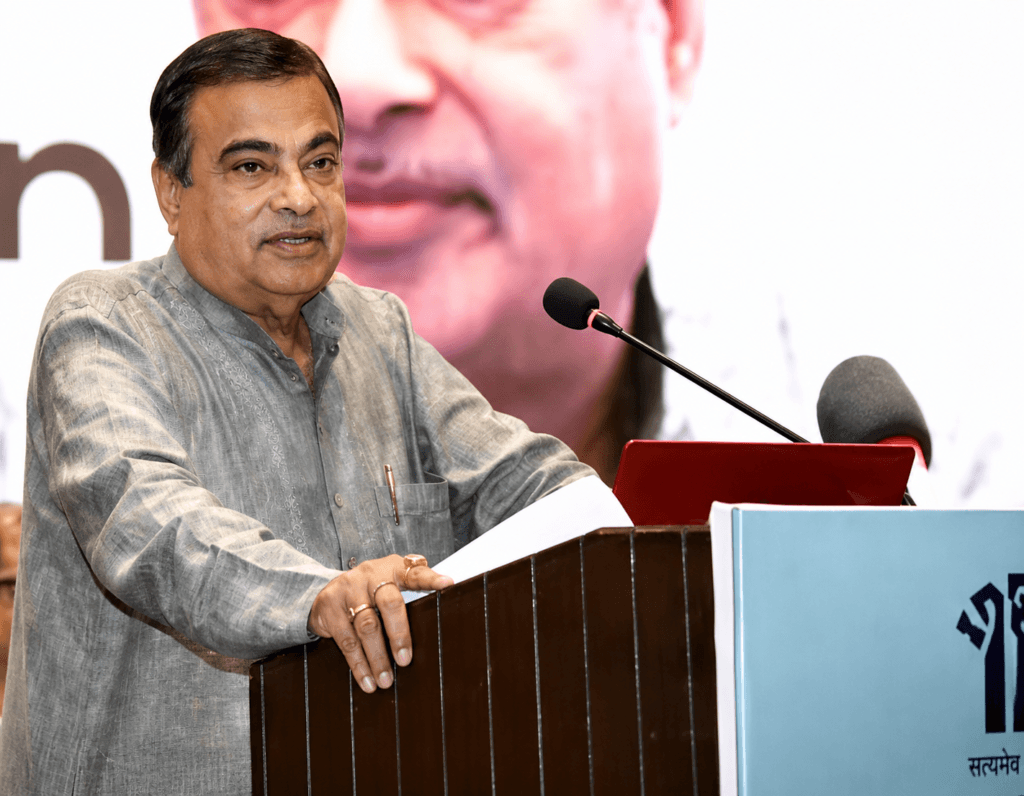
Union Minister for Road Transport and Highways Nitin Gadkari announced a major development in India’s clean energy and transport sector, saying regulations for the use of 100% ethanol as vehicle fuel have been officially finalized. Speaking at a public function here in Maharashtra, Gadkari said he signed the regulatory file for use of pure ethanol fuel and took India a step closer to wean itself away from petrol and imported crude oil.
The announcement comes as a major milestone in a vision Mr. Gadkari has been pushing for years. The minister said many people dismissed the idea as unrealistic, and others openly criticized it. But with regulatory approval now granted, and with news that auto manufacturers are readying ethanol-friendly vehicles for launch in the next few weeks, the notion appears to be shifting from a dream to a reality.
The development could reshape India’s fuel ecosystem, create new avenues for farmers, reduce fuel import bills, and contribute to the country’s broader environmental goals.
Gadkari Big Announcement in Nagpur
Gadkari said he had signed the final regulatory approval for 100% ethanol fuel usage last night, while speaking at an event in Nagpur. The concept, once dismissed as impractical by critics, had now reached a stage where it could become a realistic alternative to conventional petrol, he said.
“When I used to talk about the future of cars running on 100% ethanol, people laughed at me,” Gadkari said. He remained skeptical but continued to champion alternative fuels as a way of addressing India’s rising energy demand and its dependence on imports.
“The regulatory framework has now been approved, and automobile manufacturers are expected to bring in vehicles capable of running on pure ethanol in the next month and a half,” the minister said. The announcement has generated huge interest among industry experts, policymakers, and environmental advocates who see ethanol as a promising part of India’s energy transition strategy.
Why India Is Pushing for Ethanol
India is still one of the world’s largest importers of crude oil, spending billions of dollars each year on energy imports. Higher oil prices globally in many cases mean higher fuel prices, transportation costs, and inflation.
For a long time, the Indian government has promoted the blending of ethanol in petrol to cut this dependency. Ethanol is a biofuel, generally produced from sugarcane, corn, agricultural waste, and other biomass sources. Ethanol is a renewable resource, unlike fossil fuels, and it can be made at home.
With ethanol in the mix, India aims to kill a few birds with one stone. These are to reduce oil imports, to cut greenhouse gas emissions, to help farmers by providing additional income streams, and to improve national energy security.
We have approved 100% ethanol fuel regulations, which is a big step up in this strategy, moving beyond blending towards the possibility of dedicated ethanol-powered vehicles.
How Ethanol-Powered Vehicles Work
Flex-fuel vehicles can use ethanol, which can be run on a mixture of ethanol and petrol. Some models are fueled with up to 85 percent ethanol. New technologies are being developed for higher concentrations of ethanol.
Vehicle engines must be modified for 100% ethanol because of the combustion characteristics of this fuel. These changes include the fuel delivery systems, engine tuning and materials compatibility
Flex-fuel technology has been successfully deployed for decades in Brazil and elsewhere. Gadkari often refers to Brazil’s experience as a case study on how ethanol can be popularized as a transportation fuel.
Experts say India’s transition could begin with flex-fuel vehicles before moving to widespread use of vehicles that can run on pure ethanol.
Background
India’s ethanol blending program has evolved significantly in the last decade. “The government first looked at small percentages of blending and slowly ramped up the ambition.
India has made significant progress in raising ethanol blending levels in petrol in the country in recent years. Success in these initiatives saw policymakers look for more radical alternatives.
Nitin Gadkari has been one of the strongest advocates of ethanol and alternate fuel. Over the years, he has repeatedly made the case for India to cut its reliance on imported fossil fuel and build a transport ecosystem around domestic resources.
His advocacy has included support for ethanol, biodiesel, compressed biogas, hydrogen fuel, electric mobility, and other sustainable technologies. This latest announcement, therefore, is seen as part of a broader effort to diversify the energy mix of India’s transport.
Timeline of Key Developments
India’s ethanol mission started with the rollout of blending programs to blend small quantities of ethanol with petrol. Over time the government increased blending targets and promoted the production of ethanol in the country.
With the increased availability of ethanol, policymakers were considering the possibility of flex-fuel vehicles that would be able to use higher concentrations of ethanol. Car makers started testing compatible technologies, and government agencies began developing regulatory frameworks.
For years, Gadkari has fought a lone battle for running all vehicles on 100% ethanol and has often faced flak from naysayers who doubted the feasibility of the project.
The latest news from Nagpur now indicates that the turning point has arrived with regulatory approval supposedly finalized and manufacturers preparing for commercial launches.
Why This Matters
This is important as it has the power to transform many sectors of the Indian economy.
On the energy front, greater ethanol usage could also reduce India’s dependence on imported crude oil. It would improve energy security and possibly insulate the economy from volatile foreign oil markets.
Farmers may benefit from increased ethanol production, which could result in new demand for agricultural feedstocks such as sugarcane and maize. This can create new income opportunities and boost rural economies.
As far as the environment is concerned , ethanol might cut down carbon emissions compared to regular fossil fuels , assuming it is made sustainably .
This is a very serious issue because transportation in India has been a large consumer of petroleum products. A successful strategy for alternative fuels can have long-term economic and environmental benefits.
India Angle
The ethanol initiative is particularly apt for India, given its strong agricultural base. Millions of Indian farmers could see benefits from increased demand for crops used in ethanol production.
Maharashtra, Uttar Pradesh, Karnataka, and Tamil Nadu already have large sugarcane industries that could play a significant role in supporting ethanol supply chains.
Ethanol-fueled vehicles could provide consumers with an alternative fuel that is produced domestically and could be cheaper than imported petrol. Price dynamics will be determined by production costs and market conditions, but proponents say local fuel production can help stabilize long-term costs.
The policy also dovetails with India’s larger ambitions of self-reliance and energy security, making it especially relevant in the current geopolitical climate.
Analysis
Gadkari’s announcement is one of the boldest transport initiative policies and economics-wise taken in recent years.
The notion of vehicles operating solely on ethanol seemed audacious for a long time. Critics were skeptical that India could produce enough ethanol, build the infrastructure, and convince manufacturers to invest in compatible technologies.
However, the phased-in implementation of ethanol blending programs has shown that large-scale implementation can be achieved with government policy and industry participation.
That said, there are challenges. There’s going to have to be a lot more ethanol distribution infrastructure.” Policymakers will also need to ensure that greater fuel production does not undermine food security or the sustainability of agriculture.
“As an SEO and news writer, I think the success of this initiative will be contingent on not only regulatory approval but also execution.” For ethanol to be a mainstream transportation fuel, it must be affordable for vehicles, available for fueling, acceptable to consumers, and be economically viable in the long run.
Still, credit to Gadkari for sticking to a vision that many initially dismissed as laughable. The government is serious about taking ethanol mobility to the next level now that regulations have been finalized. This is also covered by Hindustan Times.
What Next?
Auto makers gearing up to introduce ethanol-compatible vehicles will be in the immediate spotlight. These vehicles could be in the market in the next month and a half, Gadkari said.
Furthermore, government agencies will have to work with fuel suppliers, manufacturers, and infrastructure providers to ensure adequate availability of ethanol across regions.
As commercial launches roll out, industry watchers will be eager to keep tabs on consumer reaction and what happens with fuel prices and vehicle performance data.
If successful, the rollout could turn India into one of the world’s biggest markets for ethanol-powered transportation and serve as a model for other developing economies seeking alternatives to fossil fuels.
Conclusion
The decision by Nitin Gadkari to approve regulations for 100% ethanol fuel is a milestone in India’s progress in transportation and energy. What many once thought to be an unrealistic dream has now entered the implementation phase with regulatory approval and upcoming vehicle launches.
The initiative can contribute to energy security and environmental sustainability, strengthen the farmers’ incomes, and reduce fuel imports. The development, despite the challenges, demonstrates India’s willingness to explore innovative solutions to long-standing energy challenges.
The next few months will be a test of whether this ambitious vision can live up to its potential as ethanol-powered vehicles prepare to enter the market. For now, Gadkari’s message is clear: a dream that once drew laughter is now turning into policy reality.