
Pune and Pimpri-Chinchwad witnessed traffic chaos, waterlogging and peak-hour disruption with heavy rain in the evening leading to water leakage inside a packed Pune Metro coach. The incident came after a viral video showed passengers standing under dripping rainwater inside the coach of the Pimpri-Swargate Purple Line.
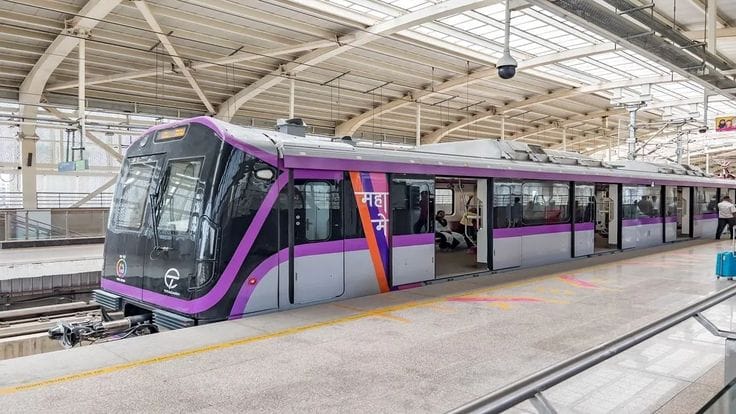
Passengers inside a crowded Pune Metro coach as rainwater reportedly leaks through the roof during heavy showers on Friday evening.
Pune faced a sharp reminder of its monsoon vulnerability on Friday evening when heavy rain lashed the city and Pimpri-Chinchwad, causing waterlogging, traffic snarls, and a concerning incident inside the Pune Metro. A video purportedly showing rainwater leaking from the roof of a crowded coach on the Pimpri-Swargate Purple Line quickly went viral, drawing attention from commuters and raising questions about metro infrastructure readiness during intense weather.
The showers brought temporary relief from the humid heat, but they also exposed the pressure that even a short spell of rain can place on the city’s transport system. Office-goers, public transport users, and motorists were all caught in the mess, with long delays on roads and discomfort inside the metro. Yeh situation kaafi important hai because it shows how a single evening rain can disrupt an entire urban commute network in a growing city like Pune.
What Happened
According to the report, heavy evening showers struck Pune and Pimpri-Chinchwad after days of hot and humid conditions. The rain led to severe traffic congestion, pockets of waterlogging, and an unusually troubling visual from the Pune Metro. In a video that spread widely on social media, water can be seen seeping through the roof of a crowded metro coach, while passengers stand packed inside the compartment and look upward in concern. NDTV has covered the full story.
The clip appears to show commuters trying to avoid the dripping water as the coach remains overcrowded. While the authenticity of the video has not yet been officially clarified by Pune Metro authorities, the visuals have already become a talking point among residents. That is because the incident is not just about inconvenience; it touches on trust in a modern public transport system that is supposed to offer shelter from weather-related chaos, not add to it.
At the same time, rain-triggered traffic disruptions worsened the problem outside the metro. Heavy showers caused massive snarls on the Mumbai-Bengaluru Highway, especially along the Baner and Mhalunge stretches. Vehicles moved slowly for kilometers as cars, buses, trucks, and two-wheelers struggled through the downpour during peak evening hours. In simple words, Pune mein ek hi waqt par road aur metro dono par pressure aa gaya.
Why the Leak Became a Concern
A rainwater leak inside a metro coach may sound like a minor infrastructure issue at first glance, but for commuters it raises bigger questions. Metro systems are expected to be weather-resilient, especially in cities that face strong seasonal rains. If water can leak inside a passenger coach during a heavy shower, it naturally triggers concern about maintenance, roof sealing, drainage, and long-term durability.
Passengers inside a crowded train already have limited space and limited mobility. Add water dripping from above, and the experience quickly becomes stressful. For many commuters, the bigger issue is not just discomfort but the sense that a premium public transport service should not behave like a compromised shelter during rain. That expectation is fair. Pune Metro is one of the city’s important mobility systems, and public confidence depends on reliability as much as speed.
This is also where communication matters. Pune Metro authorities had not issued an official clarification at the time of the report. In situations like this, even a short delay in explanation can amplify public concern. People want to know whether the leak was a one-off issue, a maintenance lapse, or a sign of a wider structural problem. Until officials respond clearly, the image in the viral video will continue to shape public perception.
Highway Chaos and Commuter Stress
The metro leak was only one part of Friday evening’s disruption. Heavy rain also caused massive traffic snarls on the Mumbai-Bengaluru Highway, especially on the Baner and Mhalunge stretches. Visuals from Thursday night reportedly showed long queues of vehicles crawling through flooded or slow-moving road sections during peak traffic hours.
The congestion affected a wide range of road users. Cars were stuck in line, buses moved slowly, trucks got delayed, and two-wheelers had to navigate slippery roads and reduced visibility. For many commuters, this meant a much longer trip home, more stress, and more time lost after a long workday. When rain falls heavily in a city like Pune, the impact is rarely limited to one transport mode. Road traffic, public transport, and local mobility all get hit together.
The combination of metro discomfort, road congestion, and waterlogging is exactly why urban rain management matters so much. Even a brief spell of intense showers can expose drainage problems, route bottlenecks, and infrastructure weak points. Friday’s weather was a clear example of that pattern.
Weather Background
Pune had been going through several days of humid weather and rising temperatures before Friday’s showers arrived. The sudden rain offered temporary relief from the heat, but it also marked the city’s first widespread thundershower spell after a long dry stretch. According to the report, the last major rainfall in Shivajinagar was recorded on April 2, when the area received 65 mm of rain. After that, Pune saw mostly dry conditions, with only a brief 0.4 mm rainfall on April 23.
That means Friday evening’s showers were not just another routine rain event. They were the city’s first significant rain activity in nearly one-and-a-half months. The India Meteorological Department forecast light to moderate rain accompanied by thunderstorms for Pune on May 23, which suggests the unsettled weather may continue for some time.
In cities like Pune, the first major monsoon-style burst after a dry spell often causes the most disruption. Drains may not be fully prepared, traffic moves slower, and commuters are not yet adapted to rain conditions. That is why one evening of heavy rain can create a bigger-than-expected impact. In short, weather change ne sirf relief diya, balki urban stress bhi expose kiya.
Timeline
April 2: Shivajinagar records 65 mm of rainfall, the last major spell before the latest showers.
April 23: Pune gets only a brief 0.4 mm rainfall.
Late May, before Friday: The city experiences hot and humid weather for several days.
Friday evening: Heavy showers hit Pune and Pimpri-Chinchwad.
Same evening: A viral video shows rainwater leaking inside a crowded Pune Metro coach.
Also on Friday: Traffic snarls build up on the Mumbai-Bengaluru Highway.
May 23 forecast: IMD predicts light to moderate rain with thunderstorms in Pune.
Also Read: Mumbai Metro Line 3 Hit by 50-Minute Rush-Hour Glitch, Commuters Describe ‘Dark Nightmare’
Why This Matters
This matters because urban transport is now central to daily life in Pune. When the metro leaks and roads clog at the same time, commuters lose time, patience, and confidence. A city that wants to grow as a modern mobility hub cannot afford repeated weather-linked disruptions without clear fixes.
It also matters because the incident highlights how infrastructure performs under real-world stress. Rainwater inside a metro coach is not just an image problem; it is a functional one. If public transport is to be a reliable alternative to private vehicles, it must work well in the exact conditions where commuters need it most. Yeh issue kaafi important hai because public trust in infrastructure is built through such everyday experiences.
India Angle
For Indian readers, Pune’s situation will feel familiar because many fast-growing cities face the same monsoon pattern every year. Whether it is Mumbai, Bengaluru, Hyderabad, or Pune, the first heavy showers often expose drainage issues, road bottlenecks, and transport flaws. This is not just a Pune story; it is a wider urban India story.
The India angle is also about how public transport must adapt to climate reality. As weather becomes more unpredictable, metro systems, roads, and drainage networks need stronger planning. In Hinglish, seedhi baat yeh hai: rain common hai, but rain ke baad chaos common nahi hona chahiye. Cities need systems that can handle both heat and heavy showers without surprising commuters every season.
Analysis
My opinion is that the viral video matters not only because it shows a leak but also because it symbolizes a larger expectation gap. Metro passengers expect a clean, dry, and dependable ride, especially during rain. If the system allows water to enter a coach during a heavy shower, even briefly, the public will start asking whether this is a maintenance issue or a design issue. The bigger lesson is that urban projects do not get judged by opening-day promises; they get judged by what happens on rainy evenings, peak hours, and difficult days. The good news is that such incidents can be fixed, but only if authorities acknowledge them quickly and improve communication as well as maintenance.
What Next
The next step should be a clear statement from Pune Metro authorities explaining what caused the leakage and whether it was an isolated occurrence. If there is a sealing, drainage, or roof-related issue, repairs will need to be checked urgently before more rain arrives.
Commuters will also want to know whether similar risks exist on other parts of the metro line. With IMD forecasting more rain and thunderstorms, the city may see additional pressure on roads and transit systems in the coming days. If authorities act quickly, the issue can be contained as a one-off disturbance. If not, public frustration could grow, especially if repeated weather-related problems hit the same routes.
Conclusion
Friday’s heavy rain brought Pune temporary relief from heat, but it also exposed how fragile city mobility can become when weather turns severe. The viral video of rainwater leaking inside a Pune Metro coach on the Pimpri-Swargate Purple Line has raised serious commuter concerns, while traffic snarls on the Mumbai-Bengaluru Highway added to the disruption.
The incident is a reminder that modern urban infrastructure must be tested not only in sunshine but also in rain, congestion, and peak-hour pressure. Pune Metro and city planners now have an opportunity to respond clearly and improve confidence before the next spell of bad weather arrives.
Written By A. Jack