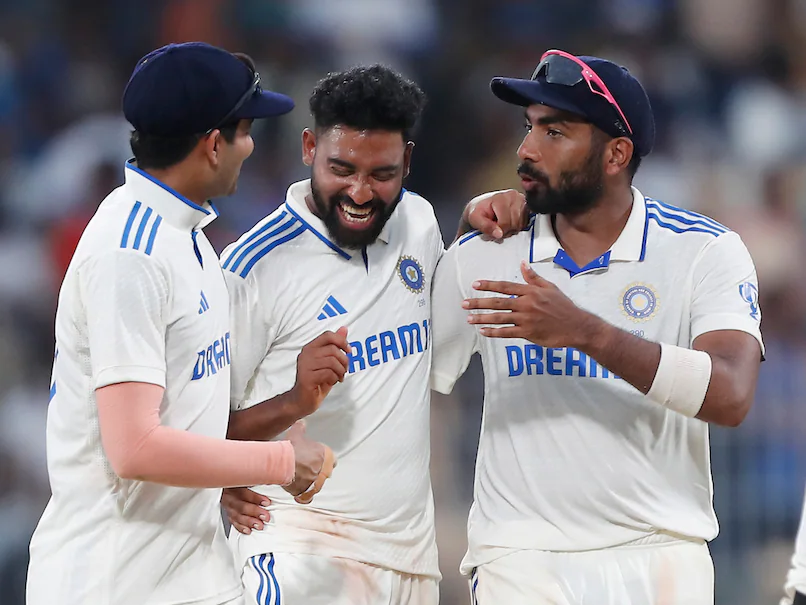
The T20I squad is a blend of youth and experience with Rinku Singh and Mayank Yadav returning and several debutants being called up for the promising performers. India have a more settled look for the England leg with Virat Kohli back in the ODI squad after passing a fitness test.
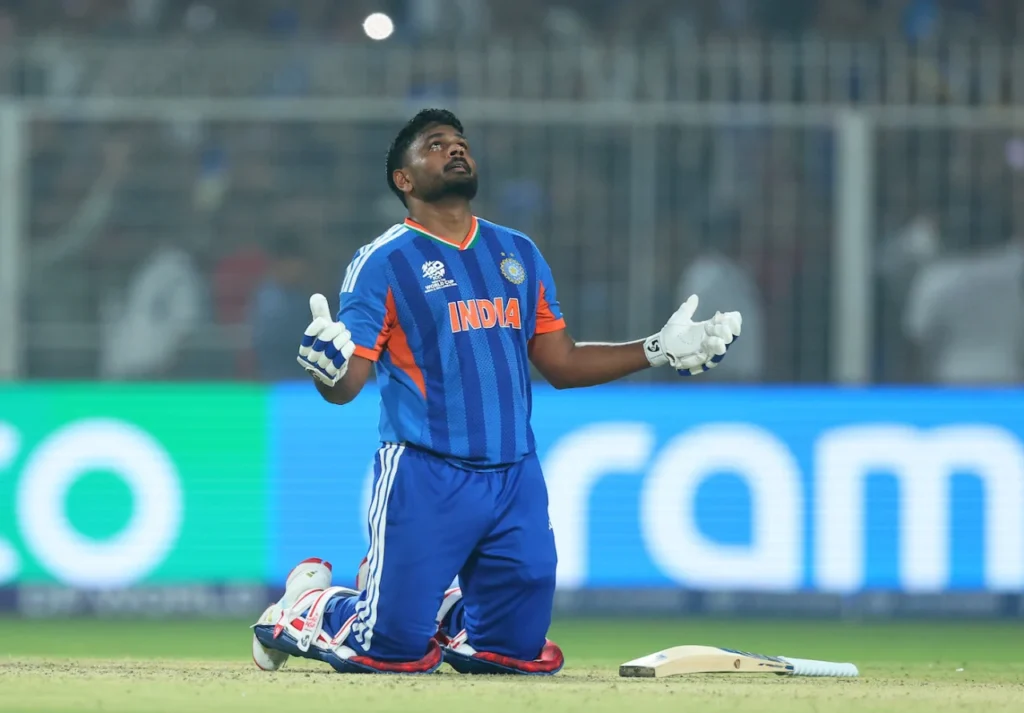
Sanju Samson’s omission from India’s Zimbabwe T20I squad has sparked discussion. Image Credit: ESPNcricinfo
Sanju Samson Left Out of India’s T20I Squad: India’s latest squad announcement has created immediate debate, with Sanju Samson omitted from the T20I squad for the Zimbabwe tour and Shivam Dube drafted into the ODI group for the England series. The T20I squad, led by Shreyas Iyer, features seven changes from the side currently playing in England, while the ODI squad has been updated after Nitish Kumar Reddy was ruled out with injury.
The move is especially notable because Samson remains part of India’s full-strength squad for the 2026 Asian Games in Japan later this year, which makes his omission for Zimbabwe feel more like a selection call than a long-term exclusion. At the same time, India has taken the opportunity to reward in-form domestic and India A performers, with several youngsters earning maiden T20I call-ups. Yeh announcement kaafi important hai because it shows how India is already balancing immediate results with long-term planning.
Why Sanju Samson’s Omission Stands Out
Samson’s absence is the headline decision because it comes after a mixed run of results and opportunities. He was not included in the T20I squad for the Zimbabwe series, even though he remains in the broader plan for the 2026 Asian Games. The BCCI did not say whether he was rested or dropped, so the reasoning remains officially unclear. This story is also covered by ESPNcricinfo.
What makes this more interesting is that Samson had already been left out of the playing XI for the second T20I against England at Old Trafford. That detail suggests the selectors may be reassessing his current role in the T20 setup rather than making a one-off decision. His recent scores — 5, 0 and 1 in matches against Ireland and the first T20I against England — will also have weighed on the thinking.
At the same time, it would be unfair to read this as a permanent setback. Samson had been outstanding before IPL 2026, scoring three consecutive half-centuries to help India win the 2026 T20 World Cup and earning the Player of the Tournament award. That kind of form does not disappear overnight. But in selection, recent match rhythm matters, and the selectors appear to have gone with players they feel are more aligned with the current plan.
The Players Who Returned
India’s T20I squad for Zimbabwe includes middle-order batter Rinku Singh and fast bowler Mayank Yadav, both of whom make a return. Their inclusion shows the selectors are still keen on keeping a mix of proven impact players and high-ceiling talents in the shorter format.
Rinku Singh’s return is particularly logical because he remains one of India’s most dependable finishers in pressure situations. When a T20 side is being rebuilt or rotated, having a player like Rinku in the middle order gives structure and confidence. Mayank Yadav’s recall is more of a second chance. He had previously played three T20Is in 2024 after a breakout IPL season in which he regularly touched 150 kph, but injuries have since limited his progress.
This is exactly the kind of selection India often uses in a transition phase. They keep one eye on performance and another on future potential. In that sense, Zimbabwe becomes an opportunity to test players who could matter at the next major tournament cycle.
New Faces in the T20I Squad
The biggest positive from the T20I selection is the maiden call-ups for Prabhsimran Singh, Yash Thakur, Ashok Sharma and Harsh Dubey. That is a clear signal that domestic and Indian A performances are being rewarded.
Prabhsimran Singh earned attention after finishing as Punjab Kings’ highest run-scorer in IPL 2026 with 510 runs at a strike rate of 168.87. Those are the numbers selectors like in T20 cricket because they show both volume and intent. Ashok Sharma also made a strong case through his pace in IPL 2026, with his fastest delivery clocked at 154.2 kph. In a format where raw speed can change match-ups, that is a serious asset.
Harsh Dubey’s selection is notable because he has now broken into all three squads. He had earlier been named in the Test squad against Afghanistan and later made his international debut in the ODI series against them. That kind of rapid rise points to a player who has impressed across formats and earned trust quickly. For a young allrounder, that is a huge step.
Shivam Dube’s ODI Return
India’s ODI squad for the England series also has a key change, with Shivam Dube replacing injured Nitish Kumar Reddy. Reddy is still in rehab at the Centre of Excellence and is hoping to return in time for the Test tour to Sri Lanka in August. Dube, meanwhile, gets back into the 50-over picture after a long gap.
That recall is significant because Dube has not been a regular ODI pick lately. His most recent ODI appearance came in July 2024, so this is both a comeback and a chance to re-establish himself in a format where he has not been central recently. Selection here may reflect India’s desire for left-right balance, power hitting and medium-pace depth.
From a tactical point of view, Dube is the kind of player who can be useful in multiple roles. He can accelerate in the middle overs, provide a few overs of seam bowling and give flexibility to the batting order. That makes him a practical replacement in a long England series where conditions and team balance often matter as much as raw talent.
Kohli’s Fitness Clearance
Another major takeaway from the ODI squad update is the return of Virat Kohli after he passed his fitness assessment at the Centre of Excellence. Kohli had missed the Afghanistan ODIs at home because of a hamstring strain, so his return comes as a boost for the batting line-up.
Kohli’s fitness clearance matters because he is still one of India’s most important ODI batters and a key senior presence in the group. He had picked up the injury late in his IPL 2026 campaign with Royal Challengers Bengaluru, but he still finished the season with 675 runs in 16 innings at a strike rate of 165.84. That was reportedly his best-ever strike rate in a single IPL edition, which tells you that form was not the problem — only fitness was.
His return brings stability to the batting order. When Kohli is available, India can build around him with more confidence, especially in a series like this where the team wants both continuity and results. His presence also helps younger players because it reduces pressure on the middle order.
India’s Squad Strategy
The squad announcements suggest that India are trying to do two things at once: protect certain players and expand the pool. In T20Is, that means experimenting with new names while keeping some experienced performers around. In ODIs, it means restoring senior players like Kohli while also replacing injured allrounders with flexible alternatives like Dube.
That is a practical approach, especially in a packed international calendar. It also reflects the reality of modern Indian cricket, where squad management has become almost as important as match selection. With multiple formats and upcoming tournaments, selectors need to think beyond the next fixture.
The inclusion of players such as Vaibhav Sooryavanshi, who recently became India’s youngest men’s debutant at 15, also shows how aggressively the selectors are looking at future talent. That makes the Zimbabwe series more than a routine bilateral tour. It becomes a testing ground.
Background and Context
Samson’s omission will inevitably invite discussion because he has often been viewed as a talent whose international role has not always matched his quality. He has produced important innings for India, but selection stability has never fully come his way. That tension makes every omission feel like a bigger story than it might be for another player.
The broader context is that India just won the 2026 T20 World Cup, and now the team appears to be shifting into a fresh selection cycle with a mix of champions and challengers. That is normal after a major title, but it is still a delicate phase. The challenge is to avoid overreacting to one or two failures while also not becoming too loyal to a fixed combination.
For Zimbabwe, India are clearly using the series to assess squad depth. That means the result will matter, but individual performance and adaptability may matter just as much. For players on the fringe, this is an audition.
Timeline
Recent England T20I series: Samson is left out of the playing XI for the second T20I at Old Trafford.
June 2026: Kohli completes a fitness assessment and receives an RTP certificate.
Late June / early July 2026: India finalises squads for the England ODIs and Zimbabwe T20Is.
July 2026: Samson is omitted from the Zimbabwe T20I squad.
July 2026: Shivam Dube replaces injured Nitish Kumar Reddy in the ODI squad.
July 23, 25 and 26, 2026: India begins the Zimbabwe T20I series in Harare.
Also Read: England Beat India by 4 Wickets in 2nd T20I as Ravi Bishnoi’s Costly Over Changes the Game
Why This Matters
This matters because squad announcements are often where a team’s next chapter begins. When a player like Samson is left out and newcomers are brought in, it tells fans and analysts that the selection group is actively reshaping the pecking order. Yeh issue kaafi important hai because these choices influence careers, confidence and team direction.
It also matters because India is in a transition period between major tournaments. A squad that keeps rotating without a clear plan can lose rhythm, but a squad that never rotates can become predictable. The current selections suggest India is trying to find the right balance.
For fans, the immediate impact is discussion and debate. For players, it is opportunity and pressure. For selectors, it is accountability, because every omission and inclusion becomes part of the larger story of how India is planning for the next big event.
India Angle
For Indian cricket followers, Samson’s omission will feel like a familiar selection debate. In Hinglish, seedhi baat yeh hai: jab ek talented player is baar-baar XI se bahar hota hai, toh fans naturally poochte hain “why?” That’s exactly the conversation this squad is likely to trigger.
The good news for Indian fans is that the squad also offers excitement. Young players like Prabhsimran, Ashok Sharma and Harsh Dubey getting chances means there is fresh energy in the system. And Kohli’s fitness clearance brings reassurance before a major ODI series.
This is also relevant because India’s cricket ecosystem is huge, and every selection feels like a national conversation. Whether it is a senior player returning or a new name breaking through, these decisions shape the way fans view the team’s future.
Analysis
My opinion is that the selectors have made a bold but defensible call. Samson’s omission will be debated, especially because of his T20 World Cup heroics, but recent form and the need to test other options likely influenced the move. Cricket selection is often about timing, not just reputation.
I also think Mayank Yadav’s return is one of the most interesting elements. India’s fast-bowling pipeline has often been tested by fitness issues, and when a high-speed bowler gets another chance, it becomes a major storyline. If he stays fit, he could become a serious asset.
The ODI update feels more straightforward. Kohli’s fitness clearance is reassuring, and Dube’s return adds depth. India’s balance looks sensible for England’s conditions, where flexibility and batting depth matter.
What Next
The next step is the Zimbabwe tour, where India’s young T20I squad will get a chance to prove itself in Harare. The three matches on July 23, 25 and 26 will be watched closely because they could shape selection thinking for the next phase of India’s T20 plans.
In the ODI series against England, Kohli’s return and Dube’s inclusion will be monitored closely. If Dube performs well, he could revive his limited-overs career. If Samson’s omission backfires in later series, the conversation around his role will only intensify.
For now, the selectors have sent a clear message: performance, fitness and future planning all matter, and no spot is guaranteed.
Conclusion
India’s latest squad announcement brings together surprise, opportunity and strategic planning. Sanju Samson’s omission from the Zimbabwe T20I squad will dominate debate, while Shivam Dube’s return to the ODI setup and Virat Kohli’s fitness clearance offer reassurance for the England series. The addition of fresh names such as Prabhsimran Singh, Yash Thakur, Ashok Sharma and Harsh Dubey shows that India is continuing to build depth. In simple terms, the selection update shows a team balancing current form with future ambition — and that makes it one of the more interesting squad stories of the season.
Written By A. Jack