UP Police reportedly raided the house of Mohd Junaid, a volunteer known for distributing food and water to protesters at Jantar Mantar in Delhi. His father and minor brother were taken into custody, reports said. In Meerut, his sister’s father-in-law and her devar were also reportedly picked up.
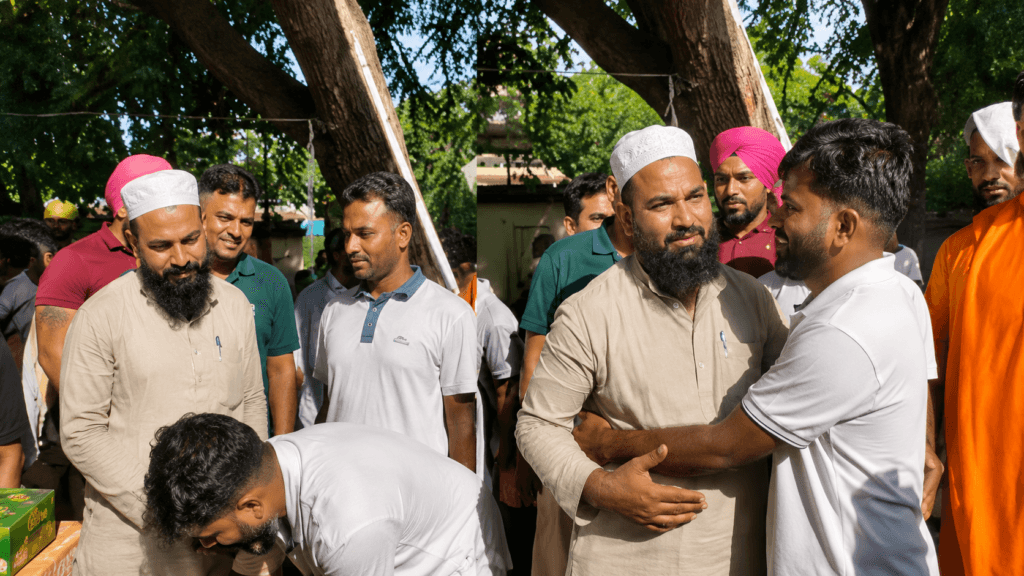
Mohd Junaid, a volunteer who has been helping protesters at Jantar Mantar with food and water. Image Credit: Economics Times
UP Police Raid Jantar Mantar Volunteer: Reports on Saturday, July 25, 2026, said Uttar Pradesh Police raided the home of Mohd Junaid, a volunteer who has been serving food and water to protesters at Jantar Mantar in Delhi. The reports claim that his father and minor brother were detained during the action, while additional detentions were also reported from Meerut, where his sister’s father-in-law and her husband’s brother were allegedly taken into custody.
The development comes at a sensitive time, with protests at Jantar Mantar already drawing national attention over alleged examination irregularities and demands for accountability. Supporters of the movement say Junaid’s role has been limited to arranging basic relief for protesters, making the reported police action politically charged and emotionally resonant.
What Reports Say
According to the information available in public reports, Junaid has been helping protesters by providing food and water at the protest site since the movement began. One report claimed that UP Police reached his home, searched the premises and detained his father and minor brother.
The same report said police also moved in Meerut and detained his sister’s father-in-law and her devar. Social media posts and user-shared updates amplified the claims quickly, but the reports reviewed also note that an official response from Uttar Pradesh Police had not yet been made. This story was also covered by The EconomicTimes.
Because the details are still emerging, it is important to separate the reported claims from confirmed facts. At this stage, the only firmly documented part across multiple reports is that Junaid is a protest volunteer associated with the food-and-water arrangement at Jantar Mantar and that allegations of a raid and family detentions are being circulated widely.
Why It Happened
The likely context here is Junaid’s visible role in the protest zone, where he has been helping participants with basic supplies. In politically tense environments, such volunteers often become part of the larger conflict around the protest itself, even when their role is logistical rather than political.
If the reported raid and detentions are accurate, they may have been linked by authorities to larger concerns around protest coordination or local scrutiny of the volunteer’s background. However, without an official police explanation, that remains an inference rather than a confirmed reason. The situation therefore remains fluid and sensitive.
There is also a broader context to the movement: Jantar Mantar has become a focal point for student agitation, and every development there tends to draw quick political reactions. That means even a volunteer like Junaid can become the centre of a wider narrative almost overnight.
Reported Reactions
Supporters of the protest movement have portrayed the reported action as intimidation. One social post linked to the development questioned why a person serving food and water at a protest site should face such pressure, suggesting that the police action was meant to send a warning to others involved in the agitation.
Some online reactions also described the reported detentions as an attempt to disrupt the protest ecosystem rather than address the underlying grievance. However, those claims are political reactions, not verified findings, and should be read as commentary from supporters and critics rather than established facts.
A source quoted in one report said Junaid had been helping protesters from the beginning and that the matter had now spread beyond Delhi into Meerut as well. That widens the story from a single local raid to a broader family-level impact, which is why it is attracting so much attention.
Background
Mohd Junaid has been identified in reports as a volunteer associated with the Jantar Mantar protest, where he has been helping with food and water for participants. One report said he had been serving supplies since the first days of the protest, making him a familiar face in that space.
Jantar Mantar itself has long been one of India’s most symbolic protest locations, especially for student movements and public campaigns on governance, education and accountability. When a volunteer linked to such a protest is reportedly targeted, the story quickly takes on larger meaning.
The broader political backdrop is already tense because the ongoing movement has drawn national headlines, legal scrutiny and competing claims from protest leaders and the government. In that atmosphere, any action against a volunteer can be interpreted by supporters as a message to the entire protest ecosystem.
Timeline
Since the start of the protest: Mohd Junaid has reportedly been serving food and water to protesters at Jantar Mantar.
Friday, July 24, 2026: Social reports begin circulating that UP Police raided his home and detained relatives.
Saturday, July 25, 2026: Multiple reports amplify claims of detentions in both Uttar Pradesh and Meerut.
As of now: No official detailed public clarification from Uttar Pradesh Police is included in the available reporting.
Also Read: Sonam Wangchuk Says He Ended Fast to Protect Protests From Legal Action
Why This Matters
This matters because it is not just about one volunteer; it is about how protest support networks are treated during a major public movement. When someone helping with food and water at a protest site becomes the subject of a police raid, it raises immediate questions about proportionality, intent and the limits of state action. Yeh issue kaafi important hai because it can affect how ordinary supporters participate in future protests.
It also matters because the reported detention of family members widens the emotional and social impact. Even if authorities believe they have a legal basis for action, such moves often create a perception that the pressure is extending beyond the individual and into the family. In a democracy, that perception itself can become politically explosive.
For citizens watching the protest from across India, the story touches on a larger question: how far can the state go while responding to dissent? That debate is not limited to one movement or one city; it is part of the national conversation on civil liberties and policing.
India Angle
For Indian readers, this story hits two emotional notes at once: student protest politics and family distress. In simple Hinglish, seedhi baat yeh hai — agar koi sirf paani aur khana de raha hai, toh us par itni strict action kyun? That is the question many people will ask after hearing the reports.
The matter also resonates because protests at Jantar Mantar are watched closely across the country, especially when they involve students, exams and accountability. People in India tend to follow these stories not just as political events but as signs of how institutions respond to young voices.
If the reports are verified, the case could strengthen criticism that the state is trying to discourage even peripheral support for protests. If the reports are inaccurate or incomplete, then it becomes equally important for officials to clarify the facts quickly, because misinformation around detentions spreads fast and fuels mistrust.
Analysis
My opinion is that the reported action, if verified, would be a heavy-handed response to a volunteer who appears to have been performing a support role. Even when police are trying to investigate a wider network, taking action that reaches into family homes creates a public relations problem and invites suspicion. That is why transparency from the police matters so much here.
At the same time, responsible reporting requires caution. Social media has already amplified the claims quickly, but not every online assertion becomes fact immediately. For readers, the most important thing is to understand that the story is developing and that official confirmation will determine whether this was a targeted legal action or a politically framed overreach.
What Next
The next step should be an official statement from the Uttar Pradesh Police clarifying whether the raid and detentions took place and under what legal grounds. Without that, the public version of the story will continue to rely on reports, claims and social-media amplification.
If the detentions are confirmed, the case could trigger sharper political reactions from protest leaders and opposition voices, especially because Jantar Mantar is already at the centre of a national debate. If the police deny the claims or explain them differently, the narrative may shift toward questions about the accuracy of initial reporting.
For Junaid and his family, the immediate future depends on what the authorities formally say and whether any charges or notices follow. For the protest movement, the bigger question is whether such reported actions will discourage volunteers or, instead, energise further support.
Conclusion
The reported raid on Mohd Junaid’s home and the alleged detention of his family members have added a tense new layer to the Jantar Mantar protest story. Junaid, who has reportedly been helping protesters with food and water, is now at the centre of claims that the state has extended its response beyond the protest site and into his private family network.
At this stage, the story is important not just for what it says about one volunteer but for what it suggests about the broader climate around protest, policing and public dissent in India. Until an official statement comes, the safest reading is to treat the matter as a serious allegation that still needs formal confirmation.
Written By A. Jack