Virat Kohli has become the face of Oakley and Meta’s new Oakley Meta Performance AI glasses in India, marking a fresh push for smart wearables in sports and fitness. The launch positions the glasses as a hands-free, performance-focused device built to help athletes train smarter, capture moments, and stay focused.
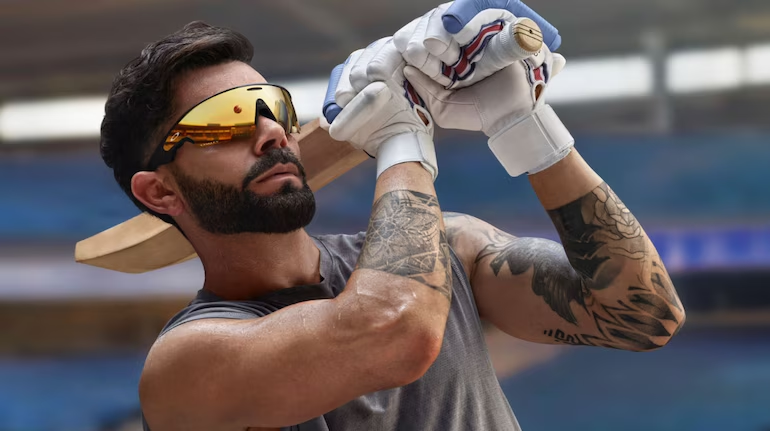
Virat Kohli at the India launch of Oakley Meta Performance AI glasses, a new smart eyewear product aimed at athletes and active users.
Virat Kohli Fronts Oakley
Virat Kohli’s association with Oakley and Meta’s Oakley Meta Performance AI glasses is a notable moment for India’s wearable tech market. The launch brings together one of India’s biggest sporting icons and two global technology brands that are betting on the future of AI-powered eyewear. The product is being positioned not just as a style accessory but as a performance tool for athletes and active users who want real-time insights without breaking concentration.
The announcement is important because it reflects a larger shift in how sports technology is evolving. Instead of only tracking fitness after the fact, these glasses are designed to deliver quick data and guidance while the user is still in action. For Indian consumers, especially sports fans and tech adopters, the mix of Kohli’s credibility and Meta’s AI push gives the launch immediate visibility.
What the Glasses Offer
The Oakley Meta Performance AI glasses are being marketed as smart eyewear that blends sports utility with AI-enabled convenience. According to the launch messaging, the glasses can deliver real-time training insights, helping athletes stay informed during practice or play without needing to stop and check a phone or watch. That hands-free design is central to the product’s appeal. NewsBytes has covered the full story.
The idea is simple: if an athlete is training, competing, or even recording action moments, the glasses are meant to keep the focus on performance. Meta’s Sandhya Devanathan said the product is designed to provide quick tips while users are active, not distractions. That positioning matters because most wearables are either too passive, giving only post-workout data, or too intrusive, pulling attention away from the moment. Here, the promise is immediacy without interruption.
Why Kohli Matters
Virat Kohli is the perfect face for a product like this because his public image is built around discipline, performance, and preparation. Oakley’s Corey Hill reportedly said the glasses align with Kohli’s constant drive to push his limits. That kind of brand fit is important in marketing because audiences are more likely to trust a product when the celebrity spokesperson genuinely matches the product’s purpose.
Kohli himself has long been associated with intense training standards and elite fitness culture. His involvement gives the product a strong sporting identity rather than making it look like just another tech collaboration. In India, where celebrity endorsement often shapes product perception, this is a smart move. Consumers do not just see a gadget; they see a performance tool backed by a player known for high standards.
How the Product Fits the Market
Wearables have moved far beyond step counts and heart-rate monitoring. In the current market, the biggest growth is happening in devices that combine AI, convenience, and lifestyle value. Smart glasses are a particularly interesting category because they sit at the intersection of hardware, software, and personal computing. The Oakley Metas glasses are trying to turn that futuristic idea into a sports-first product.
The Indian market is well-suited for such a launch because it has a large young population, a rapidly growing fitness culture, and a strong appetite for premium smart devices. Users who already buy smartwatches, wireless earbuds, and action cameras may see AI glasses as the next step. If the product delivers on speed, usability, and comfort, it could appeal to both serious athletes and everyday fitness enthusiasts.
Reported Statements
Meta’s Sandhya Devanathan reportedly said the glasses are designed to give quick tips while people play, not distractions. That is a key promise because the success of any wearable depends on whether it adds value without becoming annoying. Oakley’s Corey Hill linked the product to Kohli’s mindset of pushing limits, suggesting that the collaboration is meant to symbolize endurance, precision, and performance.
Kohli’s own reaction is also important. He reportedly appreciated the extra insights that helped him stay sharp during training and on the field. That message is likely to resonate with fans because it frames the product as practical rather than flashy. In a market full of tech hype, users respond better when they hear about clear use cases instead of vague innovation language.
Background
Meta has been expanding its wearable and AI ecosystem beyond phones and social platforms, and smart glasses are one of the most visible ways it is doing that. Oakley, meanwhile, has long been associated with sports performance eyewear. Putting the two together creates a product that can appeal to athletes, outdoor users, and tech-forward consumers.
Virat Kohli has also been a strong choice for brand storytelling because he already represents discipline, precision, and modern fitness culture. Over the years, top sports brands in India have used Kohli to launch products that sit at the intersection of performance and aspiration. This launch follows that same pattern, but with a much stronger AI and wearable-tech angle. It is not just about eyewear anymore; it is about data, utility, and hands-free action capture.
Timeline
Earlier: Meta and Oakley developed the Oakley Meta Performance AI glasses as a sports-focused wearable.
Launch phase: The product was unveiled in India with Virat Kohli as the face of the campaign.
Launch messaging: Meta and Oakley highlighted real-time insights, hands-free use, and sports performance benefits.
Current stage: The product is now being positioned for Indian consumers interested in smart wearables and active tech.
Also Read: Samsung Galaxy Watch Can Predict Fainting Five Minutes Early, Study Says
Why This Matters
This matters because smart wearables are becoming more integrated into daily life, and the next growth wave may come from devices that do more than measure activity. If AI glasses can truly help users train smarter and capture moments hands-free, they could change how people interact with both sports and technology. That makes this launch relevant not only for consumers, but also for the wider wearable industry.
It also matters for India’s premium tech market. When a global product is launched with a star like Kohli, it signals confidence in Indian buyers as a serious market for advanced devices. For young users, athletes, and creators, the idea of getting real-time insights through glasses instead of a phone is appealing. Yeh issue kaafi important hai because it shows where consumer tech is heading: toward devices that feel more natural, more personal, and less interruptive.
India Angle
For Indian readers, the story connects strongly to the country’s growing sports and fitness culture. More people are running, cycling, training in gyms, and tracking performance than ever before. At the same time, India is one of the world’s biggest smartphone and smart-device markets, so a wearable that promises hands-free utility has natural appeal.
Virat Kohli’s involvement adds a strong local hook. He is not just a celebrity; he is one of the most recognized sporting figures in India. When Kohli backs a performance product, Indian consumers are more likely to pay attention. This launch also suggests that India is becoming an important market for next-gen wearables, not just a secondary destination after global launches. In simple Hinglish, this product sirf showpiece nahi lagta—it is being sold as a serious training companion.
Analysis
My view is that the collaboration is smart from a branding angle, but the real test will be product usefulness. Indian consumers are increasingly skeptical of gadgets that look futuristic but do not solve real problems. If the glasses genuinely offer useful real-time insights, then the launch has long-term potential. If not, the story may remain a high-profile marketing moment. The strongest part of the launch is the clear fit between Kohli’s personal brand and the product’s performance positioning.
What’s Next?
The next step will be consumer adoption. The success of the Oakley Meta Performance AI glasses in India will depend on pricing, comfort, battery life, app integration, and actual usefulness during sports or active use. If early users find the glasses practical, the category could grow quickly among athletes, creators, and premium gadget buyers.
There is also room for more India-specific marketing and athlete collaborations if the launch performs well. We may see the product extended to fitness creators, runners, cyclists, and outdoor sports communities. The larger question is whether AI glasses can move from novelty to necessity. That will depend on how well the product blends into everyday activity without feeling bulky or distracting.
Conclusion
Virat Kohli fronting Oakley Meta Performance AI glasses in India is more than a celebrity launch. It is a sign that smart wearables are entering a more performance-driven phase, where AI, sports, and hands-free convenience come together in one product.
The collaboration has all the ingredients of a strong India campaign: a trusted athlete, a clear use case, and a technology story that feels timely. Whether the glasses become a mainstream hit will depend on real-world performance, but the launch itself clearly puts India on the map for the next generation of wearable tech.
Written By A. Jack