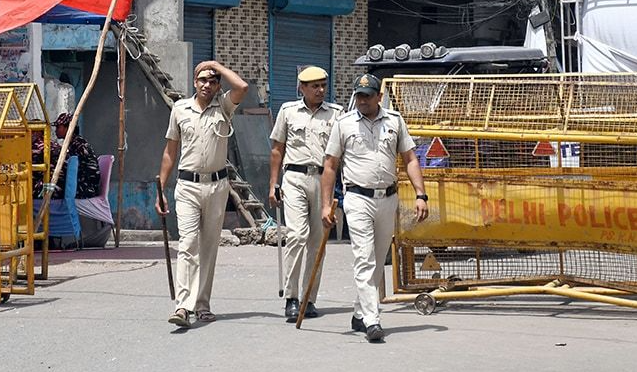
Dipke said he could have done more to protect the protesters, particularly the women who were allegedly beaten during the Delhi Police action. The apology comes after one of the biggest flashpoints of protest in the national capital in recent years.
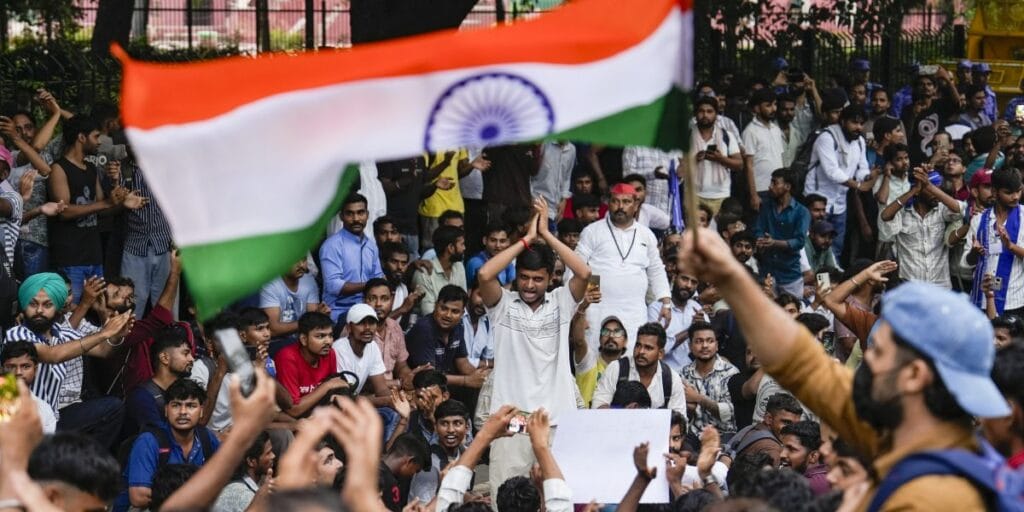
Supporters of the Cockroach Janta Party gather after the “Sansad Chalo” protest in Delhi turned violent, prompting an apology from Abhijeet Dipke. Image Credit: The Hindu
Abhijeet Dipke, a key face of the Cockroach Janta Party (CJP) movement, apologised on Tuesday to supporters who were injured during Monday’s protest near Parliament in New Delhi. The apology followed a day of heavy police action, tear gas, baton charges and detentions during the party’s “Sansad Chalo” march, which was aimed at pressing demands over exam irregularities and related accountability issues.
The protest had already become one of the most dramatic security incidents in the capital in recent years, and Dipke’s apology added an emotional layer to the political confrontation. In his public statement, he said he could have done more to protect supporters, especially the women who were allegedly beaten during the police action. Yeh issue kaafi important hai because it is not only about protest violence but also about the responsibility of protest leaders when large crowds are involved.
What Dipke Said
Dipke’s apology was direct and personal. He said he wanted to apologise to all supporters, especially girls who were “brutally beaten” by male police officers. He also said he could have done better to protect them from what he described as the inhumane actions of Delhi Police.
He further asked injured supporters to message him directly so that he could speak to them personally and apologise. That kind of statement matters because it shows that the protest leadership is trying to maintain contact with the people who turned out in support of the movement. At the same time, it reflects the scale of the shock after the police response. Seedhi baat yeh hai: when a protest turns violent, the emotional fallout is not limited to the street; it reaches the organisers, too. This story was also covered by TheHindu.
Dipke also linked the violence to his broader criticism of the government, saying that the administration was willing to “spill the blood” of young students to protect Education Minister Dharmendra Pradhan. That language is strong, and it shows how quickly the protest has shifted from demands about exams to a larger political conflict.
The Police Response and Injuries
The apology came after a major police crackdown on Monday’s march. Police had already said that protesters were “unruly, aggressive and violent” and that repeated warnings and lawful directions had been ignored. According to the police version, the protesters refused to disperse, violated prohibitory orders and allegedly attacked security personnel, damaged vehicles and public property.
The scale of the injuries was significant. More than 118 police personnel, including several senior officers, were injured, while around 60 protesters were also reported hurt. Around 70 protesters were detained, and an FIR was registered against unidentified persons for violence and vandalism. The protest also unfolded during an internet shutdown in the New Delhi district, which added another layer of tension and confusion to the situation.
From a public-order standpoint, this is important because it shows how quickly a protest can move from symbolic mobilisation to physical confrontation. Once the crowd reached near Parliament, the situation escalated fast. Tear gas and lathicharge followed, and the resulting violence now sits at the centre of the political debate. Yeh bhi important hai because the numbers tell us this was not a small scuffle—it was a major confrontation with real injury and legal consequences.
Government Engagement and Talks
Even as the protest turned violent, the Centre opened a channel of communication. Union Health Minister J.P. Nadda met CJP spokespersons Ashutosh Ranka and Saurav Das on Monday and assured them that the government leadership would discuss their demands internally. Nadda later said the discussion was initiated after CJP approached the government for talks.
The CJP delegation placed three demands before the minister: the release of Sonam Wangchuk without any restriction on his movement, the resignation of Education Minister Dharmendra Pradhan, and Rs 1 crore compensation for each NEET aspirant who died by suicide following the NEET 2026 paper leaks. Those are very serious demands, and they show how the protest has moved from student frustration into a broader political and moral campaign.
After the meeting, CJP’s Saurav Das said the minister had assured them that the issue would be taken up at the appropriate level, but no commitment had been made yet. That means the protest has entered a negotiation phase, but without a clear resolution. In protest politics, that is often the most unstable phase of all. People feel heard, but not satisfied.
Sonam Wangchuk’s Role
Sonam Wangchuk remains one of the most important emotional anchors of the protest. He has said he will continue his indefinite hunger strike, citing police action against protesters as the reason for extending his fast. That decision has kept public attention fixed on the movement even after the march itself was broken up.
Wangchuk’s wife, Gitanjali J. Angmo, also shared a handwritten message from him on social media, where he expressed solidarity with the protesters. He said he would continue fasting until youth leaders are allowed to meet MPs in Parliament or until they are allowed to meet him in the hospital in Delhi. That note, with his signature, gives the movement a strong moral dimension.
In many ways, Wangchuk’s fast and Dipke’s apology are two sides of the same unfolding story. One is a gesture of endurance and solidarity, the other is a gesture of regret and responsibility. Together, they show how deeply the Delhi crackdown has affected the people connected to the protest. Yeh issue kaafi important hai because it is no longer just a political protest; it has become a human story about injury, accountability and dignity.
Also Read: Mobile Internet Shutdown in Central Delhi Delays Protest Visuals as Crackdown Unfolds
Background and Context
The CJP protest has been building over allegations of NEET 2026 paper leaks and the broader issue of exam fairness. The group has framed the agitation as a fight for justice for students and accountability from those in power. Over time, Jantar Mantar became its base, and the “Sansad Chalo” march was intended to take the issue directly to Parliament.
Monday’s events were a turning point. Protesters moved toward Parliament in large numbers, police responded with force, and the resulting images circulated widely despite the internet shutdown. The scale of the violence prompted criticism from opposition parties, especially the Congress, which called the police action a “shameful chapter” in the injustices inflicted on India’s youth.
This background matters because it shows that Dipke’s apology was not happening in a vacuum. It was part of a wider confrontation involving students, police, political leaders and the Centre. Every statement now lands in a much bigger public debate than a normal protest would.
Timeline
Before Monday: CJP continues its protest at Jantar Mantar over alleged NEET irregularities.
Monday morning: Thousands join the “Sansad Chalo” march toward Parliament.
During the march: Police use tear gas and baton charges; violence and detentions follow.
Monday afternoon: J.P. Nadda meets CJP spokespersons and hears their demands.
Monday evening: Reports emerge of injuries to both police personnel and protesters.
Tuesday: Abhijeet Dipke apologises to supporters who were injured or hurt in the crackdown.
Ongoing: Sonam Wangchuk says he will continue his fast until youth leaders are allowed to meet parliamentarians.
Also Read: CJP Reclaims Jantar Mantar as Protest Continues, Delhi Police Remains on Alert
Why This Matters
This matters because it highlights the human cost of political confrontation. Protests are often discussed in terms of slogans, demands and strategy, but the real impact falls on people in the crowd. When supporters are injured, especially young students and women, the public conversation changes immediately. Yeh issue kaafi important hai because it puts the focus on safety, not just politics.
It also matters because the apology could shape how supporters respond next. If they feel the leadership is owning responsibility, they may stay connected to the movement. If they feel the apology is not enough, trust could weaken. That is a delicate balance for any protest group to manage.
There is a broader democratic question too. When a protest around exam fairness turns into a major law-and-order episode, it shows how high the emotional stakes are for India’s youth. Students do not take to the streets lightly. If they do, it usually means the issue has struck a nerve that goes far beyond one policy or one exam cycle.
India Angle
For Indian readers, this story hits several familiar pressure points at once: student anger, police response, political negotiation and public sympathy for youth. In Hinglish, seedhi baat yeh hai: jab students apne future ke liye sadkon par utar aate hain, toh poora system pressure mein aa jata hai. That is exactly what happened here.
The NEET issue is especially sensitive because it affects families across states, cities and income groups. A paper leak or exam irregularity can damage faith in the whole system. That is why the CJP protest has resonated so strongly and why Dipke’s apology will be closely watched. It is not just a Delhi story; it is a national one.
The police action also matters to Indian readers because it raises the recurring question of how much force is appropriate when crowds become unruly. Citizens want order, but they also expect proportionality. When photos and videos show injuries on both sides, public opinion becomes sharply divided. That makes the story much bigger than a protest update.
Analysis
My opinion is that Dipke’s apology is strategically smart but also emotionally necessary. In a movement that has suffered injuries and public criticism, leadership credibility depends on acknowledging pain. Apologies may not fix the situation, but they can keep supporters engaged. The phrase “I could have done better” is especially significant because it accepts at least some responsibility without fully conceding the protest was wrong.
I also think the police response will remain controversial for some time. The police say they acted because of violence and barricade breaches; protesters say force was excessive. Both sides have their own narrative, and both will likely stick to it. The truth may lie in the details of the confrontation, but in public memory, the images of baton charges and injuries are often what last longest.
From an editorial perspective, this is a high-impact story because it combines apology, confrontation and ongoing political negotiation. It has a clear emotional arc and a strong public-interest angle. It also raises a question that matters far beyond this one protest: when young people feel compelled to fight this hard for accountability, what does that say about the system they are protesting against?
What Next
The next step will likely depend on how CJP handles its protest going forward and whether the government follows up on the discussion initiated by J.P. Nadda. If there is no movement on the key demands, particularly around Wangchuk and the resignation call, the protest could continue or even broaden.
Authorities may also continue their legal action against those detained or accused of violence. That means more scrutiny, more possible arrests and more political statements in the days ahead. At the same time, CJP leaders may try to keep the protest peaceful while sustaining pressure.
The most important thing to watch is whether the apology leads to healing within the movement or becomes another point of debate. If supporters feel acknowledged, the protest may regain energy. If not, the group could face internal and external pressure to rethink its strategy.
Conclusion
Abhijeet Dipke’s apology to injured CJP supporters captures the human cost of Monday’s violent crackdown in Delhi. The protest around exam irregularities has now become a larger struggle involving police force, political negotiation and student anger. With J.P. Nadda engaging the CJP delegation and Sonam Wangchuk continuing his fast, the movement is far from over. The apology may calm some hurt, but the bigger questions about accountability, protest rights and youth justice remain wide open.
Written By A. Jack