The move was a major relief to protesters and their families after months of legal uncertainty. It also marks a distinct change in the state’s position on the student-led agitation for fair exams.
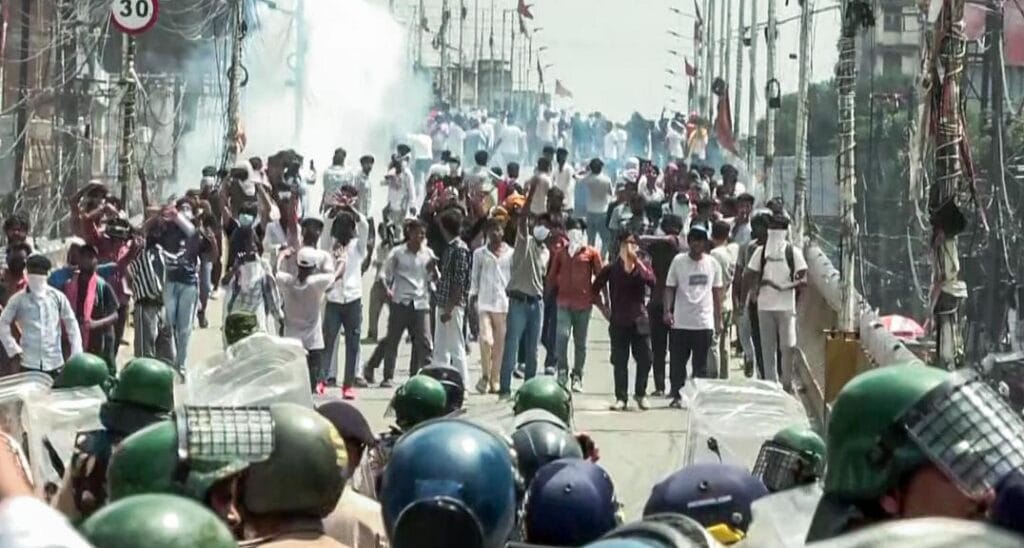
Protesters demanding action over the NEET paper leak in Bihar. Image Credit: The Hindu
In a significant political and administrative move, the Bihar government on Monday, July 27, 2026, announced that it will withdraw all cases lodged against protesters involved in the NEET paper leak agitation. The state also said it will release people who were jailed under various charges related to the demonstrations.
The announcement was made late in the evening through a statement issued by the State Home Department. It said that “no adverse legal action – punitive/retaliatory – shall be taken by the government against any individual participating in the protests before 6 p.m. on 26.07.2026.” The statement effectively gives legal relief to those who took part in the agitation before the cut-off time.
What the decision means
This decision is important because it reverses the pressure many protesters had been facing since the NEET paper leak issue first triggered anger among students, parents and activists. Cases had been filed against demonstrators in different parts of the state, and some people were even jailed under multiple charges. This story was also covered by The Hindu.
By withdrawing those cases, the government is sending a message that it does not want to keep punishing individuals for participating in a movement tied to exam fairness and student rights. In practical terms, this means those named in the cases may no longer face active legal proceedings for protest-related charges, subject to official process.
The phrase used by the Home Department — “no adverse legal action” — is also notable because it suggests the government wants to close the chapter on protest-related retaliation. That is a significant step in a politically sensitive situation.
Why the move happened
The withdrawal likely reflects a combination of political pressure, public sentiment and the changing national environment around the NEET paper leak protests. Over the last few weeks, the agitation has moved far beyond Bihar and become part of a wider debate on exam integrity, student anger and government accountability.
Once protests become symbolic of a larger issue, governments often face pressure to soften their response. In this case, continuing prosecutions against protesters would likely have drawn criticism for being harsh or politically motivated. The Bihar government appears to have calculated that legal withdrawal would reduce tension and show goodwill.
There is also a strong human angle. Many of the people involved in such protests are young students or supporters who may have been swept into the agitation at a moment of frustration. Continuing to file cases against them could have prolonged conflict without necessarily solving the underlying problem. Yeh issue kaafi important hai because it affects not just legal records but also the emotional trust between students and the state.
Background and context
The NEET paper leak controversy has become one of the biggest education-related stories in the country. It triggered protests in several states, with students demanding accountability, fair exams and action against those responsible for irregularities. Bihar was among the states where the issue became especially visible, leading to police action and multiple cases against demonstrators.
In any protest movement, the legal aftermath can sometimes outlast the street protests themselves. People may be detained, booked or charged under provisions meant to maintain order, even if their main role was participation rather than violence. That is why the Bihar government’s new statement is being seen as a major relief measure.
This decision also comes at a time when public debate around exam fairness remains intense across India. When a state starts rolling back cases against protesters, it often means the political cost of enforcement has become higher than the cost of de-escalation.
Timeline
Earlier months: NEET paper leak controversy sparks anger among students and activists.
During the agitation: Protesters in Bihar face police action and multiple cases are registered.
Some protesters are jailed: Various charges are brought against those involved.
July 27, 2026: Bihar government announces withdrawal of all such cases.
Same statement: Home Department says no punitive or retaliatory action will be taken against participants before 6 pm on July 26, 2026.
Why This Matters
This matters because it shows that governments can, and sometimes do, step back from a hardline position when public pressure and fairness concerns become too strong to ignore. For students and families, the withdrawal of cases is not just legal relief; it is also symbolic recognition that their anger had a legitimate basis.
It also matters because protest-related cases can have long-term consequences for young people. A criminal case on record can affect studies, jobs, travel and future opportunities. By withdrawing cases, the state is removing a burden that may have followed protesters for years.
For the broader education system, this move may help restore some trust. In a country where competitive exams shape life chances, every action tied to paper leak controversies carries outsized importance. If the state is seen as fair in response, it can reduce fear and frustration.
India angle
For Indian readers, this story is directly relevant because the NEET issue has touched lakhs of families across the country. In simple Hinglish, yeh sirf Bihar ka case nahi hai — yeh poore desh ke students ki chinta se juda hua matter hai. The state’s decision will likely be watched closely by other governments too.
The Indian angle also lies in the political message. When a government withdraws cases against protesters, it signals that student anger cannot be dismissed lightly. That matters in a democracy where young people are increasingly vocal and organised.
This move may also shape how future protest responses are handled in India. States may become more cautious about filing broad cases against peaceful demonstrators if they know such decisions can later have to be reversed. That is a healthy debate for the country to have.
Analysis
My opinion is that the Bihar government’s move is politically smart and socially necessary. It likely helps cool tempers, avoids further criticism and gives the administration a chance to reset its public image around the education controversy. But the bigger test is whether this is followed by deeper reforms in exam accountability.
It is also worth noting that the government used very specific language in its statement. By drawing a line at 6 pm on July 26, it is trying to separate past protest participation from any future unrest. That creates a legal boundary while also giving the state some room to manage post-announcement developments.
What Next
The next step will likely be the formal withdrawal process for the pending cases and the release procedures for those who were jailed. Depending on the number of cases and courts involved, this may take some time even after the announcement.
There is also a possibility that protest organisers will claim this as a victory and use it to keep pressure on authorities for exam reform. If that happens, the focus may shift from legal relief to systemic change, including how paper leaks are prevented in the future.
For the Bihar government, the challenge is to ensure that this announcement is not seen as a one-off damage-control move. If the administration wants lasting credibility, it will need to pair this gesture with stronger assurances on student safety, exam transparency and accountability.
Conclusion
The Bihar government’s decision to withdraw cases against NEET paper leak protesters is a major relief for those who had been facing legal action for participating in the agitation. By also promising to release jailed individuals and avoid retaliatory action, the state has clearly chosen de-escalation over confrontation.
This is significant not just for the protesters, but for India’s broader conversation about education, fairness and the right to demonstrate. The move may not solve the NEET controversy by itself, but it is an important step toward restoring trust and reducing the legal burden on young citizens.
Written By A. Jack