The climate activist, who was fasting over the alleged NEET paper leak and education reforms, was reported to be conscious and stable after being admitted to hospital. The development has raised concern about his health and the next phase of the protest.
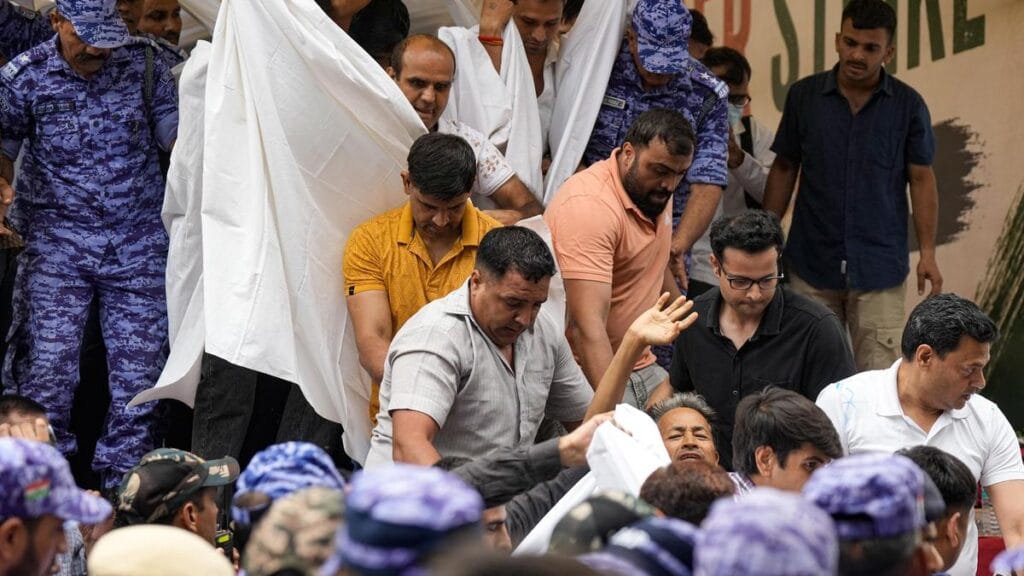
Police and medical personnel move Sonam Wangchuk from the Jantar Mantar protest site to Safdarjung Hospital. Image Credit: The Hindu
Climate activist Sonam Wangchuk was taken from the protest site at Jantar Mantar to Safdarjung Hospital in Delhi on Saturday after spending 21 days on hunger strike, according to police and media reports. The move came after his condition reportedly worsened and in the wake of directions from the Delhi High Court to ensure his medical safety.
Wangchuk has been protesting against Education Minister Dharmendra Pradhan over the alleged NEET paper leak and demanding wider reforms in India’s examination system. The situation has now shifted from a political protest to a major health concern, with police saying they acted under court orders and on expert medical advice. Yeh development kaafi important hai because it brings urgency to a protest that had already been stretching the limits of endurance.
What Happened at Jantar Mantar
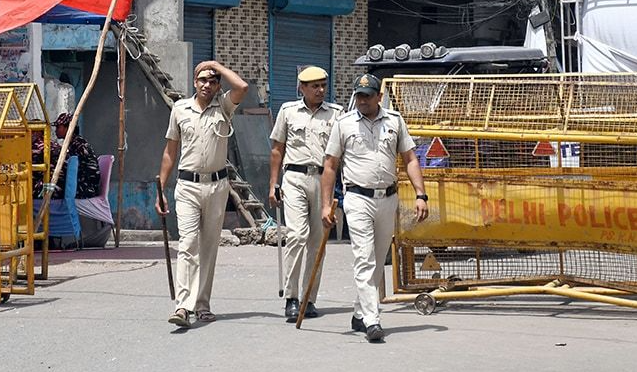
Police reached Jantar Mantar early on Saturday morning and removed Wangchuk from the protest site for medical care. According to the Delhi Police statement, the action was taken in accordance with the Delhi High Court’s directions and after doctors advised hospitalisation because of his deteriorating condition.
Reports said Wangchuk was conscious and his vital signs were stable after being admitted to Safdarjung Hospital. That detail matters because it indicates that the transfer was precautionary but serious. He had reportedly been losing weight and his condition had been monitored daily in the days leading up to the hospital shift. On Friday, doctors described his state as an emergency, expressing fear that his organs might fail if the fast continued. This story was also covered by The Hindu.
The protest had become increasingly difficult to ignore because the health of the activist was visibly worsening. Hunger strikes are meant to signal moral urgency, but once they begin to threaten life, the focus shifts from protest to survival. In this case, the court, doctors and police all appear to have treated the matter as a life-preservation issue rather than just a public demonstration.
Why Police Intervened
The police statement said Wangchuk was shifted for essential medical care and that the action followed both court orders and expert advice. The Delhi High Court had, two days earlier, directed authorities to conduct daily clinical health checks on Wangchuk and stated that the “life of any citizen is precious”. It also told the Centre that “anything and everything should be done to protect Wangchuk’s life.”
That judicial intervention appears to have been the key reason the police moved in early Saturday morning. The court’s language suggests that the concern had become urgent enough for regular monitoring, not just occasional check-ins. When a court says a person’s life must be protected at any cost, it sets a very clear tone for the administration.
Police also said protesters tried to create obstruction during the process, although they added that the operation was completed safely with maximum restraint. They later urged the protesters to peacefully vacate Jantar Mantar. This is important because it shows that the authorities wanted to ensure both the activist’s safety and public order at the site. Seedhi baat yeh hai: when a protest reaches this stage, the authorities must balance compassion, law and crowd control at the same time.
Background to the Protest
Wangchuk’s hunger strike is linked to allegations of NEET paper leaks and demands for educational reform. He has been fasting since June 28, and by Saturday the protest had reached its 21st day. The protest is being organised by the Cockroach Janta Party, a satirical online movement that has now become part of the larger education reform campaign.
The group’s immediate demand is the resignation of Education Minister Dharmendra Pradhan over the alleged leak. They argue that the minister must take moral responsibility for the failure of the system. That demand has become the emotional centre of the protest and has drawn support from several political leaders over the last few days.
Wangchuk himself has become a symbolic figure in the campaign because he is known not just as an activist but also as someone associated with innovation and public interest causes. His fasting has given the issue national visibility and made it harder for the government to treat it as a small protest. Yeh issue kaafi important hai because exam integrity affects lakhs of students and families across India.
Timeline
June 28: Sonam Wangchuk begins his hunger strike at Jantar Mantar.
Over the following days: The protest grows around demands for education reform and action over the alleged NEET paper leak.
Two days before hospitalisation: Delhi High Court directs daily clinical health checks and says Wangchuk’s life must be protected.
Friday: Doctors say his condition is becoming critical, with fears of organ failure.
Saturday morning: Police shift Wangchuk to Safdarjung Hospital.
Saturday: Police say he is conscious and stable after admission.
Coming days: Protesters plan a march to Parliament on July 20, the opening day of the Monsoon Session.
Also Read: Kejriwal Backs Sonam Wangchuk at Jantar Mantar, Says He Should Be Made Union Education Minister
Political Support and Public Attention
The protest has also drawn support from Opposition leaders in recent days. Congress leader Pawan Khera, Samajwadi Party MP Dimple Yadav and Aam Aadmi Party chief Arvind Kejriwal all visited Wangchuk to express solidarity and urged him to end the hunger strike because of his health. Their visits gave the protest fresh political visibility and turned it into a broader anti-government moment.
That kind of support matters because it shows the protest is no longer just a civil society event. It has become part of a larger political narrative around accountability, student welfare and trust in competitive examinations. The planned march to Parliament on July 20 is likely to keep the issue in the spotlight and may bring more parties into the conversation.
The protesters have also appealed to political parties to join the march. That indicates they want the issue to move from symbolic protest to legislative pressure. If more leaders join, the government may face stronger demands to respond publicly. In India, such moments often shape how quickly an issue moves from social concern to policy debate.
Why This Matters
This matters because it is about the safety of a protester who has already pushed his body to a dangerous limit for a public cause. A hunger strike is a serious form of dissent, but once the medical risk becomes high, the state has a duty to act. The court and police intervention here is not just procedural; it is about preserving life. Yeh issue kaafi important hai because every citizen’s life must be protected, even in the middle of a political protest.
It also matters because the underlying issue — alleged paper leaks and exam reform — affects students across India. Competitive exams are a life-changing gateway for millions of young people. When trust in those exams is shaken, the consequences go beyond one activist or one protest site. They affect confidence in the entire education system.
There is also a democratic angle. The Jantar Mantar protest has become a space where questions about accountability, education policy and moral responsibility are being openly debated. The movement shows how public pressure can grow when institutions fail to answer concerns quickly. For many Indians, that is a reminder that civic action still matters, especially when it forces difficult issues into the national conversation.
India Angle
For Indian readers, this story touches something very familiar: the anxiety around competitive exams. Students and parents across the country know how important exams like NEET are and how devastating it can be if there is even a hint of unfairness. In Hinglish, seedhi baat yeh hai: jab exam system par bharosa hilta hai, toh poori family tension mein aa jaati hai.
The protest also reflects how national politics in India often intersects with education and youth issues. A demonstration at Jantar Mantar in Delhi is not just local news; it becomes a national signal. When a well-known activist is shifted to hospital after a long fast, the message reaches households far beyond the capital.
This is also relevant because India’s democratic culture still allows space for protest, but it also requires care when protest becomes physically dangerous. The state’s response here will be watched closely by students, parents and civil society groups. How the government handles the next few days may shape public perception of both the protest and the education issue at its core.
Analysis
My opinion is that the court’s intervention was the turning point. Once the judiciary framed the issue around the sanctity of life, the administration had little room to delay medical action. That is why the hospital shift feels less like a political move and more like a necessary safety step. It also shows that hunger strikes, while powerful, cannot be allowed to continue indefinitely when health reaches a critical point.
I also think the protest has now entered a new phase. Wangchuk’s hospitalisation may reduce the immediate physical tension, but it will probably increase political pressure. A martyr-like narrative can build quickly around a fasting protester, even if the intention is only to protect him. That means the government may now face stronger scrutiny over exam reform, protest rights and the handling of the NEET controversy.
What Next
The next step will likely be continued medical observation at Safdarjung Hospital. Doctors will monitor Wangchuk’s condition closely, especially after a prolonged fast. If his health stabilises, he may be discharged later, but that depends entirely on medical advice.
Politically, the planned march to Parliament on July 20 is now the biggest immediate development to watch. If protesters go ahead with it, the issue could intensify during the opening days of the Monsoon Session. Opposition leaders may use the moment to push harder on exam reform and government accountability.
The government, meanwhile, will be under pressure to respond not only to the health emergency but also to the substance of the protest. Whether it chooses dialogue, clarification or a stronger public defence of its position will shape the next phase of the story. For now, the hospitalisation has moved the spotlight from the protest site to the medical and political response around it.
Conclusion
Sonam Wangchuk’s shift to Safdarjung Hospital marks a critical turning point in a protest that had already become a national talking point. After 21 days of hunger strike at Jantar Mantar, the activist’s deteriorating health prompted intervention by police, doctors and the Delhi High Court. The immediate concern is his recovery, but the larger story is still the same: anger over alleged NEET paper leaks and the demand for accountability in India’s education system. As the protest moves into its next phase, the focus will remain on both Wangchuk’s health and whether the government responds meaningfully to the concerns that brought thousands of eyes to Jantar Mantar in the first place.
Written By A. Jack