Xiaomi has launched the Xiaomi 17 Max in China. The new flagship focuses on endurance, performance and premium imaging. It has a Snapdragon 8 Elite Gen 5 chip, an 8,000mAh battery and a 200MP Leica-tuned camera setup. It’s clearly for heavy users who want top-tier specs and a long battery life.
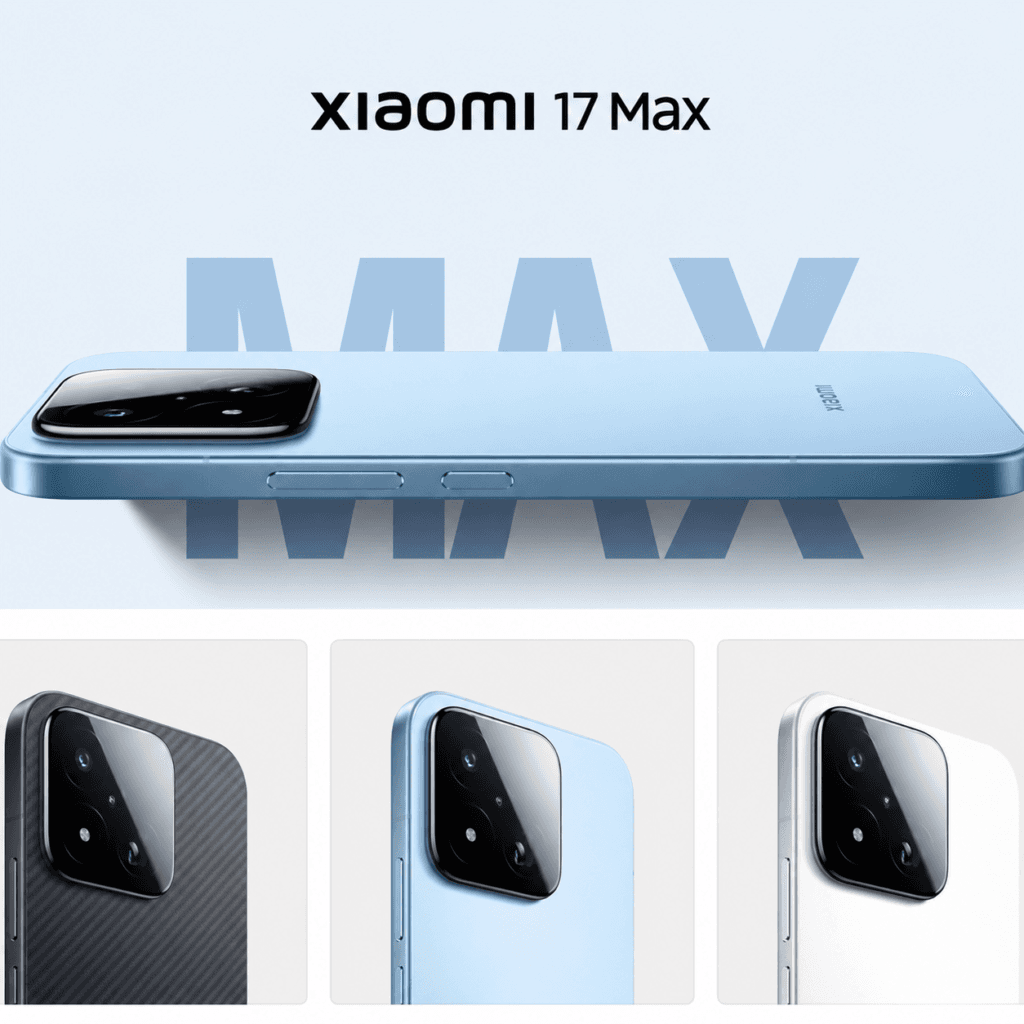
The Xiaomi 17 Max arrives as Xiaomi’s battery-focused flagship, pairing a massive 8,000mAh cell with Leica cameras and premium hardware.
Xiaomi has expanded its flagship smartphone portfolio in China with the launch of the Xiaomi 17 Max during its May 2026 event. The new model sits alongside the Xiaomi 17 series and is being positioned as the battery-first powerhouse in the lineup, thanks to its huge 8,000mAh battery and flagship-grade internals.
The phone joins a crowded but highly competitive premium segment where battery endurance, camera quality, and chipset performance matter more than ever. Xiaomi’s pitch is clear: if you want a large-screen flagship that can last all day and beyond, the Xiaomi 17 Max is built for you. Yeh launch kaafi important hai because it shows how flagship phones are now being designed not just for power but for practicality too.
What Xiaomi Has Launched
The Xiaomi 17 Max is the newest addition to the company’s flagship family in China. It was unveiled along with the Xiaomi YU7 GT, Xiaomi Band 10 Pro, and Xiaomi Ear Clip TWS, making the launch event a major product showcase for the brand. The phone starts at CNY 4,799 for the 12GB RAM + 256GB storage version, which is approximately Rs 67,800.
Xiaomi is offering the device in multiple variants, with up to 16GB RAM and 512GB storage. Buyers in China can choose from Pixel Black, Sky Blue, and White color options. Pre-orders are already live in China, and official sales are set to begin on May 25. At the moment, there is no confirmed global release plan, and the phone may remain a China-exclusive device for now. 91Mobiles has covered the full story.
That detail is important for Indian buyers because Xiaomi’s India strategy often differs from its China launch cycle. Some models arrive globally under adjusted branding, while others remain limited to the domestic market. So while the Xiaomi 17 Max is generating attention, Indian users will have to wait and see whether Xiaomi decides to bring it here.
Why the Xiaomi 17 Max Stands Out
The biggest headline feature is the 8,000mAh battery. That is unusually large for a flagship smartphone, especially one that still manages to keep the body relatively slim at 8.2mm. The trade-off is weight, which comes in at 225g, so this is definitely not a lightweight device. Still, for many users, the battery life advantage will be worth it.
Xiaomi has paired the battery with 100W wired fast charging and 22.5W reverse wired charging. That means the phone can charge very quickly and can also act as a power source for accessories or even other devices. In real-world use, this makes it especially attractive for travelers, gamers, content viewers, and people who spend long hours away from a charging point.
This is exactly where the Xiaomi 17 Max’s identity becomes clear. It is not trying to be the slimmest or most camera-centric flagship on the market. Instead, it is going after users who want a reliable all-day device with premium performance and a battery that can handle serious workloads. In simple words, yeh phone un logon ke liye hai jo “charge karo aur bhool jao” type experience chahte hain.
Performance and Software
Under the hood, the Xiaomi 17 Max runs on Qualcomm’s Snapdragon 8 Gen 5 Elite chipset, built on a 3 nm process. That places it firmly in the highest tier of Android performance for 2026. The chipset is expected to deliver strong results in gaming, multitasking, video editing, and heavy app usage.
The phone ships with up to 16GB LPDDR5x RAM and up to 512GB UFS 4.1 storage, which means it is being positioned squarely in ultra-premium territory. These specifications are more than enough for power users who run demanding apps or store large amounts of media locally. Xiaomi is also shipping the device with HyperOS 3 based on Android 16 out of the box.
That combination matters because software optimization is now just as important as raw hardware. A high-capacity battery is only useful if the system manages power efficiently, and Xiaomi appears to be betting on a balanced hardware-software stack. The result should be a phone that feels fast, responsive, and efficient through long usage sessions.
Display and Design
The Xiaomi 17 Max features a 6.9-inch 1.5K AMOLED display with a 120Hz refresh rate and up to 3,500 nits peak brightness. It supports HDR10+, Dolby Vision, and HDR Vivid, which makes it a strong choice for streaming, gaming, and general multimedia consumption. The panel is protected by Dragon Crystal 3.0 glass, and the phone also carries an IP68 rating for dust and water resistance.
This display setup suggests Xiaomi wants the device to appeal to users who care about screen quality just as much as battery life. A larger screen paired with a brighter panel is ideal for binge-watching, gaming, and reading in outdoor light. But the size also means one-handed use may be difficult for some people, especially those who prefer compact phones.
The 225g weight is another sign of the trade-offs involved. This is not a phone for users who want an ultra-light daily driver. It is more of a media machine, a power-user tool, and a battery champion wrapped in premium materials. That positioning is very deliberate and likely very effective.
Camera Setup
On the camera front, Xiaomi has included a Leica-tuned triple rear camera system. The main sensor is a 200MP Samsung HP9 sensor with optical image stabilization. It is joined by a 50MP periscope telephoto camera with 3x optical zoom and a 50MP ultra-wide camera with a 102-degree field of view. For selfies and video calls, the phone offers a 32MP front camera.
This camera specification is impressive, though Xiaomi appears to be emphasizing dependability rather than pure camera bragging rights. Compared with some ultra-premium rivals, the Xiaomi 17 Max seems to prioritize balanced flagship photography alongside battery and display strength. That makes sense for its target audience, which likely values all-round performance more than niche camera supremacy.
Leica branding also gives the phone a premium imaging identity, which matters in a crowded market where camera collaboration logos can influence buyer perception. The 200MP main sensor should help with detail and cropping flexibility, while the periscope lens should improve zoom performance. For casual users and enthusiasts alike, this is a powerful imaging package.
Also Read: Virat Kohli Fronts Oakley Meta Performance AI Glasses Launch in India
Background
Xiaomi’s flagship strategy has increasingly leaned toward differentiation through battery, display, and performance. While many brands compete on thinness or camera-first marketing, Xiaomi often tries to build phones that feel practical without giving up premium appeal. The Xiaomi 17 Max continues that trend by pushing battery capacity far beyond what most flagship users expect.
The company has already introduced the Xiaomi 17, Xiaomi 17 Pro, Xiaomi 17 Pro Max, and Xiaomi 17 Ultra, so the Max model now fills the endurance-focused slot in the family. Xiaomi is also preparing the Xiaomi 17T and 17T Pro, which suggests the company is building a broad portfolio to target both premium and semi-premium segments. This is a familiar pattern for a brand that likes to cover multiple use cases under one naming strategy.
Timeline
May 2026: Xiaomi unveils the Xiaomi 17 Max in China.
At launch: The phone is introduced alongside the YU7 GT, Band 10 Pro, and Ear Clip TWS.
Pre-orders begin: The device goes live for pre-order in China.
May 25: Official sales are scheduled to start.
Future: No confirmed global launch yet, though India availability remains uncertain.
Why This Matters
This matters because battery life is still one of the biggest pain points for smartphone users, even in the premium category. A phone with an 8,000mAh battery directly addresses that frustration and could influence how other brands think about endurance in flagships. Xiaomi is essentially saying that premium phones do not have to compromise on battery size.
It also matters for users who rely on their phones for work, travel, streaming, and gaming. In markets like India, where long commuting hours, heavy social media use, and frequent power cuts in some areas still matter, a big-battery flagship can be extremely appealing. Yeh issue kaafi important hai because it reflects what many users actually want: less charging stress and more usable screen time.
India Angle
For Indian readers, the Xiaomi 17 Max is relevant because Xiaomi has long been one of the strongest smartphone brands in the country. Even though this specific model may not launch globally right away, Indian buyers always watch Xiaomi’s China launches closely because they often hint at future hardware trends.
The India angle is also about user preference. Indian smartphone users value battery life, fast charging, and value for money more than almost any other group. If Xiaomi eventually brings a version of this device to India, it could attract buyers who want a premium phone that can handle long days without constant charging. In Hinglish, yeh phone un users ke liye kaafi interesting hai jo “battery low” ka message dekh kar irritated ho jaate hain.
Analysis
My opinion is that Xiaomi has made a smart move by focusing on endurance rather than trying to outdo rivals only on camera hype. In 2026, users already expect fast processors and advanced cameras from flagship devices. Battery life, however, still feels like the feature that can truly change daily usage. Xiaomi’s large-battery approach may help it stand out in a market where many premium phones look similar on paper. The key challenge will be balancing that huge battery with ergonomics and global market demand. If Xiaomi can deliver strong battery life without making the phone feel unwieldy, this could become one of the year’s most compelling Android flagships.
What Next
The next step is the China launch on May 25, after which early reviews will likely focus on battery performance, charging speed, display quality, and camera consistency. Benchmarks and real-world endurance tests will determine whether the Xiaomi 17 Max lives up to its “battery beast” label.
For global users, the big question is whether Xiaomi will keep this model limited to China or eventually expand it to other markets. Indian buyers will especially watch for signs of a local launch or a modified version later in the year. If Xiaomi sees a strong response to the China model, it may inspire similar battery-first strategies in future global flagships. That would be good news for users who want more screen time and less charging anxiety.
Conclusion
The Xiaomi 17 Max arrives with a clear identity: a premium flagship built around battery life, large-screen entertainment, and high-end performance. With its 8,000mAh battery, Snapdragon 8 Elite Gen 5 processor, and Leica-tuned 200MP camera system, it aims to stand out in a crowded flagship market.
The phone may be heavy and large, but it also looks practical, powerful, and well-suited for demanding users. Whether it reaches India remains unclear, but the launch is still important because it reflects where premium smartphones are headed. Battery life is becoming a serious flagship battleground, and Xiaomi wants to lead that race.
Written By A. Jack