The sale of premium petrol in the capital’s petrol pumps is going up significantly, especially in the posh localities and among the owners of luxury cars. However, the Centre has said E20 petrol is costlier to make than regular petrol at current crude prices but still offers long-term benefits for India.
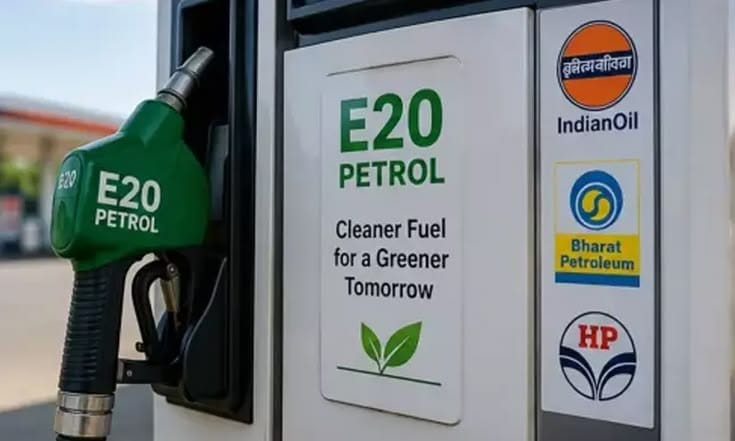
Premium petrol variants such as XP95 and XP100 amid ongoing debate over E20 fuel. Image is only for illustrations.
Delhi’s fuel market is witnessing a clear shift in consumer behaviour, with more vehicle owners reportedly moving away from regular petrol and toward premium fuel variants. According to sources, demand for IndianOil’s XP95 and XP100, Bharat Petroleum’s Speed 97 and similar high-octane fuels has increased sharply at several retail outlets across the capital. The trend is being linked to concerns around E20 petrol, which contains up to 20 per cent ethanol and has become a much-discussed topic among motorists in recent weeks.
The change is significant because it is not just a pricing story, but also a trust and perception story. Many consumers appear to be reacting to uncertainty, whether justified or not, by choosing fuels they believe are better suited for their cars. Yeh issue kaafi important hai because it shows how policy, public messaging and consumer confidence can affect even routine purchases like petrol.
What Is Happening at Fuel Stations
Sources told Business Today TV that Delhi fuel stations are seeing a clear increase in premium petrol sales. In some retail outlets, demand has reportedly doubled, while pumps in affluent neighbourhoods have seen as much as a five-fold jump. One station reportedly saw daily sales of XP95 rise from about 1,000 litres to between 1,500 and 1,700 litres, while XP100 sales jumped from roughly 100 litres a day to nearly 500 litres. This story was also covered by BusinessToday.
This kind of shift is important because petrol buying habits usually do not change overnight unless there is a strong reason. Here, the reason appears to be a mix of technical confusion, social media debate and consumer caution. Some motorists seem to believe premium petrol may offer better performance or more comfort for their vehicles amid the E20 discussion, even though the government says E20-compatible vehicles are built to run on the blended fuel.
The trend also appears to be stronger among owners of high-end and performance-orientated cars. That makes sense because premium fuel has long been marketed as a better fit for vehicles that demand smoother performance or higher octane levels. But the current surge suggests there is now an added psychological layer: fear or uncertainty around E20.
Why Consumers Are Switching
The most immediate reason appears to be concerns around E20 petrol. Social media has amplified claims that E20 may damage engines, reduce mileage or not suit every vehicle in the same way. While the Centre has rejected those claims, many consumers are still choosing to play it safe by moving to premium petrol variants.
This is a classic case of perception influencing buying behaviour. Even if experts and automakers say E20-compatible vehicles are designed for the blended fuel, drivers may still prefer a product they feel more confident about. For many people, especially those who own expensive vehicles, the fear of possible damage outweighs the appeal of lower-cost or standard fuel.
There is also a behavioural element here. When a consumer hears repeated discussion around “pure petrol”, “E10”, “E20” and engine wear, the simplest reaction is often to choose the premium option. It may cost more, but it feels like a safer bet. That is exactly the kind of response retailers are now seeing in Delhi.
Government’s Position on E20
In a separate clarification, the Ministry of Petroleum and Natural Gas said on Friday that E20 petrol is currently costlier to produce than conventional petrol at prevailing crude oil prices of around $70 per barrel. However, it emphasised that India’s ethanol blending programme has helped shield consumers from global oil price volatility and strengthen energy security.
The ministry also pushed back against recent social media claims that E20 damages engines, significantly reduces mileage or will soon be replaced by higher ethanol blends without proper testing. According to the government, India’s transition to E20 has been gradual and involved consultations with automakers, oil marketing companies and testing agencies.
The ministry’s FAQ on the Ethanol Blended Petrol programme included some striking numbers. It said maize-based ethanol is procured at around Rs 71.86 per litre before GST and related costs. It also said the programme has saved over Rs 1.97 lakh crore in foreign exchange, replaced nearly 316 lakh metric tonnes of crude oil imports, reduced carbon emissions by about 952 lakh metric tonnes and transferred more than Rs 1.66 lakh crore to farmers.
That is a strong policy defence. The government is essentially saying that even if the current economics of E20 are not cheaper at today’s crude price, the larger strategic benefits remain significant. In simple terms, India is trading some short-term cost pressure for long-term fuel security and agricultural support.
Background and Context
India’s ethanol blending programme has been one of the Centre’s major energy policy pushes. The idea is to reduce dependence on imported crude oil, support domestic agriculture and lower emissions over time. That makes the policy much bigger than just a fuel-pump decision. It sits at the intersection of energy, environment and rural economics.
The current discussion around E20 became louder after social media posts claimed that the blend could harm vehicles or reduce mileage. The Centre has rejected those claims and said the transition has been backed by consultation and testing. Petroleum Minister Hardeep Singh Puri has also said there is no decision yet to move beyond E20 and that studies on higher blends are still underway.
This context matters because fuel behaviour often changes when the public feels the policy is moving faster than the messaging. If consumers do not understand what their car is compatible with, they will usually choose the most conservative option available. In this case, that means premium petrol.
Timeline
Earlier years: India expands ethanol blending as part of its fuel policy.
Recent weeks: Social media debate grows over E20 fuel and vehicle compatibility.
Friday, July 10, 2026: The government says E20 is currently costlier to produce at prevailing crude prices.
Same period: Delhi fuel stations begin reporting a sharp rise in premium petrol demand.
Now: Sources say XP95, XP100 and Speed 97 sales have jumped significantly at several retail outlets.
Why This Matters
This matters because fuel choices affect millions of motorists and also shape the direction of India’s energy policy. If consumers move in large numbers toward premium petrol because they are unsure about E20, it creates a clear signal that public communication needs to improve. Yeh issue kaafi important hai because confidence in fuel is not just about price; it is about trust, vehicle safety and long-term policy stability.
It also matters for the fuel retail market. A sudden shift toward premium variants can change sales patterns and influence how oil companies position their products at the pump. If demand continues rising, retailers may see more pressure to explain the difference between standard petrol, blended petrol and premium variants in simpler language.
For everyday drivers, the issue is practical. Petrol is one of the most routine expenses in urban India. Even a small change in the perceived suitability of a fuel can lead to a major shift in consumer behaviour. That is exactly what seems to be happening in Delhi right now.
India Angle
For Indian readers, this story goes beyond Delhi because it touches the bigger question of how India transitions to cleaner fuels without confusing drivers. In Hinglish, seedhi baat yeh hai: agar logon ko lag raha hai ki E20 aur unki car ka match clear nahi hai, toh woh naturally premium petrol ki taraf jayenge. That is a very human reaction.
The story also matters because India’s fuel policy has wide public consequences. When the government pushes ethanol blending, it is not just about fuel efficiency. It is also about reducing import bills, supporting farmers and lowering emissions. But to make that work, the public has to feel informed and reassured. Otherwise, the policy can run into distrust at the consumer level.
Delhi is a useful case study because it is a high-vehicle-density market with a large number of informed consumers. If premium petrol demand is rising here, the pattern may offer clues about sentiment in other metro cities too.
Analysis
My opinion is that the demand surge is less about confirmed technical problems and more about uncertainty. People often respond to complex policy changes by choosing what feels safer. Premium petrol becomes a kind of insurance purchase, even if the technical necessity is not proven for every vehicle.
The government’s response is also important because it reflects a broader challenge in public policy: implementation is not just about supply but about confidence. India may be doing the right thing strategically by promoting ethanol blending, but if the public does not understand the benefits and vehicle fit, the policy can trigger confusion. That confusion can then push consumers into more expensive choices, which is what seems to be happening in Delhi.
From an editorial perspective, the most newsworthy part is the contrast between consumer behaviour and official messaging. On one side, motorists are shifting to premium petrol. On the other, the government is saying E20 is central to India’s energy future and not harmful when used appropriately. That tension is what makes the story compelling.
What Next
The next step will likely depend on whether the premium petrol demand remains elevated or settles down after the current debate. If official clarifications are repeated and easier-to-understand consumer guidance is circulated, some of the panic buying may cool off. If not, the preference for premium fuels may continue for a while, especially among car owners who are still uncertain.
Oil marketing companies may also need to communicate more clearly at the retail level. Simple signage, vehicle compatibility guidance and pump-level explanations could help reduce confusion. That would be especially useful in urban markets like Delhi.
The government may also have to keep explaining the benefits and limits of E20 in plain language. If consumers continue to associate the blend with risk, then even a technically sound policy can face resistance. Better communication is likely to be just as important as fuel formulation itself.
Conclusion
Delhi’s rising demand for premium petrol shows how quickly consumer behaviour can change when there is uncertainty around fuel policy. While the government says E20 petrol is part of India’s long-term energy strategy and has delivered major savings and emissions benefits, many motorists are still choosing premium variants like XP95, XP100 and Speed 97 as a precaution. The result is a sharp shift at fuel stations, especially in wealthier areas of the capital. For now, the story is not just about petrol — it is about trust, clarity and how India manages the transition to a new fuel future.
Written By A. Jack