The Bench of Chief Justice D.K. Upadhyaya and Justice Tejas Karia noted that the transfer was necessary for Wangchuk’s safety and to protect his fundamental rights under Articles 19 and 21 of the Constitution in view of his continuing fast in solidarity with the Cockroach Janata Party.
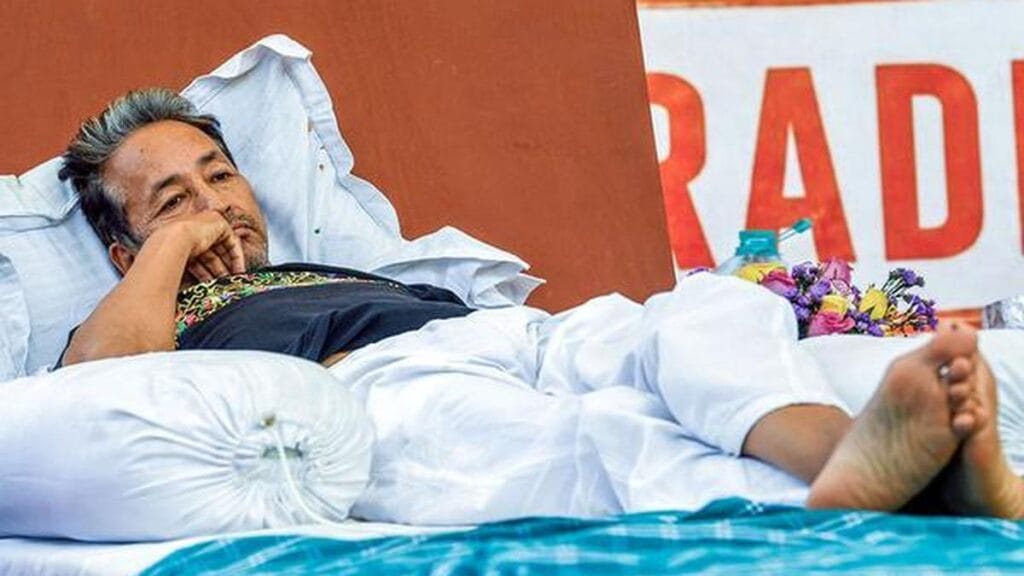
Environmental activist Sonam Wangchuk, who has been on a prolonged hunger strike in Delhi. Image Credit: The Hindu
In a significant development in the 24-day hunger strike of environmental activist Sonam Wangchuk, the Delhi High Court on Tuesday (July 21, 2026) ordered his immediate transfer from Safdarjung Hospital to Medanta Hospital in Gurugram. The court said the move was necessary to protect Wangchuk’s fundamental rights under Articles 19 and 21 of the Constitution, which guarantee the right to freedom and the right to life and personal liberty.
The order came on an appeal filed by Wangchuk’s wife, Gitanjali J. Angmo, who had sought his transfer to a private hospital of his choice. A Bench of Chief Justice D.K. Upadhyaya and Justice Tejas Karia noted that its interaction with doctors from AIIMS and Safdarjung Hospital revealed medical concerns requiring constant supervision. The court directed that Wangchuk be shifted to Medanta and that all medical records and treatment details from Safdarjung Hospital be shared with the private hospital.
What Happened in Court
The Delhi High Court’s decision marked a turnaround from an earlier Sunday order in which it had declined to interfere with Wangchuk’s ongoing treatment at Safdarjung Hospital and refused to direct his transfer to Medanta. On Monday, the court had sought all medical reports relating to Wangchuk and directed doctors from Safdarjung and AIIMS to assist it before deciding on the plea.
During Tuesday’s hearing, the Bench reviewed the medical reports and heard from doctors about Wangchuk’s condition. The court observed that Wangchuk’s health had deteriorated significantly during his hunger strike, with medical reports indicating dangerously low blood sugar and potassium levels. The court noted that there was a broad consensus among government and private doctors that he required continuous medical monitoring in view of his ongoing fast. This story was also covered by TheHindu.
The court then proposed shifting Wangchuk to Medanta Hospital, noting the need for constant supervision and specialised care. It asked the director of Medanta to form a team of doctors with requisite expertise to constantly monitor Wangchuk’s condition. The order also directed that all medical records and treatment details from Safdarjung Hospital be shared with the private hospital to ensure continuity of care.
Why the Transfer Was Ordered
The court’s decision to order the transfer was based on serious medical concerns arising from Wangchuk’s prolonged hunger strike. Wangchuk, who began his fast on June 28 in solidarity with the Cockroach Janata Party (CJP) student protest, has lost significant weight and shown signs of severe physical strain. Medical reports indicated that his blood sugar levels were critically low and his potassium levels were dangerously depleted, raising concerns about his vital organs.
The court said the transfer was necessary to ensure his safety and protect his fundamental rights under Articles 19 and 21 of the Constitution. The Bench noted that while the government had assured daily monitoring of his health, the severity of his condition required more specialised and constant supervision at a private hospital with advanced facilities.
Wangchuk’s wife had argued that his transfer to Safdarjung Hospital was arbitrary and that he should be allowed to continue treatment at a private hospital of his choice. The court initially declined to pass an interim order, but after reviewing the medical reports and hearing from doctors, it concluded that the transfer to Medanta was necessary to safeguard his life and health.
Background and Context
Sonam Wangchuk, a renowned environmental activist and education reformer from Ladakh, began his hunger strike on June 28 at Jantar Mantar in Delhi. His fast was in solidarity with the Cockroach Janata Party (CJP), a youth-led movement demanding the resignation of Education Minister Dharmendra Pradhan over alleged examination irregularities and calling for education reforms.
Wangchuk had previously undertaken a three-week hunger strike in Ladakh over demands for statehood and greater autonomy for the region. His current fast has drawn widespread attention, with supporters from across the country joining the CJP protests in Delhi and other cities. The movement has grown to include students, professionals and families who feel the education system is failing them.
The Delhi High Court had earlier directed the Centre to ensure daily medical examinations of Wangchuk by government doctors and to provide necessary medical intervention if his condition deteriorated. The court had observed that the life of citizens is precious and that all medical attempts must be made to protect it. However, as his health worsened, the court took a more proactive stance, ultimately ordering his transfer to Medanta.
Timeline
June 28, 2026: Sonam Wangchuk begins hunger strike at Jantar Mantar in solidarity with CJP protests.
July 16, 2026: Delhi High Court orders daily medical check-ups for Wangchuk as his health deteriorates.
July 18, 2026: Court declines interim plea to transfer Wangchuk to a private hospital, saying the move to Safdarjung was not arbitrary.
July 19, 2026: Court seeks all medical reports and directs doctors from Safdarjung and AIIMS to assist it.
July 21, 2026: Court orders immediate transfer of Wangchuk to Medanta Hospital in Gurugram.
July 21, 2026 (evening): Safdarjung Hospital discharges Wangchuk and hands him over to Medanta doctors.
Also Read: India’s Cockroach Movement Protesters Show No Sign of Backing Down After Police Crackdown
Why This Matters
This matters because it highlights the tension between the state’s duty to protect life and the rights of an individual to protest. Wangchuk’s hunger strike has become a symbol of the broader youth movement demanding education reform and government accountability. The court’s decision to order his transfer to a private hospital shows that the judiciary is taking his health seriously and is willing to intervene to protect his life.
It also matters because the case tests the limits of protest rights in India. While the right to protest is a fundamental freedom, the state also has a responsibility to ensure that protesters do not come to serious harm. The court’s order strikes a balance by allowing Wangchuk to continue his fast while ensuring he receives the best possible medical care. Yeh issue kaafi important hai because it sets a precedent for how similar cases will be handled in the future.
For the CJP movement, Wangchuk’s health has been a major concern. His deteriorating condition had raised fears that his life was at risk. The court’s order to transfer him to Medanta provides some reassurance that he will receive specialised care. However, it also raises questions about how long he can continue his fast without risking his life.
India Angle
For Indian readers, this story matters because it touches on the right to protest, the role of the judiciary and the limits of state power. In Hinglish, seedhi baat yeh hai: jab koi activist apne demands ke liye bhookh hartal karta hai, toh uski jaan ki zimmedari kaun leta hai?
The case also highlights the growing youth movement in India demanding education reform and government accountability. Wangchuk’s fast has become a rallying point for the CJP protests, which have drawn thousands of supporters in Delhi and other cities. The court’s decision to order his transfer to a private hospital shows that the judiciary is sensitive to the concerns of protesters while also ensuring their safety.
For families across India, the issue is personal. Many have children or relatives who are studying for competitive exams or facing job uncertainty. That makes the protest relatable and emotionally powerful. It is not just about one activist; it is about the future of millions of young people.
Analysis
My opinion is that the court’s decision to order the transfer was the right move. Wangchuk’s health had deteriorated to a critical point, and the government hospital may not have had the specialised facilities needed to monitor his condition continuously. The transfer to Medanta ensures that he receives the best possible care while still allowing him to continue his fast if he chooses.
I also think the case highlights the importance of the judiciary’s role in protecting fundamental rights. The court’s order to transfer Wangchuk was based on the need to protect his life and personal liberty under Articles 19 and 21 of the Constitution. That is a strong message that the state cannot ignore the health of a protester, even if he is on a voluntary fast.
From an editorial perspective, this is a strong story because it has a clear central event, legal significance and human interest angle. It is not just about a hunger strike; it is about how the judiciary balances protest rights with the duty to protect life. The challenge is to explain the story in a way that is both factual and accessible to readers who want to understand the big picture.
What Next
The next step will depend on Wangchuk’s health and whether he chooses to continue his fast. The court has ordered daily monitoring of his condition, and Medanta Hospital will be responsible for providing him with the necessary medical care. If his health deteriorates further, the court may take additional steps to ensure his safety.
There may also be further legal challenges or appeals related to the transfer or the state’s handling of the hunger strike. The CJP movement is likely to continue its protests, and Wangchuk’s health will remain a key issue. The government’s response to the court’s order will also be closely watched.
For now, the situation remains fluid. Wangchuk’s transfer to Medanta provides some reassurance that he will receive specialised care, but the underlying issues that led to his fast remain unresolved. Whether the government responds to the CJP’s demands or the movement gains further momentum will determine the next phase of the protest.
Conclusion
The Delhi High Court’s order to shift Sonam Wangchuk from Safdarjung Hospital to Medanta Hospital in Gurugram marks a significant development in his 24-day hunger strike. The court said the transfer was necessary to protect his fundamental rights under Articles 19 and 21 of the Constitution and to ensure his safety amid his deteriorating health.
The order came after the court reviewed medical reports and interacted with doctors, finding that Wangchuk required constant supervision. While the transfer provides reassurance that he will receive specialised care, the underlying issues that led to his fast remain unresolved. The case highlights the tension between protest rights and the state’s duty to protect life, setting a precedent for how similar cases will be handled in the future.
Written By A. Jack