Angmo’s appeal argues that the earlier order does not properly address informed consent or a patient’s right to accept or reject medical treatment. The hearing adds a fresh legal and medical layer to an already high-profile hunger strike case.
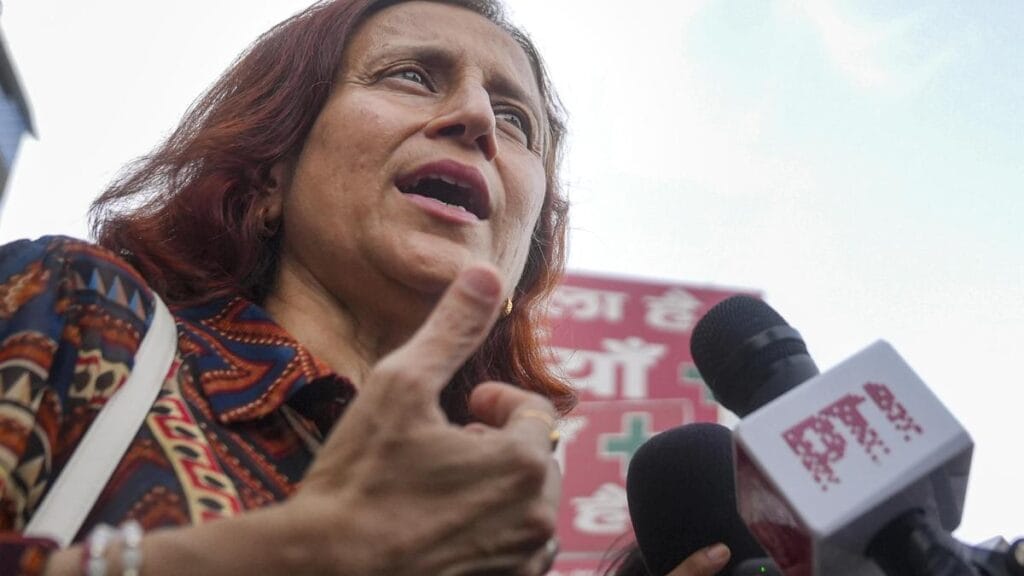
Gitanjali J. Angmo arrives at the Delhi High Court as the court agrees to hear her plea over Sonam Wangchuk’s hospital transfer dispute. Image Credit: The Hindu
The Delhi High Court on Monday agreed to hear a plea filed by activist Sonam Wangchuk’s wife, Gitanjali J. Angmo, challenging the court’s refusal to shift him from Safdarjung Hospital to Medanta Hospital in Gurugram. The matter is now scheduled for hearing at 2.30 p.m. on July 20, 2026.
The petition adds a significant legal twist to Wangchuk’s ongoing hunger strike, which has already become a major public and political issue. Angmo’s argument, as stated in the appeal, is that the earlier order does not adequately deal with “informed consent” and the right of a patient to accept or reject medical treatment. Yeh issue kaafi important hai because it moves the debate beyond protest politics and into the core question of patient autonomy.
What the Plea Is About
The central issue in the plea is whether Wangchuk should remain at Safdarjung Hospital or be transferred to Medanta Hospital in Gurugram. According to the appeal, the earlier court order refusing transfer did not properly account for the legal and ethical principle of informed consent. That principle is a major part of modern medical law and says a patient has the right to understand treatment options and make decisions about them.
Angmo’s position appears to be that if Wangchuk or his family want a different hospital setting, that choice should be considered carefully. The plea also suggests that medical treatment cannot be decided only by institutional convenience or existing directions. Instead, it must respect the patient’s rights as well. Seedhi baat yeh hai: the case is no longer only about health but also about who gets to decide what kind of medical care an individual can accept. This story was also covered by The Hindu.
That is a serious issue because hunger strike cases often place courts, doctors and families in a difficult position. The person fasting may be medically vulnerable but may also wish to continue asserting control over treatment decisions. When those interests collide, the law has to balance safety with autonomy. That is exactly the tension now before the court.
Why the Hearing Matters
The court agreeing to hear the plea is important because it means the issue has not been closed and will now receive another judicial look. In legal terms, that does not mean the court has accepted the petitioner’s argument in advance, but it does show that the matter raises enough concern to warrant further examination.
For families in similar situations, this hearing could be closely watched as a signal of how courts treat patient choice during medical emergencies. In India, hospital transfer decisions can become deeply contentious when an individual is under treatment but wants care elsewhere. This is especially sensitive when the patient is a public figure or activist, because the case then carries political, legal and emotional dimensions all at once.
The hearing also matters because Wangchuk’s health situation has already drawn widespread attention. Any decision about where he is treated will likely affect not just his immediate care but also how the public interprets the fairness of the process. If the court examines informed consent more directly, it could set an important example for future cases. Yeh bhi important hai because judicial clarity in such matters helps reduce confusion and speculation.
Background and Context
Sonam Wangchuk’s hunger strike has become one of the most closely followed protest-and-health stories in the country in recent days. His fast, originally tied to broader demands around education and public accountability, has now moved into the medical and legal arena because of his deteriorating condition and the questions raised about treatment decisions.
Earlier updates said that Wangchuk continued fasting in hospital even after being shifted from the protest site and that medical teams had advised immediate intervention. His family has repeatedly expressed concern about transparency and consent. That is part of why the current plea matters so much: it is built on the idea that treatment decisions for a conscious patient should not be reduced to administrative choice alone.
The situation has also drawn statements from public figures and supporters, making it more than a private family matter. Once a protester’s health becomes a matter of national discussion, every court filing, medical bulletin and family statement gains significance. That is why this hearing will likely attract more attention than a routine hospital transfer dispute.
Timeline
Earlier: Sonam Wangchuk’s hunger strike becomes a major protest issue.
After 21 days of fasting: He is moved from the protest site to hospital care.
Hospital phase: Concerns rise over dehydration, refusal of fluids and need for urgent intervention.
Court stage: A transfer to Medanta Hospital in Gurugram was sought but refused earlier.
Monday, July 20, 2026: Gitanjali J. Angmo files a plea challenging that refusal.
Later on Monday: The Delhi High Court agrees to hear the matter at 2.30 p.m.
Key Legal Questions
One of the biggest questions is how the court interprets informed consent in a case where the patient is still central to the decision-making process. Medical law generally gives strong weight to patient autonomy, but that autonomy can become complex when doctors believe urgent care is needed. If the patient refuses or family members disagree with the current treatment setup, the court may need to decide how far those objections should influence care.
Another question is whether the hospital transfer itself would materially change the nature of treatment. In many cases, a transfer request is not just about location; it is about perceived quality, trust and confidence in the care being provided. If a family believes another hospital can provide better monitoring or a more trusted environment, that can become a major legal and ethical issue.
The final question is practical: what is in Wangchuk’s best medical interest right now? Courts in such situations often try to avoid second-guessing doctors unless there is clear reason to do so. But they also cannot ignore a patient’s legal rights. That is why hearings like this can become delicate and highly consequential.
Also Read: Sonam Wangchuk Hunger Strike Deepens as AIIMS Expert Says Immediate Medical Intervention Needed
Why This Matters
This matters because it sits at the intersection of health, law and human dignity. When a person is seriously ill, the state has a duty to protect life. But that duty must still be exercised with respect for the patient’s wishes and legal rights. Yeh issue kaafi important hai because the question is not only where Wangchuk should be treated but also how India understands medical consent in high-pressure situations.
It also matters because the case may influence public trust in both hospitals and courts. Families want to know that if they raise genuine concerns about treatment, those concerns will be heard seriously. If the legal system is seen as too rigid, people may feel powerless. If it is seen as too deferential to family preference without medical basis, that can also cause confusion. The right balance is essential.
For the wider public, the issue has a democratic dimension too. Wangchuk is not an ordinary patient in public perception; he is an activist whose hunger strike has triggered protests, public statements and scrutiny. That means the court’s handling of the transfer plea will be read not just as a legal decision but as a message about how institutions respond to dissent, health crises and individual rights. Seedhi baat yeh hai: the case has become bigger than one hospital bed.
India Angle
For Indian readers, this is a story about how the system handles difficult human situations. Many families in India face hospital decisions, referrals and treatment disagreements without the visibility or legal support that a public figure has. In Hinglish, seedhi baat yeh hai: har patient ke parivar ko kabhi na kabhi trust, treatment aur consent ke beech balance karna padta hai. This case may help people understand those rights better.
The issue also resonates because India is still evolving in how it thinks about patient autonomy. In many households, doctors are seen as the final authority and family members often defer completely. But modern healthcare increasingly recognises that patients should be informed participants in decisions about their own bodies and treatment. This hearing is a live example of that shift.
There is also a Delhi-specific angle. As the national capital, Delhi often becomes the stage for major legal and medical questions that later echo across the country. If the court clarifies how consent and transfer requests should be handled, that could influence hospitals and families far beyond Delhi itself.
Analysis
My opinion is that the plea’s strongest point is not just the requested transfer but the principle it invokes. “Informed consent” is not a technical phrase to be buried in legal text; it is the heart of patient rights. If the court examines that idea seriously, the outcome could influence how future medical disputes are framed. That is why this hearing deserves close attention.
I also think the case highlights a gap between emergency treatment and trust. Sometimes the issue is not whether doctors are competent, but whether the family believes the patient is in the right environment. That difference matters because trust affects compliance, cooperation and peace of mind. In high-stress medical cases, those things can be as important as the technical treatment itself.
From an editorial standpoint, this is the kind of story where precision matters. It must be reported carefully because the stakes involve both health and law. At the same time, the narrative is compelling because it shows how a hunger strike can move from protest grounds to hospital corridors to courtroom scrutiny. That layered progression makes the story powerful and widely relevant.
What Next
The immediate next step is the scheduled hearing at 2.30 p.m. on Monday. The court will likely examine the grounds of the plea, the earlier refusal to transfer Wangchuk and the medical reasoning behind keeping him at Safdarjung Hospital. Depending on what is argued, the court may choose to uphold the current arrangement, modify it or ask for further clarification.
If the court gives weight to the consent argument, it could open the door to a hospital transfer or at least a more detailed reconsideration of the medical setup. If not, Wangchuk may remain at Safdarjung under the current treatment plan. Either way, the hearing will likely shape the next phase of the case.
Beyond the immediate outcome, this hearing may influence public discussion about how India handles patient choice in serious medical situations. That is the larger significance here. A single court appearance can sometimes clarify a principle that affects thousands of families later on. That is why many people will be watching closely.
Conclusion
The Delhi High Court’s decision to hear Gitanjali J. Angmo’s plea over Sonam Wangchuk’s continued treatment at Safdarjung Hospital marks another important turn in an already sensitive case. What began as a hunger strike has now become a serious legal and medical dispute involving consent, treatment choice and the right to decide where a patient receives care. The court’s hearing at 2.30 p.m. may not settle everything immediately, but it will shape the next chapter of the case. For now, the central question remains clear: how should India balance urgent medical care with a patient’s right to informed consent?
Written By A. Jack