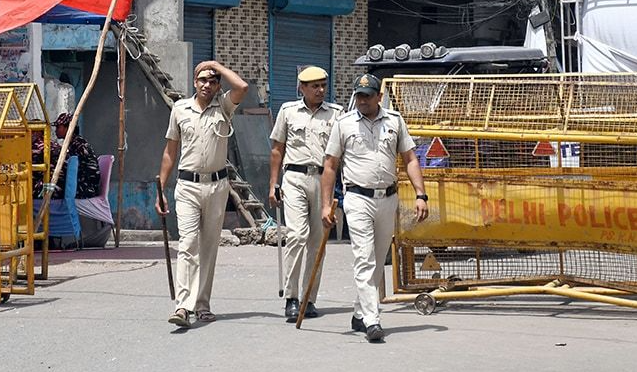
Eyewitnesses said that a group of miscreants after being confronted returned to the society and attacked the residents with stones and sticks. Police are looking at CCTV footage and taking witness statements as the incident has sparked anger about law and order in the capital.
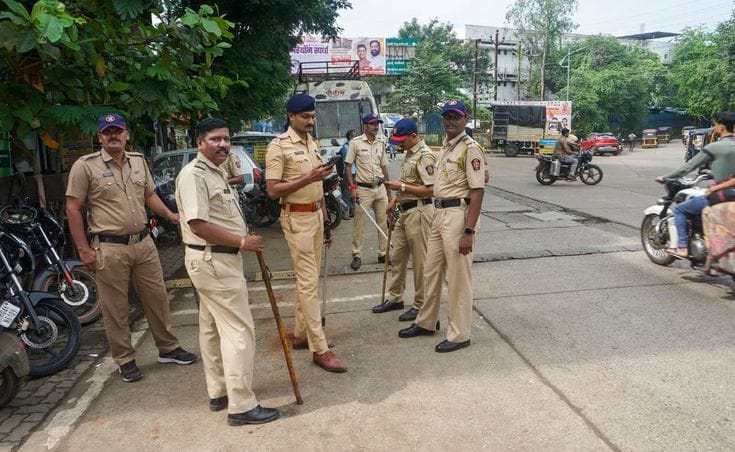
Police and residents near a housing society in Delhi’s Mayur Vihar Phase 3 after a mob attack reportedly broke out following objections to alleged eve-teasing. This image is only for illustrations.
A disturbing case of violence unfolded in east Delhi’s Mayur Vihar Phase-3 on Sunday evening, when a group of miscreants allegedly attacked residents after locals objected to the eve-teasing of a young woman. The clash left around 10 to 15 people injured, including a 10-year-old child who is now in the ICU in serious condition. According to residents, the attack spread panic inside the society as the group returned with stones and sticks and assaulted people in the area.
The incident has quickly become a flashpoint in the city because it combines a public safety issue, alleged harassment of a woman and a violent retaliatory attack in a residential neighbourhood. Yeh issue kaafi important hai because it is not just about one fight; it is about how quickly a neighbourhood argument can turn into a serious law-and-order problem.
What Happened
Based on eyewitness accounts, the trouble began when some residents objected to the alleged molestation or eve-teasing of a young woman in the society. Instead of the situation calming down, residents allege that the accused returned with associates and unleashed violence across the society. Witnesses said the group attacked people they encountered, creating chaos and fear among residents. This story was also covered by NDTV.
At around 9:25 pm, CCTV footage reportedly captured a group of young people running through the area and pelting stones at residents inside the society. In another video, one person was seen attacking people with a stick. Those visuals matter because they appear to support the accounts of a sudden and aggressive assault, rather than a simple verbal dispute.
The attack reportedly left 10 to 15 people injured, and local residents said four to five of them are in serious condition. Among the injured is a 10-year-old boy who sustained severe injuries and has been admitted to the ICU. The child’s sister described the attack as sudden and brutal, saying that he had gone with a cousin to take photographs before being struck from behind with stones.
Family Accounts and Injuries
The most alarming part of the story is the injury to the child. According to his sister, the 10-year-old had gone out with a cousin, who is around 27 or 28 years old, to take photographs when the attack happened. She said he was hit from behind with stones and suffered a blood clot, leaving him in critical condition.
Her account adds a deeply human layer to the incident. A child going out for something as ordinary as photographs should not end up in an ICU because of a street attack. That is exactly why the public reaction has been so strong.
She also alleged that the attackers were carrying stones and sticks and described one of the sticks as broad and fitted with nails. Such details, while still part of a witness account, suggest the violence may have been prepared or at least escalated beyond a spontaneous scuffle. The family said they identified three attackers and had handed over photographs of one alleged accused to the authorities.
At this stage, these claims are allegations from witnesses and family members, but they are serious enough to drive the police investigation forward. When multiple people are injured and a child is in critical condition, the case immediately becomes one that needs fast and careful handling.
Police Response and Investigation
Police have launched an investigation and are trying to identify those involved. Officials are scanning CCTV footage from the area and collecting eyewitness statements to piece together what happened. That is the correct first step in a case like this, because such incidents often involve fast movement, multiple participants and a sequence of events that can only be reconstructed through video and witness testimony.
The police will likely need to determine whether this was a targeted retaliation, a mob-style attack or a wider clash that escalated quickly. They will also need to verify who started the violence, who participated and whether the child was directly targeted or caught in the middle of the attack. Those details matter legally and morally.
For residents, however, the big concern is simpler: why did a violent group feel confident enough to enter a residential area, attack people and leave before being immediately stopped? That question has already become part of the public debate around the incident.
Political Reaction and Law-and-Order Questions
The incident also took on a political tone after AAP MLA Kuldeep Kumar raised questions over law and order in the national capital. He said the attack took place despite the presence of a police outpost just 500 metres from the society. He visited the site during the night and spoke with residents, who reportedly expressed anger and concern over the violence.
Kumar also criticised the state of policing in Delhi, arguing that criminals were acting without fear despite what he described as a “four-engine government”. He urged Chief Minister Rekha Gupta to ensure the immediate arrest of the accused. Whether one agrees with the political framing or not, the statement reflects a common public frustration after such incidents: people want visible protection, not just post-incident investigation.
This is a familiar pattern in urban India. A violent incident happens, political leaders rush to the site, residents demand arrests, and police promise action. But what people really remember is whether the city felt safe in the first place. That is why the law-and-order angle has become central to the story.
Background and Context
Mayur Vihar Phase-3 is a densely populated residential area in east Delhi, and like many urban neighbourhoods, it depends on a mix of local vigilance and police presence to maintain order. In such societies, even a small dispute can become serious if there is poor crowd control or if a group returns with more people. This makes the area’s security concerns particularly relevant after Sunday’s attack.
The allegation of eve-teasing adds another layer to the story because harassment in public or semi-public spaces often triggers confrontation. In many Indian cities, when residents intervene to protect a woman or object to harassment, the situation can escalate if the accused respond violently. This case appears to fit that broader social pattern, though the exact sequence is still under investigation.
There is also a larger social reality here: residential societies are increasingly becoming spaces where both personal safety and collective responsibility matter. When violence enters such a space, it affects not just the direct victims but the entire community. People begin to question gates, cameras, response time and the role of local policing.
Timeline
-
Sunday evening: Residents in Mayur Vihar Phase-3 object to alleged eve-teasing of a young woman.
-
Soon after: Witnesses allege the accused return with associates and attack residents.
-
Around 9:25 pm: CCTV footage reportedly shows young people running and pelting stones.
-
Later that night: Police and residents begin responding to the violence.
-
By nightfall: Around 10 to 15 people are reported injured, including a 10-year-old boy in the ICU.
-
Afterward: Police start scanning CCTV footage and recording eyewitness statements.
-
Following the incident: AAP MLA Kuldeep Kumar raises questions over law and order.
Also Read: Delhi’s Red Fort Receives Bomb Threat Call, Security Tightened Before Threat Is Declared a Hoax
Why This Matters
This matters because it shows how quickly allegations of harassment can escalate into large-scale violence if tempers are not controlled and law enforcement response is delayed. When a child ends up in intensive care after a neighbourhood attack, the issue is no longer just a local scuffle; it becomes a public safety crisis. Yeh issue kaafi important hai because it touches on women’s safety, child safety and the state’s responsibility to keep residential spaces secure.
It also matters because the attack appears to have happened in a populated urban society, not in a remote or isolated area. That means any resident could have been affected, and that makes the fear broader. People expect gated or semi-gated communities to offer a sense of security. When that breaks down, trust in local protection systems weakens.
The political and administrative implications are also serious. If there is indeed a police outpost close by, residents will want to know why the response was not enough to prevent the attack or stop it earlier. This kind of question often becomes part of the wider conversation about policing in Delhi and other metros.
India Angle
For Indian readers, this story is immediately relatable because eve-teasing, mob retaliation and neighbourhood violence are issues that many urban communities have seen in different forms. In Hinglish, seedhi baat yeh hai: jab ek society ke andar violence ghus jaata hai, toh sabse pehle fear spread hota hai. Families start worrying about children playing outside, women moving freely and whether police will arrive in time.
The case also matters because it reflects a common Indian reality: many neighbourhoods rely on CCTV and local alertness, but those systems are only useful if response is quick and coordinated. A residential society is supposed to feel safer than the street outside, but this incident shows that safety can break down even inside a managed community.
It is also important for the larger national conversation on women’s safety. Alleged eve-teasing often becomes the spark for far bigger conflicts, especially when locals intervene and the accused return in groups. That pattern can be seen in several Indian cities, which makes this case more than just a Delhi story.
Analysis
My opinion is that the most troubling part is the scale of the retaliation. If the witnesses are correct, then an objection to harassment was followed by a group attack involving stones and sticks. That suggests not just anger but coordination, which is far more dangerous. It also points to a failure of immediate containment if the group could enter, attack and flee.
I also think the child’s injury will shape public emotion strongly. Whenever a minor is seriously hurt, the story becomes far more painful and urgent. That does not just increase sympathy; it also raises the pressure on police to solve the case quickly. In such stories, public trust depends on visible action, not only statements.
From an editorial angle, the key issue is not to overstate what is still under investigation. The allegations are serious, but police will need to verify the sequence through CCTV and witness accounts. The responsible way to report this is to separate confirmed facts — injuries, police investigation, CCTV review — from allegations made by residents and family members.
What Next
The next step will be the police investigation into the CCTV footage and identification of the suspects. Officers will likely interview residents, hospital staff and eyewitnesses to build a proper case file. If the footage clearly identifies the attackers, arrests may follow quickly.
There may also be medical updates on the injured child and the other seriously hurt residents. That will be an important part of the story because the full human cost of the attack is not yet settled. If any of the injured worsen, the incident could become even more serious.
At a civic level, residents will likely demand stronger security measures around the society and more visible policing in the area. Depending on the investigation’s outcome, the case could also become part of a larger political debate about safety in Delhi’s residential neighbourhoods.
Conclusion
The Mayur Vihar mob attack is a disturbing reminder of how quickly a neighbourhood dispute can spiral into violence. What began as an alleged objection to eve-teasing reportedly turned into a stone-pelting and stick attack that injured around 10 to 15 people, including a 10-year-old child now in the ICU. Police are reviewing CCTV footage and witness statements, while residents and political leaders raise questions about safety and law enforcement. As the investigation unfolds, the most important priorities remain clear: identify the attackers, protect the victims and ensure that such violence does not repeat.
Written By A. Jack